





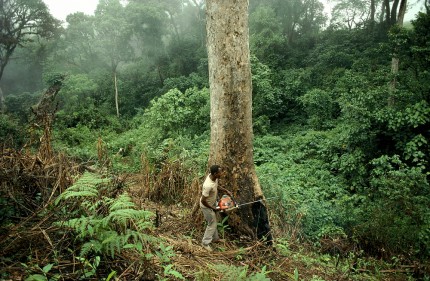
The federal government has announced plans to convert under-utilised forest reserves to farmlands to achieve food sovereignty in the country.
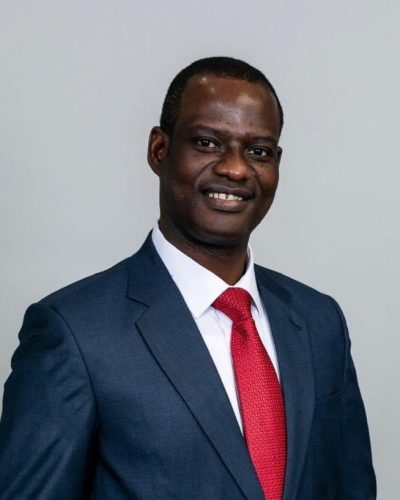
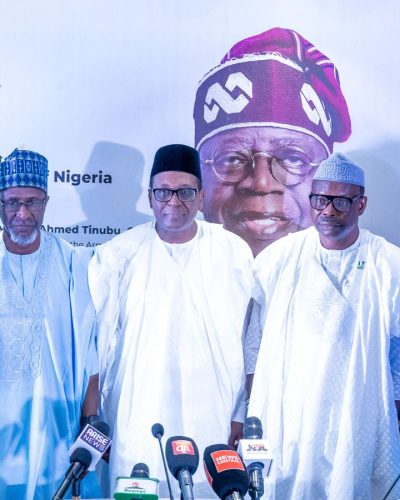
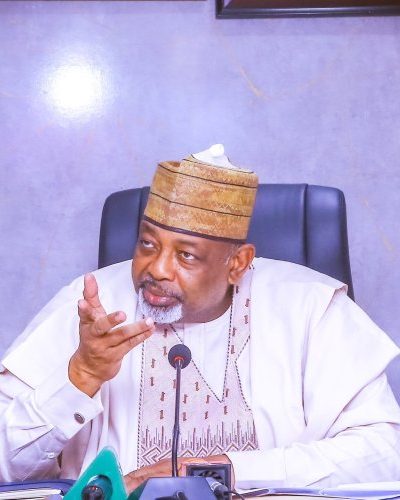
National Agricultural Lands Development Authority (NALDA) Executive Secretary and Chief Executive Officer Cornelius Adebayo disclosed this at a press briefing in Abuja on Friday.
Mr Adebayo explained that the project is expected to benefit at least 4,000 people who are mostly farmers, adding that the project is already implemented in Ogun, Lagos, Federal Capital Territory (FCT), among others.
“The Greenhouse Project is not solely green. It’s called the ‘Green Hope Project’. It is three-layered. You have the open field, greenhouses, normal, regular greenhouses, and you have the high-tech, temperature-controlled and high-tech greenhouses.
“Right now, we have started implementing the two layers. The open field, horticulture, and the normal greenhouses. We have two locations right now. One in Giri to service Abuja, in Shagamu to service neighbours because you don’t have a lot of land, of course, in Lagos, but the population is there to consume these greenhouses. So, we are hoping to be able to service neighbours from Ogun State.
“In Lagos, we put up 30 greenhouses, and we are hoping to add 50. In Abuja, we put up 20, and we are hoping to add 60,” Mr Adebayo said.
He said these greenhouses are also sitting next to what he called the open field, noting that the open field is the easiest way to be able to meet and close the gap.
“One thing we have been able to do is that we have about 38 locations across the country for the open field. 38 locations, and each location is a minimum of 500,” he added.
He stressed that the target for the greenhouses is to engage women and make them major beneficiaries so they can sustainably run the businesses as a way of empowerment for them and their families.
“The target is women, and the idea is to make sure that women are supported so that we can support the men also. I said we have 38; it is targeting about 4,000 beneficiaries in total. This is the first stage that we are at, and we are hoping to be able to replicate that in every federal constituency in the country.
“From that, we take it to the next level. Why is this? We believe that we need to decentralise the production of vegetables. We need to reduce how we transport vegetables. Vegetables are something we eat fresh, and not something that spends days in transit.
“Every modern society, every modern city that we travel to, has greenhouses and supplies where they can feed the city. That is what gave birth to this project,” he said.
ALSO READ: Nigeria seeks strong bilateral ties with Israel in agriculture, security, others
Mr Adebayo announced a partnership with government organisations in vegetable production, as it did in “the initial stage, in partnership with Agricultural and Rural Management Training Institute (ARMTI), and the National Horticultural Research Institute (NIHORT), which is specialised in horticulture, are training the first set of beneficiaries of this project.
“NIHORT will give them the first set of inputs, so when they harvest, there will be an aggregator that collects a percentage of their harvest. The idea is to be able to supply the immediate environment first. So after that, the percentage, so we don’t have wastage.”
He said the percentage is collected and taken to secondary and tertiary markets.
“We are talking about training by ARMTI. ARMTI has a partnership. We believe in partnerships. We don’t believe that anyone can do it alone. Partnerships from every angle. You can see we’ve brought in NIHORT.
“For our cocoa programme, we have brought in the Cocoa Research Institute of Nigeria (CRIN), because we cannot do this work alone. Our own is to facilitate and make it easier. And any support you can get from a sister agency or a co-government agency, definitely we’ll be happy to take,” he said.