


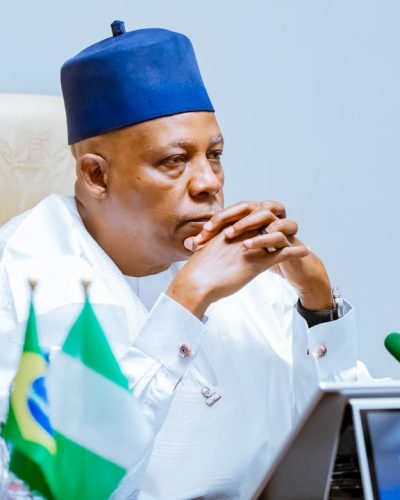

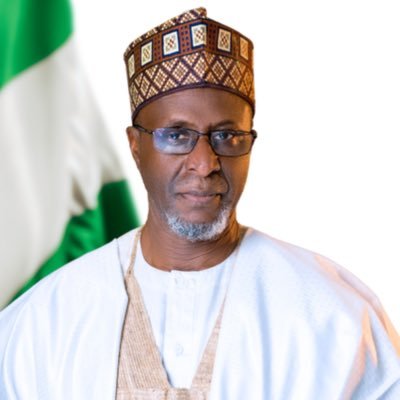
The Federal Ministry of Environment‘s €175 million Nigeria Erosion and Watershed Management Project (NEWMAP-EIB), funded by the European Investment Bank (EIB), is embroiled in controversy after staff members accused Minister Balarabe Lawal and top officials of nepotism.
The ministry recently deployed fourteen staff to the project’s Federal Project Management Unit (FPMU), sparking allegations of unfair treatment and contract terminations without payment.
A letter with reference no FMEMV/PS/535/11/18 dated 23 December 2025, addressed to ministry directors, said the affected officers are required to complete handing over and taking over by 5 January, adding that the failure to comply will attract sanctions under public service rules.
The letter, titled ‘Deployment of staff to the Federal Project Management Unit (FPMU) of the Nigeria Erosion and Watershed Management Project (NEWMAP)’, was signed by the Director, Human Resources Management, Abdullahi I.
“I am directed to convey approval of the Honourable Minister for the deployment of the underlisted members of staff of the Ministry to the Federal Project Management Unit (FPMU) of the Nigeria Erosion and Watershed Management Project (NEWMAP) funded by the European Investment Bank.
“All handing and taking over must be completed on or before Monday, 5th January, 2026, and the affected officers are to note that failure to adhere to this posting instruction contravenes the provision of the Public Service Rules 100301 (b) and 020602 (iv) and will be met with appropriate sanctions,” the letter read.
The deployed staff members include: Adebiyi Rotimi, Principal Scientific Officer, as GIS Specialist; Luka Kwada, Assistant Chief Civil Engineer, as Water Resource and Hydrology Specialist; Yahaya Sadiq, Assistant Chief Irrigation Engineer, as Geo-tech and Civil Engineering Specialist; Akinkoye A. Joshua, Principal Agricultural Officer, as M&E Specialist; Maijega Mohammed Kasimu, Deputy Director (Accounts), as Financial Specialist.
Others include: Usman Kumo, Assistant Director (Procurement), as Procurement Specialist; Gaji Abacha, Chief Admin, as Administration Officer; Zenum R. Kifasi as Environmental Safeguard Specialist and Miss Laraba Anago as Social Livelihood Specialist.
Other staff redeployed to support positions are: Idris Hauwa Rani, Chief Accountant, as Support Staff (Finance); Isyaku J. Barau, Principal Agricultural Engineer, as Support Staff (Hydrology); Malangale Badal, Principal Agricultural Engineer, as Support Staff (GIS); Garba Aliyu A., Chief Executive Officer, as Support Staff (Admin); and Ojua Omodara Jokotola, Chief Procurement Officer, as Support Staff (Procurement).
However, some affected staff members who spoke to this newspaper are alleging unfair treatment, claiming they were redeployed without justification and their contracts were terminated without payment.
They accused the minister, the Permanent Secretary, Mahmud Kambari and the Minister’s Technical Adviser, Olaitan Fajuyitan, of nepotism, saying new staff brought in are their relatives or friends.
Speaking to this newspaper, Mr Fajuyitan dismissed the allegations, stating that those disengaged were due for disengagement.
He said the project is a new project, and those deployed to handle the project were recommended by the heads of their departments.
“You know how projects work, they start, and they end. Of course. When the project ends, that is the end of the project now, and then a new one. Projects start and end, and that project is now staffed mainly by staff of the ministry.
“Is it possible that the ministry has relatives in the ministry that have been working in the ministry for 20, 25 years? Did he know in the future that you would be the minister of the environment?
“The report is totally unfounded. It is business, and it is a very useless petition. It is just people who feel that they should be on a project forever,” he said.
He explained that the project has a new direction. “It is a totally different project,” noting that the new map, launched in 2013, was funded by the World Bank.
“The only reason why it is still called New Map is that the new funders said just to avoid a long process of it if they put a new name. So they said, ” Let us just continue the name. The World Bank was funding one, now it is the EID.
“The EID and World Bank are two different entities. So, you can see that it is totally different. It is a new project. And civil servants, 90 per cent of the staff there are civil servants from the ministry and were recommended by the supervising departments. So, it is just some people who feel that it is their birthright,” he added.
READ ALSO: Nigerian gov’t launches new macro-strategy to tackle hunger, boost economy
The project
In 2010, the federal government, with support from the World Bank, launched the NEWMAP-IDA to address soil degradation, food insecurity, and land remediation under the Economic Recovery and Growth Plan (ERGP).
The project commenced in 2013 with seven states and later expanded to 23 states. The project closed in June 2022.
In 2020, the federal government secured additional financing from the EIB to expand the scope of the project.
At the time, the government said the EIB approved a facility of €175 million aimed at building upon and deepening the achievements recorded under NEWMAP-IDA, using the strategic watershed management approach.
“In 2023, the project became technically effective and now disbursively effective in 2025,” the ministry said.
The project is to be implemented over a period of five years across twenty-three states, namely: Abia, Akwa Ibom, Anambra, Borno, Cross River, Delta, Ebonyi, Edo, Enugu, Ekiti, Gombe, Imo, Kaduna, Kano, Katsina, Kogi, Nasarawa, Niger, Ogun, Ondo, Oyo, Plateau, and Sokoto.