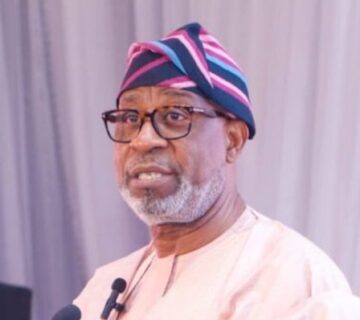


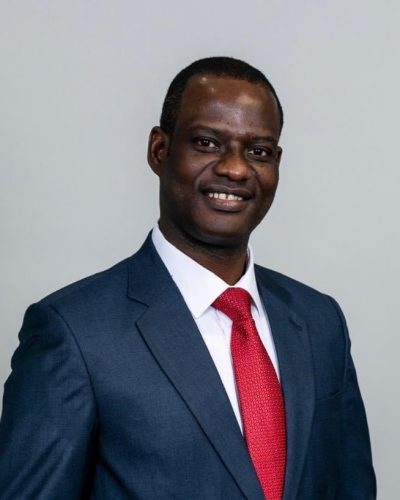
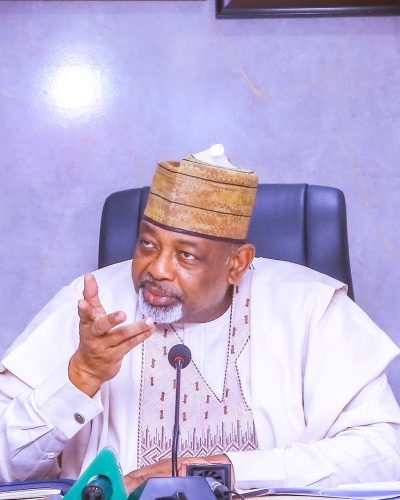

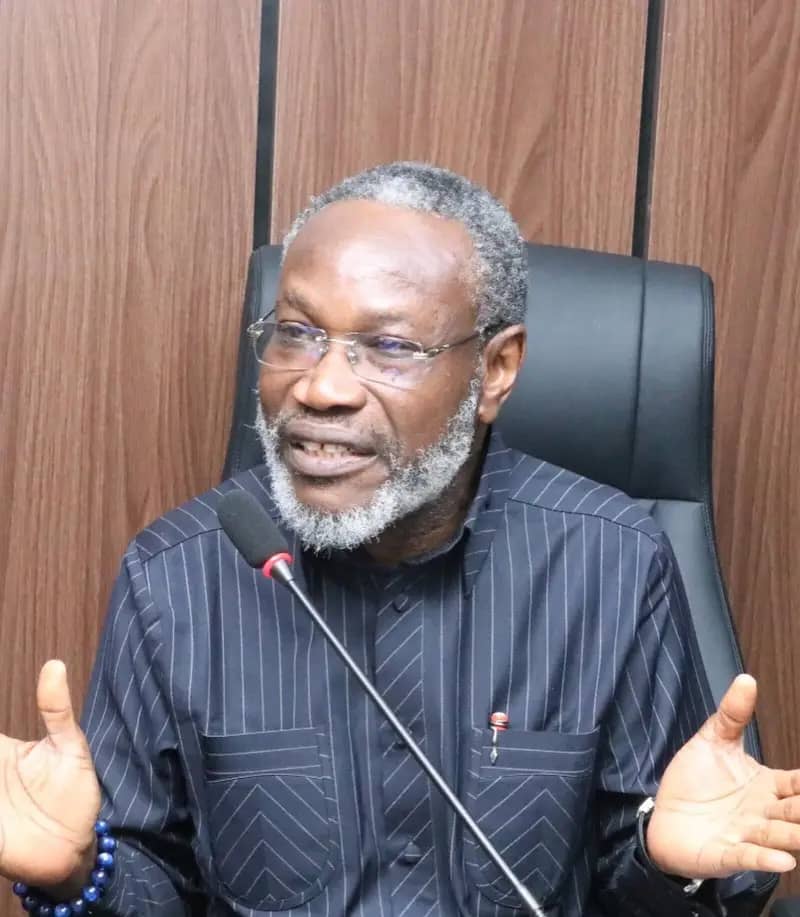
The First Deputy President of the Abuja Chamber of Commerce and Industry (ACCI), Adesoji Adesugba, has said Nigeria cannot achieve its $1 trillion economy ambition on 5GW of grid power.
Mr Adesugba stated this in Abuja on Tuesday while delivering his keynote address at the 20th anniversary lecture of the Commerce and Industry Correspondents Association of Nigeria (CICAN).
The event was themed: “FG’s $1 Trillion Economy: Roles of Policymakers, Stakeholders and Media in its Actualisation.”
Mr Adesugba, who is also the Chairman and Founder of ACCI Business Entrepreneurship, Skills and Technology (BEST) Centre, said Nigeria’s grid-connected plants have 13,625MW installed capacity, but average available capacity was 4,758MW in August 2026 and fell as low as 4,384 megawatts in February, roughly a third of installed capacity.
“No economy of 220 million people has ever approached a trillion dollars on 5 gigawatts of grid power,” Mr Adesugba said.
He said the $1 trillion target should be understood not as a forecast but as a mobilisation target, and will be won or lost on quality of implementation rather than announcements.
“Stabilisation has been substantially achieved. Transformation has not yet begun at the scale the target requires,” he said.
Mr Adesugba said independent analysts placed Nigeria’s 2025 nominal GDP at $285 to $291 billion, meaning the economy must more than triple in dollar terms to hit $1 trillion by 2030 – an average expansion of about 28 per cent a year in dollar terms.
He noted that while nominal GDP reached about N119.3 trillion in Q2 2026 and real growth improved to 4.43 per cent, with reserves at $55.25 billion and headline inflation easing to 14.63 per cent in September, the real-sector fundamentals remain weak.
“On current real growth of 4 to 4.5 per cent, with moderate inflation and gradual depreciation, the economy would reach about $450 billion by 2030 and cross the trillion-dollar mark only around 2040,” he said.
“If reforms accelerate, lifting real growth towards 6 or 7 per cent with a broadly stable naira, we would reach about $585 billion by 2030 and a trillion dollars around 2034.”
He said even under highly optimistic assumptions, the economy would only reach about $773 billion by 2030 and cross $1 trillion around 2032.
Mr Adesugba said the naira cannot do the heavy lifting, warning that any attempt to manufacture a trillion-dollar headline through an artificially strong currency would repeat past costly mistakes.
On capital importation, he said total inflows reached $10.37 billion in Q1 2026, up 84 per cent, but Foreign Direct Investment contributed only $135.08 million, or 1.3 per cent. For 2025, FDI was just $923 million.
“Portfolio capital stabilises the currency; direct investment builds factories and jobs. We are attracting the former in abundance and the latter in trickles,” he said.
He also cited poverty, noting World Bank estimates that 63 per cent of Nigerians, about 140 million people, were living below the national poverty line in 2025.
Proposal
Mr Adesugba proposed that the federal government complement the 2030 headline with interim, verifiable milestones, including a $500 billion economy, sustained real growth of at least 6 per cent, FDI exceeding 10 per cent of capital inflows, reliable grid availability of at least 8,000 megawatts and single-digit inflation.
“A national target earns credibility not when it is announced but when its milestones are published, measured and reported on a predictable calendar. The trillion-dollar economy needs a public dashboard as much as it needs a policy framework,” he said.
He recommended eight priorities for policymakers, including guaranteeing policy continuity through the 2027 elections, formalising fiscal and monetary coordination, treating power as a master reform, converting portfolio confidence to direct investment through special economic zones, fair implementation of the 2025 Tax Acts, mobilising states, strengthening the National Bureau of Statistics (NBS), and investing in human capital.
ALSO READ: Africa loses $15 billion annually in potential revenue from oil, gas exports – APPO
“If policymakers set the rules, stakeholders play the game. The trillion-dollar economy will be produced on farms, in factories, in markets, on trading floors and in classrooms, not in ministries,” he added.
Role of the media
Mr Adesugba said without the media, no economic reform of this magnitude can command public understanding, attract investor confidence or remain accountable.
He charged the media to explain, verify, track, investigate and balance, and to report markets responsibly and amplify the real economy.
“The $1 trillion economy is an ambition worthy of a nation of Nigeria’s size, talent and endowment. The progress of the past year, in growth, prices, reserves and currency stability, shows that disciplined reform can produce results.

“But the harder phase lies ahead. It requires us to turn stability into productivity, portfolio inflows into factories, revenue into infrastructure and growth into jobs and falling poverty.
“Whether we reach a trillion dollars in 2030, or a few years after, matters less than whether we build an economy capable of reaching it and sustaining it. That will depend on policymakers who stay the course, stakeholders who invest and produce, and a media that informs, verifies and holds all of us to account,” he said.