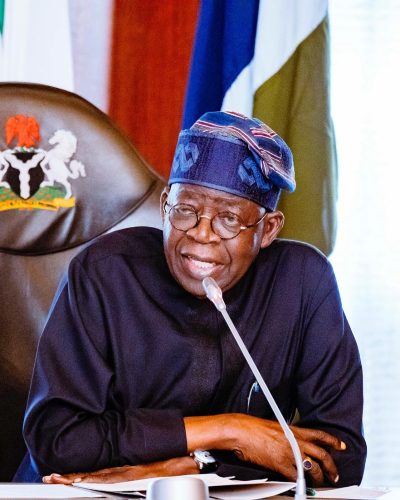
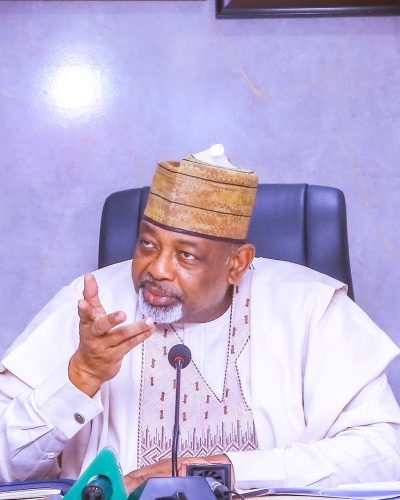


Almost three years after President Bola Tinubu declared “subsidy is gone” on his inauguration day, the policy his administration calls a necessary reform is emerging as its biggest political liability ahead of the 2027 elections.
For decades, the Nigerian government subsidised and fixed retail prices of petroleum products. The payment, however, threatened the nation’s fiscal position and weakened the government’s ability to fund developmental projects.
Successive governments argued it was unsustainable, draining public finances and fuelling corruption, but lacked the political will to end it.
On 29 May 2023, Mr Tinubu took the decision.
“Petrol subsidy is gone,” he said, noting that the 2023 budget made no provision for subsidy beyond June.
The effect was immediate. The Nigerian National Petroleum Company Limited (NNPC Ltd), at the time, directed its outlets to sell petrol between N480 and N570 per litre, an almost 200 per cent increase from below N200. By July 2023, prices had risen to N617 per litre in Abuja and other cities.
At the time, NNPC Ltd blamed ‘market forces’ for the July increase. Its then Group Chief Executive Officer, Mele Kyari, explained that with the deregulation of the oil sector, market realities would force the price of petrol up sometimes and at other times force it down.
In August 2023, Mr Tinubu assured Nigerians that there would be no further increase in the pump price of petrol, despite the deregulation.
“The president wishes to assure Nigerians, following the announcements by the Nigerian National Petroleum Company Limited (NNPC) just yesterday, that there will be no increase in the pump price of petroleum motor spirit anywhere in the country,” then presidential spokesperson Ajuri Ngelale said.
“We repeat, the president affirms that there will be no increase in the pump price of petroleum motor spirit.”
That assurance did not hold.
Today, petrol sells for between N1,300 and N1,500 per litre in many parts of the country, despite the naira-for-crude policy and the coming on stream of the Dangote Refinery.
The pain on the streets
For many Nigerians, the pain has been direct and unrelenting.
Transport fares have more than tripled since May 2023. Interstate fares, intracity bus charges and haulage costs have surged, feeding into food inflation, which the National Bureau of Statistics (NBS) put at over 40 per cent before its rebasing in early 2025.
Traders in major markets in Ekiti, Lagos and Onitsha told ThePreview Media that moving goods from the North to the South now costs three times what it cost in 2023. The costs are passed to consumers.
“The removal was done without a cushion. People are still suffering for it every day,” a trader, Boluwatife Ojo, in Ekiti said.
Another trader, Ugochukwu Okoye, in Onitsha Main Market said, “Since Tinubu assumed office as the president of this country, everything has turned upside down. The first ever mistake he made was removing the subsidy.
“He just came to put the country in chaos, and I must tell you that we are still in that chaos he put us into. No going back and no going further,” Mrs Okoye said.
A student who simply identifies himself as Nantha said, “I am a medical student in one of the universities in this country. It has not been easy for my parents to foot my bills and those of my siblings.
“I am Yoruba, and to be sincere with you, my family were so happy when he (Mr Tinubu) was declared the presidential winner in February 2023. We never knew what was coming our way. Nearly three years later, many Nigerians continue to bear the brunt of Mr Tinubu’s decision,” he said.
Research findings presented by Mohammed Shuaibu of the University of Abuja at a stakeholders’ dialogue organised by Agora Policy in Abuja on 13 March 2026 showed the reform worsened poverty.
“After the subsidy removal, poverty increased from a baseline of about 50 per cent to 63 per cent,” Mr Shuaibu said.
He added that “When social protection measures such as cash transfers were introduced, the poverty rate moderated to around 56.2 per cent, but relief was limited due to delays and small-scale implementation.”
The study highlighted that low-income households bore the brunt of the reforms, experiencing reduced consumption and eroded purchasing power, while wealthier households were largely insulated from immediate effects.
According to him, focus group discussions across Nigeria’s six geopolitical zones revealed how households and businesses adjusted. Many families reduced consumption, walked instead of using public transport, rationed electricity, and borrowed money to survive.
“Households adjusted to the shocks not through recovery but through sacrifice,” Mr Shuaibu said.
Vulnerable groups, including women, children, retirees, and rural dwellers, were disproportionately affected. Businesses reported rising costs, downsising, relocation, or closure. Some increased prices, while others adopted alternative energy sources. Government support promised to ease the transition often did not materialise or was insufficient.
The 2027 question
Inside the ruling All Progressives Congress (APC), there is quiet acknowledgement that the subsidy policy will be weaponised by the opposition.
Former Vice President Atiku Abubakar and Peter Obi, both expected to contest in 2027, have consistently argued that the Tinubu administration removed petrol subsidy abruptly without planning, plunging millions into poverty.
In August, Mr Abubakar, the presidential candidate of the African Democratic Congress (ADC), restated his pledge to restore petrol subsidy if elected president in 2027.
“On the question of subsidy, my position has not changed and will not change: I will restore it! A nation as blessed as ours has no business abandoning its citizens to hardship. Nigeria is rich enough to look after her own,” the former vice president wrote on X.
The presidential candidate said he believed the progress and wealth of a country should be measured by citizens’ ability to purchase goods and services, rather than by how much revenue the government collects.
“I believe the wealth of a nation is not measured by how much the government collects, but by how much money in the pockets of its people can buy,” he said.
He said he would restore a “targeted subsidy” by ensuring that transportation is affordable and accessible to Nigerians.
“I want wages to have value again. I want farmers to move produce without transport swallowing their profits. I want families to fill their baskets without emptying their pockets. I want businesses to produce, employ and prosper. That is why I will restore targeted subsidy and put purchasing power back in the hands of Nigerians,” he added.
This marks a departure from his 2023 position. In 2023, Messrs Tinubu, Abubakar and Obi all supported ending petrol subsidy, though they differed on the timing and implementation.
During the 2023 campaign, Mr Abubakar repeatedly argued that petrol subsidy was unsustainable and should be removed. In July 2022, he said subsidy removal was inevitable but should be implemented through negotiations with organised labour and other stakeholders. He also recalled that he chaired a committee on subsidy removal during his tenure as vice president and that the PDP administration had removed it in two phases.
In November 2022, he went further, saying he would complete the removal if elected president and channel the savings into the economy. He described the subsidy regime as “just a fraud.”
In December 2022, Mr Abubakar said he would address the issue within his first 100 days in office, arguing that subsidy was draining government resources that could be invested in critical sectors.
Mr Obi’s stance has also shifted. In January 2023, Mr Obi, the then presidential candidate of the Labour Party (LP), described the subsidy regime as “an organised crime,” stating that he would not allow it to stay any longer, should he be elected as Nigeria’s president.
“I can assure you, it (subsidy) will go immediately. The subsidy, I have said before, is an organised crime and I will not allow it to stay a day longer. What they are telling you is not what it is. Half of what is being mentioned is not subsidy. First is that we consume the quantity that is not supposed to be consumed here,” Mr Obi said at a Channels Television town hall meeting.
On 6 October, however, Mr Obi, now the presidential candidate of the Nigeria Democratic Congress (NDC) for the 2027 election, in an interview with the BBC, said he would retain subsidy if elected president.
He argued that the subsidy regime’s major problem was the corruption surrounding its implementation.
“I’ll remove the corruption and retain the subsidy,” he said.
Mr Abubakar and Mr Obi’s current pledge to restore the petrol subsidy therefore represents a departure from the position they campaigned on in previous elections.
The fiscal argument
In May 2026, Mr Tinubu said the removal of fuel subsidy by his administration saved the country from imminent bankruptcy and laid the foundation for the gradual recovery of the nation’s economy.
ALSO READ: FG’s fuel price relief limited response to global shock, not subsidy return – CPPE
In October, the Minister of Finance and Coordinating Minister of the Economy, Taiwo Oyedele, said Nigeria consumes about 50 million litres of petrol daily, meaning that returning petrol to its pre-2023 reform price would cost over N20 trillion yearly.
He warned that restoring the subsidy could weaken revenues, trigger a sovereign credit downgrade, raise borrowing costs and put pressure on foreign reserves and the naira.
The government estimates the exchange rate could approach N3,000 to the dollar within months if subsidy returns.
That, he said, could push the price of so-called subsidised petrol to at least N2,000 per litre, well above the current average of about N1,400.
“A subsidy does not lower the cost of fuel. It only changes how it is paid, and when,” he said.
The presidency insists the policy has freed up over N2 trillion for states, improved monthly Federation Account Allocation Committee (FAAC) allocations, and stopped the rent-seeking that characterised the subsidy regime. But with the minimum wage at N70,000 and petrol at over N1,000 per litre, the relief is yet to be felt on the streets.
Analysts cautioned against restoring the petrol subsidy, describing the policy as fiscally unsustainable despite the severe economic pressures caused by rising petrol prices.
In September, the Centre for the Promotion of Private Enterprise (CPPE) said the subsidy debate should not be reduced to the issue of pump prices, arguing that it has wider implications for Nigeria’s fiscal sustainability, foreign exchange stability, investment, domestic refining, industrialisation, employment and energy security.
As 2027 draws near, Mr Tinubu’s signature reforms risk becoming his biggest political burden.