







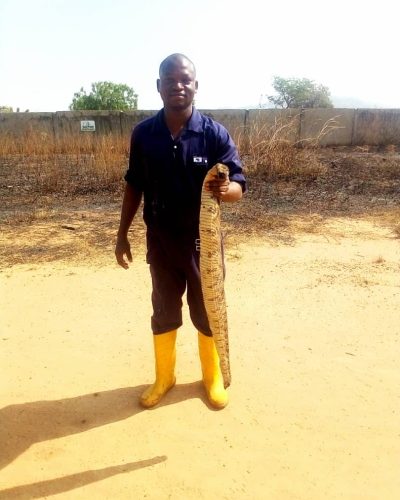

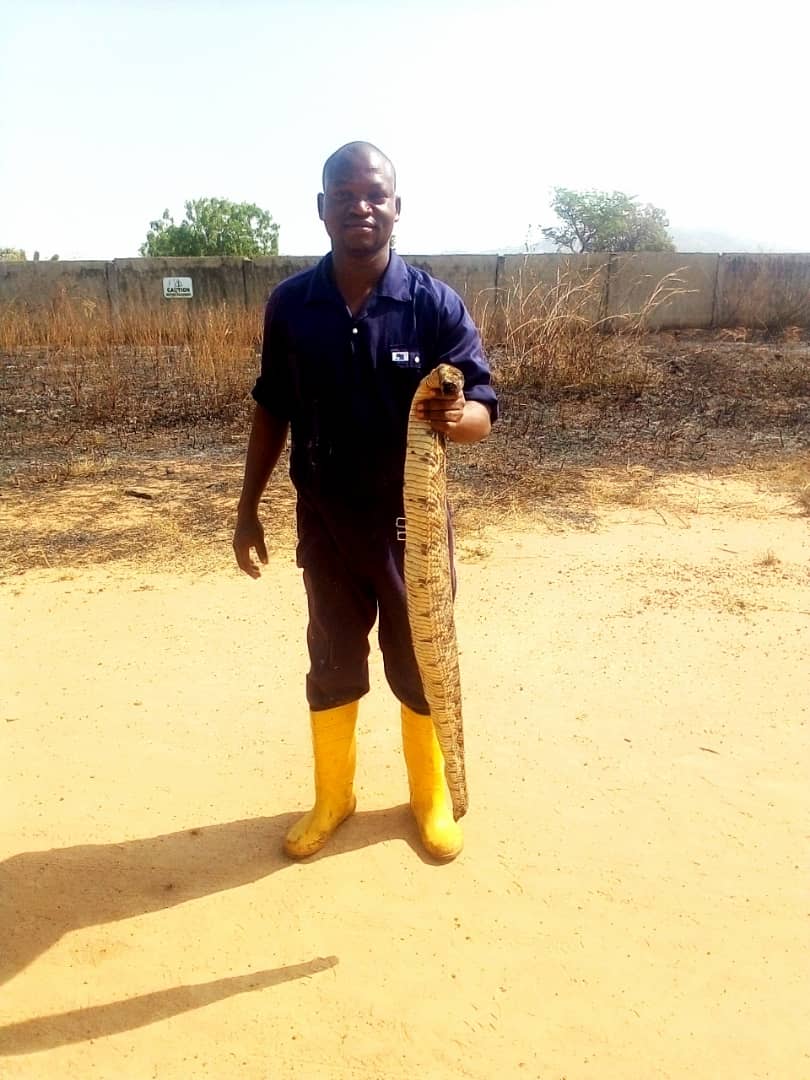
In Nigeria’s aquaculture industry, a silent threat is taking a toll on fish farmers.
Predators, from birds and snakes to leeches and even humans, are decimating fish stocks and threatening the sustainability of this vital sector.
Fish predators are organisms that actively hunt and capture fish for food, both at juvenile or matured stages.
Fish is a staple in many Nigerian households. On average, according to the Food and Agriculture Organisation (FAO), Nigerians consume approximately 8 kg of fish per person per year.
FAO explained that Nigerian aquaculture appears to have been undergoing a period of stagnation recently.
Nevertheless, the organisation said the country is the largest aquaculture fish producer in sub-Saharan Africa, accounting for 52 per cent of the total farmed fish production in the region.
Nigeria’s aquaculture industry is centred around freshwater fish, with catfish accounting for over half of the country’s production, which is roughly 260,000 tonnes. Other key species include carp, tilapia, and Nile perch.
According to reports, the total fisheries production in 2022 was estimated at 1.1 million tonnes, to which marine catch contributed 36 per cent, inland waters catch contributed 36 per cent and aquaculture 28 per cent.
The sector is said to contribute 0.83 per cent of the national Gross Domestic Product (GDP) in 2020 and 3.26 per cent of the agricultural GDP.
Earlier in January, the Ministry of Marine and Blue Economy said Nigeria’s fish production rose by 300,000 metric tonnes in 2025.
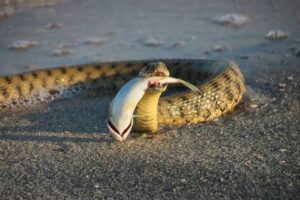
However, the constant threat of predation is stressing fish farming in the country, reducing growth rates, and leading to significant financial losses.
Speaking with this newspaper, Oyesola Peter, a fish farmer and processor based in Ibadan, shared his experience with predators on his farm.
“Predators are a major challenge for us. We’ve had to deal with snakes, birds, and even humans stealing our fish stock. It’s a serious matter that affects our profitability and sustainability,” Peter said.
Fish farming, also known as aquaculture, is the process of breeding, raising and harvesting fish in a controlled environment for the purpose of food, research, ornamental, economic and many other beneficial purposes.
Growing fish in a controlled environment involves technically raising them in artificial enclosures such as earthen ponds, tanks, dams, fish cages, hapa nets, among others, within a production cycle and making necessary provisions that facilitate their growth and security promptly.
He explained that fish farming, therefore, goes beyond “I just want to invest now and make a huge sum of money back in a few months to come. It’s a very sensitive business,” he added.
According to him, the success in the fish farming business is dependent on an array of notable factors.
This, he said, ranges from the provision of a good quantity of water that is greater than demand, having recommended physico-chemical parameters, ensuring good fish enclosures at a secure site, proper fish stocking estimation, sourcing of quality fish seeds, giving quality feeds and supplements to the growing fish, ensuring best management practices and more.
“It is worthy of note that, as important as the above processes are, regular protection of the fish stock (I personally refer to it as biological assets) is required by ensuring optimum security of the stock from natural enemies,” he added.
Impact on fish farming
The impacts of predators are far-reaching.
Peter noted that predators pose a significant threat to Nigerian fish farming businesses, leading to financial losses, reduced production, and, in some cases, the collapse of farms due to fish mortality and reduced growth rates.
“In Nigeria, catfish farmers often encounter various predators that can threaten their stock.
“Such predators include snakes, birds, monitor lizards, leeches, and crabs, among many others, which badly affect the sustainability and profitability of the business if not well managed.
“It’s actually a serious matter in the business. Another significant predator in catfish farming is human theft, usually caused by individuals or groups stealing a significant part of the fish stock, most especially at the point very close to harvest,” he added.
He said the constant threat of predation takes a psychological toll on fish farmers, leading to stress and discouragement.
“It’s like living in a state of constant fear. You never know when your fish stock will be attacked.”
Mitigation strategies
To combat the menace of predators, he said, fish farmers are adopting various mitigation strategies.
“Physical barriers, such as using nets (or screens) and fences, to prevent predators from accessing ponds or tanks, are a common strategy.
“Implementing targeted predator control measures, such as trapping or removing predators from the area, can help reduce their impact and remove food sources and other attractants that may draw predators to the catfish farm,” he said.
ALSO READ: Nigeria aims to regain top spot in global cocoa production
According to him, biosecurity measures, such as regular pond management and water quality management, are also crucial in creating a less hospitable environment for predators.
Diversification
Peter said some farmers are diversifying their farming practices, incorporating other livestock or crops, to reduce their reliance on fish farming and make them less vulnerable to predation-related losses.
As Nigeria’s fish farming industry continues to grow, experts said, addressing the issue of predators is critical to ensuring the sector’s sustainability and profitability.
“Predation has always been a silent threat in fish farming. And I must say, addressing this issue is critical to ensuring the sector’s sustainability and profitability.
“The government and relevant authorities must take steps to support fish farmers, providing training and resources for predator control, improving infrastructure, and promoting sustainable fish farming practices,” Favour Chukwuma, a graduate of aquaculture and fisheries management, said.