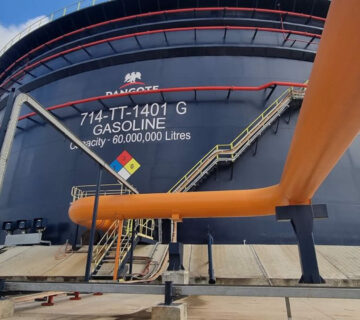








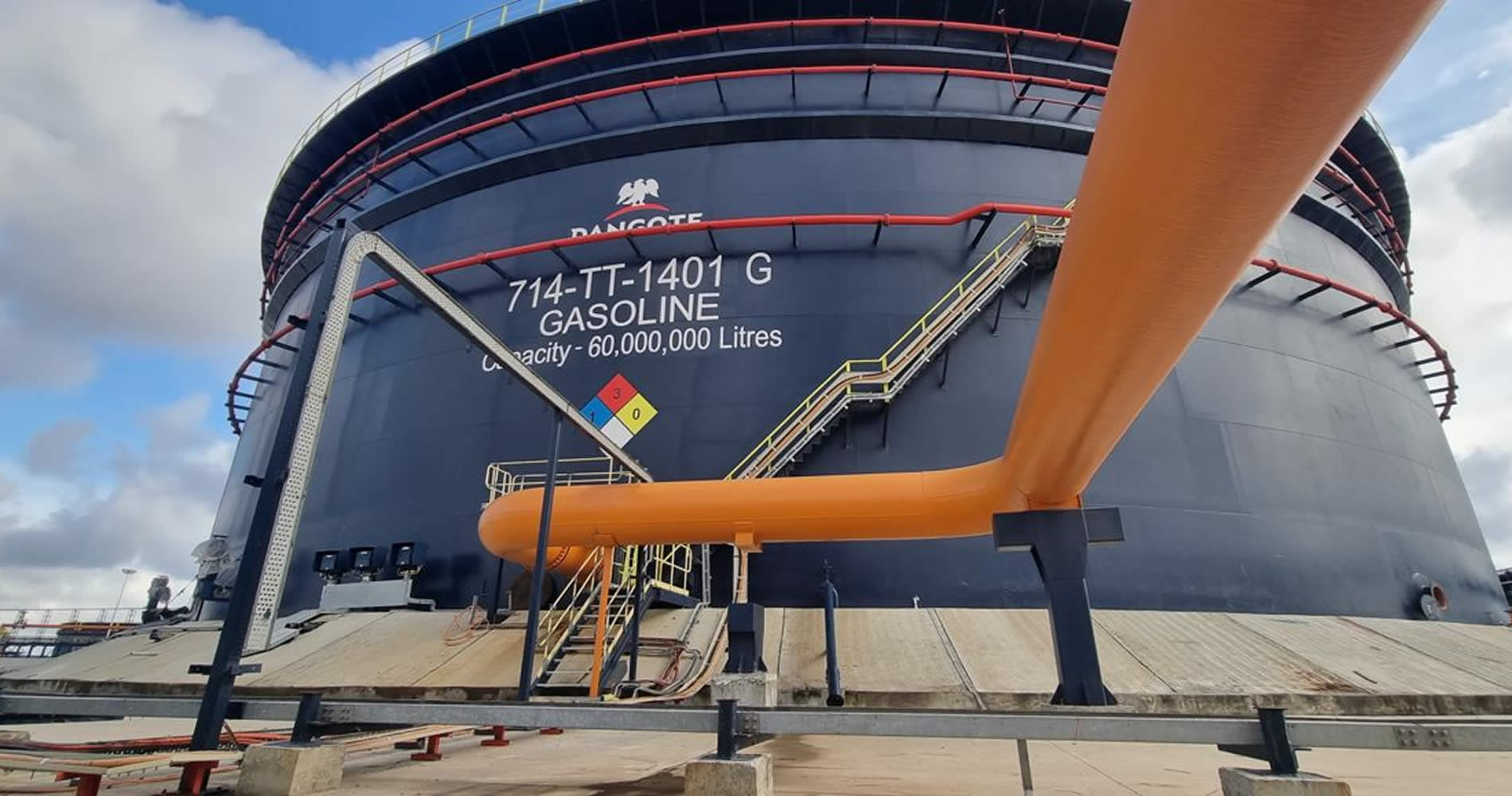
Dangote Petroleum Refinery & Petrochemicals on Thursday reassured Nigerians of its unwavering commitment to serving as a stabilising force amid recent shocks in the international oil market.
The company disclosed this in a statement signed by its management on Thursday.
Last Saturday, Israel launched an attack on Iran, despite ongoing nuclear talks between Iran and the United States. The conflict led to the shutdown of some refineries and a reduction in refinery production worldwide.
The conflict has driven global crude and freight prices sharply higher, with benchmark Brent prices rising by about 26 per cent within a short period to above $84.0 per barrel.
In response, the Dangote refinery implemented a measured adjustment of N100 per litre in its ex-depot price of petrol, representing an increase of about 12 per cent.
Earlier this week, the refinery increased the gantry price of petrol from N799 per litre to N874 per litre.
On Thursday, the Dangote refinery said it will ensure that Nigeria is insulated from these supply shocks by prioritising supply to the domestic market.
“This is one of the many benefits of domestic refining. The refinery has absorbed 20 per cent of the cost escalation, for now, to cushion the domestic market.
“This is despite continuing to source crude at prevailing international market prices, whether purchased locally or from foreign suppliers,” the statement said.
It noted that Nigerian crude oil is more expensive than the Brent benchmark price by $3 to $6 per barrel.
“After adding freight of $3.50 per barrel, crude oil will be landing in our tanks between $88 and $91 per barrel. For context, crude oil was landing in our tanks at about $68 per barrel when our ex-depot price was N774/litre.
READ ALSO: Again, Dangote Refinery increases petrol price
“Furthermore, while we receive about five cargoes a month from Nigerian National Petroleum Company (NNPC), which we pay for in Naira, these cargoes are priced at international market prices+ premium and fall short of the 13 cargoes which we require to support sales into Nigeria.
“We therefore end up procuring foreign exchange at open market rates to pay for crude cargoes purchased from local and international traders.”
The refinery said the high crude cost is compounded by the fact that Nigeria’s upstream producers have failed to supply crude oil to the refinery as required under the Petroleum Industry Act (PIA), forcing them to source a substantial portion through international traders who charge an additional premium.
The refinery said it is also accelerating deployment of Compressed Natural Gas-powered trucks to cushion the impact of global shocks, enhance nationwide distribution efficiency, reduce logistics costs and improve delivery timelines across the downstream sector.
“The rollout is scheduled to commence this month. We remain committed to transparency, operational excellence and the long-term objective of securing sustainable energy security and stability for Nigeria at an affordable cost,” it said.