









Independent Petroleum Producers Group (IPPG) has called on the federal government and all industry stakeholders to undertake urgent reforms across fiscal policy, talent development, gas utilisation, and revisit the Petroleum Industry Act (PIA) if Nigeria is to fully benefit from its hydrocarbon resources.
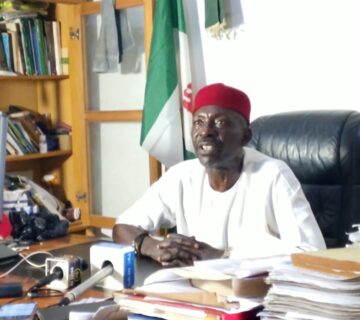
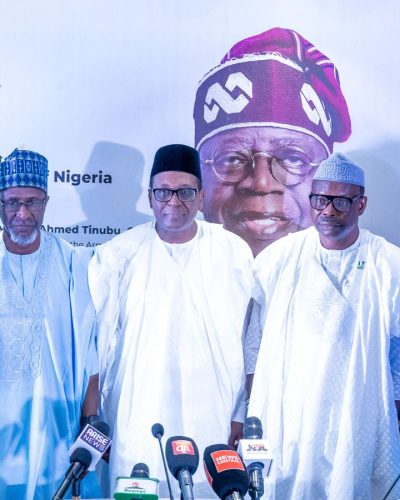
Chairman IPPG, Adegbite Falade, made the call while speaking at the opening ceremony of the 2026 NOG Energy Week in Abuja on Tuesday.
“For Nigeria to fully benefit from its hydrocarbon resources, we must build an industry that is resilient and investable before the next opportunity arrives.
“It is against this backdrop that IPPG is calling for urgent measures to be undertaken by all relevant stakeholders in addressing a shift in government posture, the cost of inaction, transitioning from commodity exporting into a broader value-enhanced midstream and downstream industry and revisiting the PIA,” Mr Falade said.
He said the sheer weight and multiplicity of fees, levies, and statutory charges imposed across the value chain continue to erode industry-wide competitiveness, and that this must be confronted.
Today, he said the Nigerian oil and gas industry remains the most taxed and levied in the country, and perhaps globally, with over 270 separate fees, taxes and levies.
According to him, these fees from multiple agencies and the cumulative burden threaten to outpace fiscal incentives introduced under the Petroleum Industry Act to attract and retain investment.
For smaller producers and operators of mature assets with thinner margins, he said this burden is a direct threat to project viability, investment decisions, and, in some cases, asset abandonment.
“We therefore urge the government to undertake a comprehensive harmonisation of all fees and levies across all agencies to eliminate duplication, ensure transparency in how these charges are computed and applied, and align the overall fiscal burden with the incentive-driven spirit of the PIA.
“A predictable, streamlined, and globally competitive cost environment is a prerequisite for the very growth, job creation, and production gains this administration seeks to achieve,” he said.
He said another area that demands immediate attention is talent development, adding that there is a manpower and competence crisis emerging, and it is one which poses an existential threat to the industry.
“Many of the professionals who built and operated Nigeria’s legacy assets are retiring or have left the system. IOC divestments in recent years have further exacerbated this issue. At the same time, new technologies, new operating models, new safety expectations and new commercial realities require a different depth of capability.
“It is therefore incumbent for every operator to commit significant effort and investment to hiring, training and empowering the right talent. This is not corporate social responsibility; it is at the very core of business survival,” he said.
Mr Falade said the future of the industry will not be determined by upstream production alone.
“It will be determined by how effectively we create viable linkages between the upstream and midstream/downstream sectors—connecting production to processing, transportation, domestic utilisation, and market delivery.
“This is why deeper collaboration between producers and midstream players is now urgent. The future is not just about producing hydrocarbons; it is about efficiently transporting, processing, and delivering them to the market,” he stated.
According to him, gas, in particular, must sit “at the heart of Nigeria’s and I dare say, Africa’s industrialisation ambition.”
“Gas remains the catalyst to drive economic transformation and prosperity. Nigeria’s vast gas resources must be exploited with immediate focus placed on restoring production to existing installed LNG capacity and expanding production (FLNG).
“In addition, we must expand domestic gas utilisation to drive geographically dispersed industrialisation through Gas-to-Power and Gas-Based Industries.”
He said the fundamental issues plaguing the sector need to be addressed, with focus placed on incentivising exploration and appraisal for new gas reserves, building key gas infrastructure, and enabling a gas value chain hinged on market-reflective pricing.
“Finally, we must speak about the Petroleum Industry Act. The passage of the landmark act provided a new legal framework which helped resolve several long-standing uncertainties across the industry.
“Five years on, we believe the time has come for a comprehensive and all-inclusive review of the Act.”
This, he said, provides an opportunity to address the practical and commercial realities of the PIA in a single and coordinated exercise which focuses on critical improvements that consolidate on the progress achieved to date.
ALSO READ: NNPC calls for stronger energy ecosystem collaboration to unlock Africa’s potential
“Clarifies ambiguities experienced during implementation, and most importantly, strengthens the PIA by codifying into law the Presidential Directives and Executive Orders that have been widely applauded by the industry.
“We must always remember that progress is not a destination, it is a runway and the question before us today is — runway to what? For decades, we have measured our industry success largely by barrels produced, cargoes lifted, and revenues collected,” he stated.
He said those measures are important, but do not translate into harnessing the true potential of our vast hydrocarbon resources.
“For Nigeria, the key question is whether we have the courage, discipline and urgency to convert these resources into national value, industrial development and shared prosperity. A country that produces crude but cannot refine at scale is exposed.
“A country that produces gas but cannot process, transport and utilise it efficiently to drive growth is constrained. A country that exports raw molecules but imports finished energy products has not yet captured the full value of its resources. Nigeria’s hydrocarbon development must go beyond merely extracting crude oil and gas,” he said.