






![Nigerian food market. [Photo credit: The Guardian NG]](https://thepreviewmedia.com/wp-content/uploads/elementor/thumbs/Nigeria-Food-market0-rnhwouhomgb6qrfulkpmvgq8nzn41y6tcgi4mirafc.jpg "Nigerian food market. [Photo credit: The Guardian NG]")

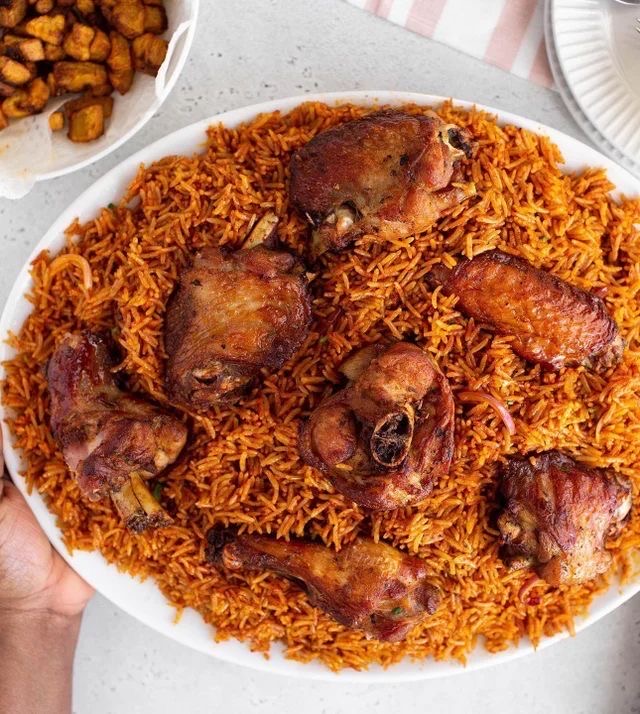
The cost of preparing a pot of jollof rice, a popular delicacy among Nigerians, rose from N25,486 in October 2025 to N30,435 in March 2026, a report has said.
SB Morgen (SBM) Intelligence, a geopolitical intelligence platform, disclosed the 19.4 per cent rise in the cost of preparing the delicacy in its latest report titled, “The SBM Jollof Index Q1 2026: from Hormuz to the pot ”.
The SBM Jollof Index tracks how much it costs to make a pot of jollof rice across 13 markets in six geopolitical zones for a family of five and uses the figures to measure the inflationary trends in the country.
Nigeria’s annual inflation rate rose to 15.38 per cent in March 2026, up from 15.06 per cent in February, the National Bureau of Statistics (NBS) said in its latest inflation report.
Food inflation eased slightly on a year‑on‑year basis to 14.31 per cent, but the month‑on‑month pace remained painfully high at 4.17 per cent.
The SBM Intelligence report said rural areas suffered the sharpest monthly spike, 6.73 per cent, reflecting how quickly transport costs bite where roads are few and markets thin.
The war in Iran that began on 28 February sent Brent crude from $82 to over $110 per barrel in three weeks. Nigeria, a crude exporter that imports nearly all its refined fuel, absorbed the shock instantly.
Lagos petrol jumped from N830 to N1,325 per litre. Abuja reached N1,367. Diesel, the fuel of logistics, surged past N1,500 per litre. Transport fares doubled and tripled.
The report said the cost of moving a tonne of grain from Kano to Lagos rose from N45,000 to N70,000.
“Every single ingredient in the jollof basket, whether grown in Benue or imported through Apapa, became more expensive to move, store, and sell.
“The national index trajectory captured the war’s timeline. Prices were already elevated in late 2025 but began to accelerate in February as news of escalating tensions filtered through commodity markets.
“By March, the index had jumped to N30,435, driven by sharp increases in the cost of rice, vegetable oil, and turkey,” the report said.
Market Prices
The report said Abuja’s two markets remain the most expensive in the country.
It said in March 2026, Wuse II rose to N36,750, a 14.7 per cent jump from February. Nyanya climbed to N31,800, a 12.8 per cent increase.
These, it said, are not gentle, seasonal adjustments but a direct imprint of a war fought five thousand kilometres away.
According to the report, the Bauchi’s Jollof Index fell from a peak above N41,000 in mid-2025 to N31,650 by March 2026.
“On paper, that looks like a correction. In reality, the market remains 35 per cent higher than a year earlier, and the downward movement owes more to a temporary harvest glut than to any structural improvement. The Iran war has added a powerful new upward force that threatens to reverse the decline,” it said.
The report added that Kano’s Jollof Index rose by a modest 0.7 per cent in March 2026, from N29,470 to N29,670.
“The suggests stability, but the baseline tells a different story. Kano’s index has climbed 53.8 per cent since September 2024.
“The market has not stabilised because conditions have improved; it has stabilised because prices have reached a ceiling that consumers can barely sustain,” it said.
According to the report, Awka and Onitsha recorded the only month-on-month declines in March 2026, each falling by 2.0 per cent to N24,250.
On the surface, it said this suggests resilience, stating that the reality is more fragile.
“Onitsha has still risen 16.2 per cent since October 2025, and the region’s insulation from global shocks is thinner than it appears.”
It said Port Harcourt recorded the steepest six-month increase of any market in the country, surging by 55.1 per cent from October 2025 to March 2026.
“Its Jollof Index now stands at N31,650, matching Bauchi as the joint third-most expensive market in Nigeria. Calabar Municipal and Bayside Mbakpa also rose, though more slowly. The South-South’s price explosion is a paradox of a port city starved of affordable food,” it said.
The report said Lagos markets experienced the country’s sharpest monthly acceleration in March 2026.
It said Trade Fair and Balogun both jumped by 23.1 per cent, from around N22,900 to N28,200.
“Ibadan’s Bodija and Dugbe markets rose more moderately but now exceed N28,000. The Southwest’s long-presumed insulation from national food inflation has evaporated in a single month,” it added.