











The Federal Government has signed a Memorandum of Understanding (MOU) with the International Institute of Tropical Agriculture (IITA) to improve soil health, enhance fertiliser efficiency and revolutionise the agricultural ecosystem.
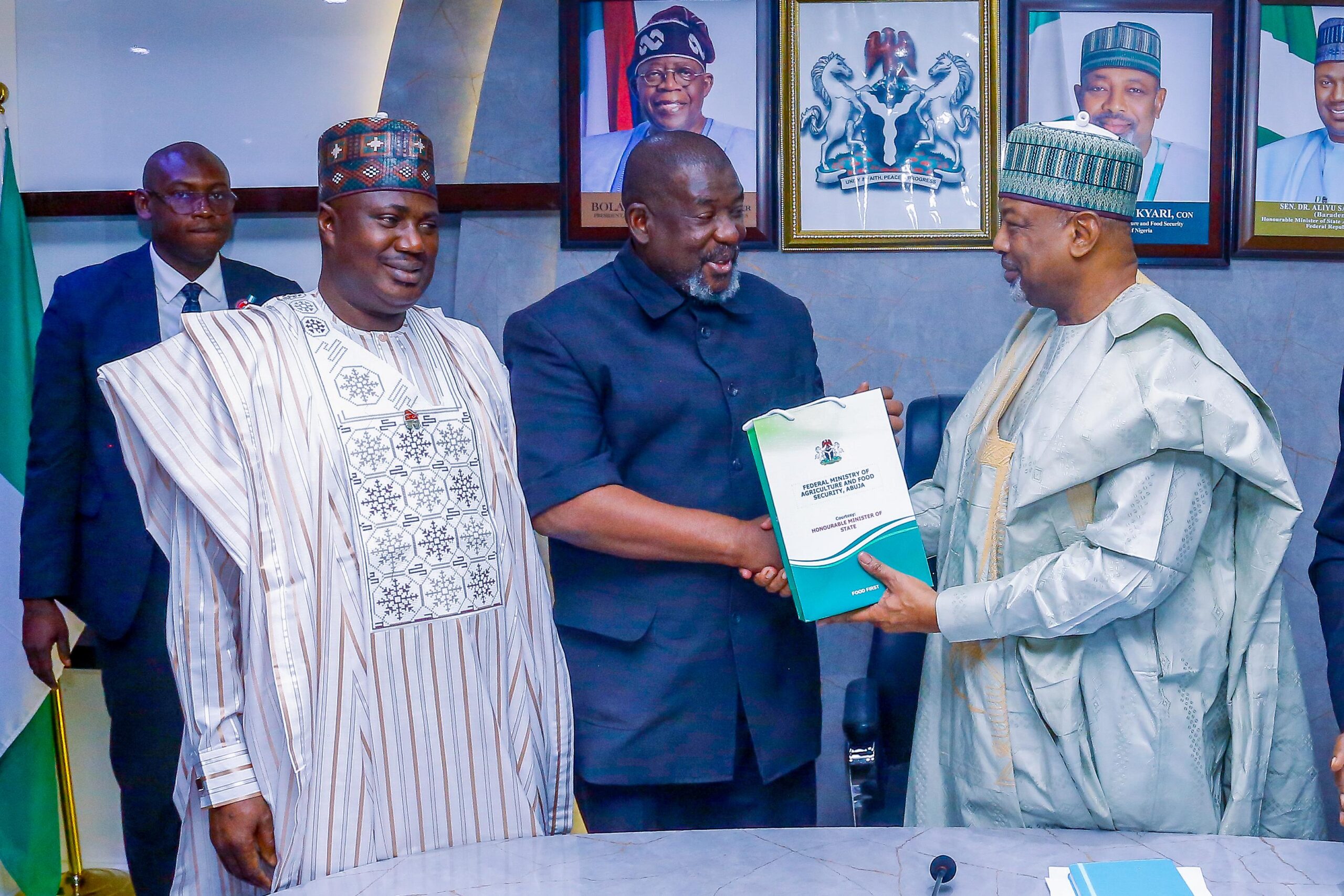
Minister of Agriculture and Food Security, Abubakar Kyari, while signing the MOU Ceremony in Abuja recently, said the initiative was part of a broader strategy to transform soil management practices, increase agricultural productivity, and ultimately achieve food sovereignty for the nation, as part of the presidential soil health scheme.
Mr Kyari stated that the agreement would provide farmers with data-driven recommendations for fertiliser use and crop selection, which can help optimise yields and reduce costs.
He added that the collaboration would also focus on improving land management and climate services, building national expertise, and creating a model for regional cooperation.
The minister stressed that both parties would work together to tackle issues such as soil nutrient depletion, erosion, and climate change effects using advanced technologies.
He pointed out that beyond food availability and affordability, the government was committed to ensuring nutritional quality and safety. If the soil is not healthy, no matter the effort, the desired results cannot be achieved.”
Also, the Minister of State for Agriculture and Food Security, Sabi Abdullahi, said that the purpose of this Memorandum of Understanding (MoU) was to articulate the understanding and willingness of the Parties (the ministry and IITA) to evaluate the benefits of their collaboration.
In addition, he said it would facilitate joint preliminary study and due diligence related to the proposed partnership, while also delineating the general intentions of the Parties regarding such collaboration.
He clarified that the MoU does not impose any legal obligations on either Party concerning the proposed collaboration.
He explained that the deal is anchored on strengthening agricultural land, management and climate change services with emphasis on soil health and fertiliser management in Nigeria, building national capacity through applied research, soil fertility practice management data systems, and policy support and promoting a model of collaboration that can inspire and inform similar efforts across the Economic Community of West African States (ECOWAS) region.
According to him, the scheme is designed to remove guesswork for Nigerian farmers by giving them facts on what to plant, where to plant, and the type of fertiliser required for each soil type.
He explained that laboratories would be sited across 774 local government areas, which would enable farmers to submit soil samples for analysis and receive recommendations similar to medical laboratory tests.
He revealed that since the inauguration of President Bola Tinubu, he has made agriculture a top priority in Nigeria through the Renewed Hope for Food Security and Sovereignty initiative.
Furthermore, he stressed that the commitment goes beyond mere political rhetoric, but is a serious mandate that the President had embraced with full dedication, including mobilising both local and international support to ensure food availability for all citizens in the nation.
He lauded the IITA for their strong collaboration and multi-faceted partnership with Nigeria over the years, focusing on transforming our agriculture for food security and economic growth through research, innovation, capacity building and technology transfer targeting climate resilience, data-driven farming and youth/women empowerment.
In his address, IITA Director General, Simeon Ehui, said that the agreement would support the Nigeria Farmers’ Soil Health Scheme (NFSHS) and the continued development of the Nigerian National Soil Information System (NNSIS)
Mr Ehui stated that the partnership, as a policy and delivery commitment, is designed to provide farmers with data-driven, location-specific recommendations rather than generalised messages.
He revealed that implementation would be channelled through the Regional Hub of Fertiliser and Soil Health for West Africa and the Sahel, hosted by IITA, to ensure coordination, common standards, and shared learning across countries.
READ ALSO: Nigeria, UAE sign agreement to boost trade ties
He said this approach assures a standards-based system rather than isolated interventions, while allowing Nigeria to benefit from regional expertise.
He emphasised that the initiative would deliver crop and location-specific fertiliser recommendations for key staples such as rice, maize, sorghum, wheat and yams alongside integrated soil fertility management, improved laboratory standards, digital soil information systems and capacity building.
He stated that IITA would provide research and technical expertise, training, soil testing support, and monitoring frameworks to ensure measurable outcomes.
“The real test of this MoU will be results-improved soil health systems, higher fertiliser use efficiency, stronger national capacity and accelerated progress towards food security,” he added.