










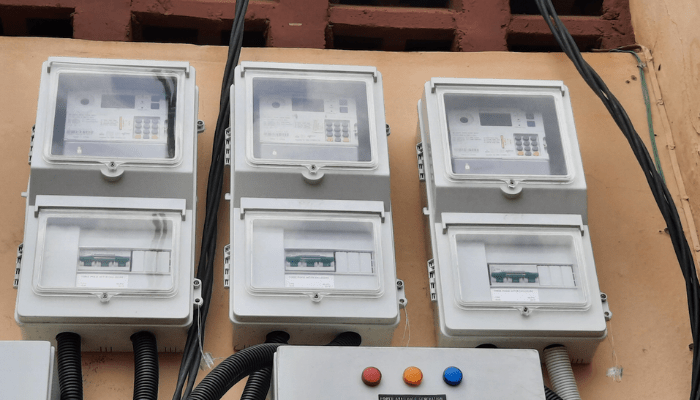
Over 2.8 million customers have been metered under the Presidential Metering Initiative (PMI) to bridge collection losses in the power sector, the Minister of Power, Joseph Tegbe, has said.
Mr Tegbe disclosed this on Thursday while delivering the opening address at the sixth annual conference of the Power Correspondents Association of Nigeria (PCAN) in Abuja.
The conference was themed “$1 Trillion Economy: Nigeria’s Roadmap to Reliable and Affordable Power Supply.”
Mr Tegbe, represented by the Special Adviser, Admin and Project, Federal Ministry of Power, Martins Olajide, said over the past three and a half years, President Bola Tinubu has tackled longstanding financial and infrastructure constraints in the sector.
“He approved a ₦3.3 trillion plan to settle verified legacy debts owed to generating companies. We have raised ₦1.23 trillion under that plan, easing the pressure on generators and improving their ability to pay for gas and maintain their plants.
“During the same period, over 2.8 million customers have been metered under the Presidential Metering Initiative to bridge collection losses,” Mr Tegbe said.
He said the Rural Electrification Agency (REA) has also connected universities, hospitals, and rural communities to solar power.

“We have commenced the construction of a new ultramodern National Grid Control Centre in Osogbo to replace the old one, built over 60 years ago,” he added.
Mr Tegbe said the theme of the conference speaks directly to a subject central to the ambition under the Renewed Hope Agenda.
“Every serious conversation about Nigeria’s industrial future eventually arrives at the question of power. Not because electricity is the only constraint on enterprise, but because it multiplies the effect of almost every other constraint.
“Reliable and affordable electricity allows businesses to produce more and gives them the confidence to invest,” he said.
He said Mr Tinubu has set a clear economic direction for the administration — to build a more productive, resilient and investment-led one-trillion-dollar Nigerian economy.
“That ambition cannot rest on consumption alone. It must rest on production. And production, at scale, must rest on reliable, affordable and commercially sustainable electricity,” the minister said.
Vandalism a major threat
The minister said vandalism remains a serious threat to the power sector, damaging critical infrastructure and disrupting electricity supply.

He said Mr Tinubu has approved the implementation of a coordinated anti-vandalism campaign involving the relevant security agencies, backed by a strengthened legal framework to protect power assets, deter sabotage and hold offenders accountable.
Mr Tegbe said the efforts are aimed at creating a sustainable industry that can support the achievement of the $1 trillion economy ambition.
He urged the press to play their educative role, especially by giving citizens the facts they need to form their own judgements and take part in public life.
In his address, the Chairman of PCAN, Obas Esiedesa, said one critical issue that deserves urgent attention is the recurring seasonal decline in electricity generation, particularly between November and March.
During this period, he said reduced water inflows into hydroelectric power stations often affect generation, while gas supply constraints to thermal power plants further compound the problem.
“This recurring challenge has continued to undermine efforts to achieve stable electricity supply. It is therefore important for the government, regulators, electricity generation companies and gas suppliers to strengthen collaboration and develop sustainable arrangements that will guarantee adequate gas feedstock for thermal power plants, especially during periods of reduced hydro power generation.

“We must also address the larger issues of inadequate transmission and distribution infrastructure, liquidity challenges, investment gaps, regulatory uncertainties and the need for improved efficiency across the electricity value chain,” Mr Esiedesa said.
$1trn economy needs reliable power
He said there is no gainsaying that reliable and affordable electricity is fundamental to achieving the $1 trillion economy ambition.
“No economy can sustainably attain significant growth without adequate and dependable power supply to support industries, businesses and households.
ALSO READ: Nigeria’s power generation utilisation hits 85% in October – NERC
He said discussion at the conference must go beyond identifying the challenges.
“We must interrogate existing policies and reforms, examine investment opportunities, address infrastructure gaps, explore sustainable financing options and develop workable strategies for improving electricity supply across the country,” he added.
Mr Esiedesa said the sector must also address the larger issues of inadequate transmission and distribution infrastructure, liquidity challenges, investment gaps, regulatory uncertainties and the need for improved efficiency across the electricity value chain.

He said the decentralisation of the electricity market under the Electricity Act 2023 also presents opportunities for increased investment, innovation and improved service delivery.
However, he said, these opportunities must be matched with effective coordination, clear regulatory frameworks and the necessary infrastructure to ensure that the reforms translate into tangible benefits for electricity consumers.