




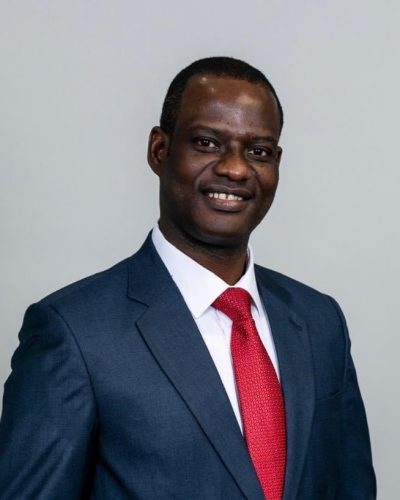





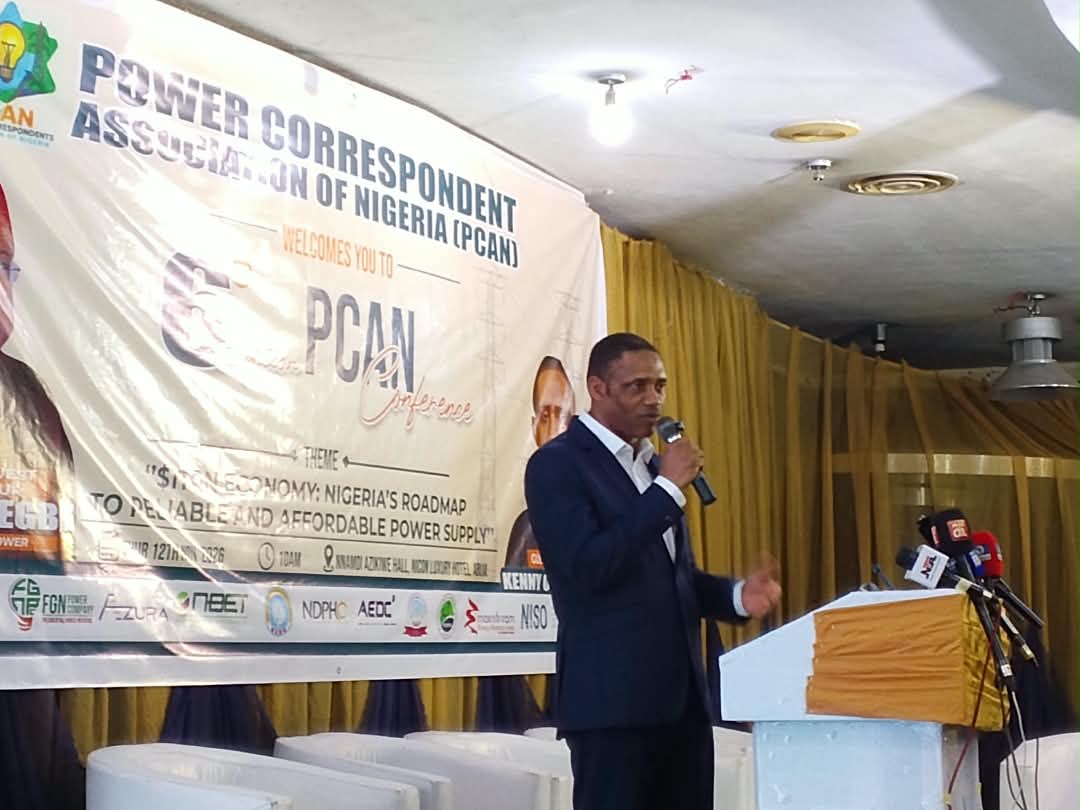
The Managing Director/Chief Executive Officer of FGN Power Company Limited, Kenny Anuwe, has said government alone is providing more than 95 per cent of new infrastructure investment in Nigeria’s power sector, a situation he described as unsustainable and contrary to the purpose of privatisation.
Mr Anuwe disclosed this on Thursday while delivering his keynote address at the sixth annual conference of the Power Correspondents Association of Nigeria (PCAN) in Abuja.
The conference was themed “$1 Trillion Economy: Nigeria’s Roadmap to Reliable and Affordable Power Supply.”
Mr Anuwe said Nigeria can build a trillion-dollar economy by leveraging bankable and scalable investment models for its electricity investments.
“We need infrastructure delivery architecture that’s treated as an economic resource. We need to stop looking at electricity investments as things that we are doing for the sake of doing them. There needs to be a simplification of how all of us operate, especially when we are to work together.
“So there is a serious problem which has left the government alone in the space of providing more than 95 per cent of new infrastructure investment in the sector. Surely that’s not right. That’s not why we privatised. We have all kinds of excuses for why that has happened. And a lot of them are legitimate.
“But it’s time for us to move from excuses to saying, how do we fix it? It does not need the government to do everything. I believe that the government cannot do everything.
“And we need to change our minds about that reality. The government can provide the enablers, provide infrastructure, delivery, and market conditions under which public and private capital can perform effectively. And this is where we need to be more effective,” Mr Anuwe said.
₦10trn spent, still not enough
Mr Anuwe said the government has invested over ₦10 trillion in the electricity sector since the advent of privatisation.
“But is it enough? How much money is enough? If government didn’t invest that money, the industry would not be standing today.
“No matter how you look at it, no matter how critical you are about what government’s role is, if government did not put that money in, the industry would not be standing,” he said.
However, he said, despite that significant amount of money, it is frustratingly limited in terms of what the country’s ambitions are.
He said Nigeria has to approach implementation differently to achieve the reality.
“We have reached a place where our limitations are clearly understood, and we appreciate the opportunities that we have.”
Speaking further, Mr Anuwe said the Presidential Power Initiative’s role at FGN Power Company is to coordinate implementation, structure commercial deals, secure financing, and deliver incremental power.
“Our framing agenda is really very crystal clear, which is to ensure that there is a last-mile impact on everything we do, that there is an end-to-end deployment, that we are focused, as the Minister’s speech said earlier, on key economic centres, load centres with growth potential,” he said.
He noted that the company has brought all stakeholders behind one delivery plan, structured commercial deals with original equipment manufacturers and EPCs with capacity to mobilise financing and engage utilities, and closed a couple of those deals.
“The equity of the federal government is, in every case, been 15 per cent of that,” he said.
He said transmission lines are a major part of the sector’s constraint, and about $237 million has been poured by this administration into electricity sector infrastructure relating directly to transmission lines.
“16 transmission lines. Altogether about 606 kilometres. And the cumulative throughput in terms of capacity improvements is again just over 7,000 megawatts,” he said.
Mr Anuwe said the company has prepared for distribution investments, but there is a constraint of overlap with another government agency also working in that area.
“The ambition is very clear. That we must provide as much support even to the Distribution Companies (DisCos) as possible. But we have our structure in place. And we are actually ready to fund whichever DisCos are actually interested in engaging us,” he said.
He said the overall impact targeted by 2029 is 5,540MW, with improved reliability by at least 60 per cent of what is currently experienced on the grid.
“That is significant. That is something that we absolutely can look forward to in Nigeria,” he said.
New financing models
Mr Anuwe said FGN Power Company is currently targeting a $2.3 billion project, with $1.3 billion coming from Europe and $1 billion from China.
He said the future is that FGN Power Company is capitalised by at least $1 billion, “AFC has promised to match that amount, and other financiers need to bring in $18 billion into the sector.
“We’re not saying that the money comes to FGN Power Company, but we’re saying it comes into the sector in such a way, with such investment models that allow us to scale and to move quickly,” he said.
ALSO READ: Electricity: Over 2.8 million customers metered under presidential metering initiative – Tegbe
He said the current model uses federal government sovereign backing and 15 per cent counterpart funds, but Nigeria needs to move to other models like viability gap financing and blended finance to crowd in institutional and private capital.
“It does not need the government to do everything. I believe that the government cannot do everything. And we need to change our minds about that reality. The government can provide the enablers, provide infrastructure, delivery, and market conditions under which public and private capital can perform effectively.”
He stated that infrastructure remains critical, but it is not all Nigeria needs.
“It is not only the federal government that should be held to account, but all of us, including the private sector, that should actually bring in the necessary capital to achieve the vision of a $1 trillion economy,” he said.