



Nigeria’s power sector experienced significant developments in 2025, marked by both achievements and setbacks. The country generated its highest-ever electricity output, but persistent challenges like vandalism and debt continue to affect the sector.
In the year, the government took steps to address these issues, planned to regularise electricity tariffs and unbundle the Transmission Company of Nigeria (TCN) into two entities.
The country also successfully conducted a grid synchronisation test with the West African Power Pool (WAPP) system, marking a significant step towards regional energy cooperation.
In this report, ThePreview Media presents the key events that shaped the sector in 2025.
Tariff regularisation
In February, the Nigerian government announced plans to regularise the country’s electricity tariffs. At the time, the government said the move aims to address the significant disparity in tariffs between different consumer bands.
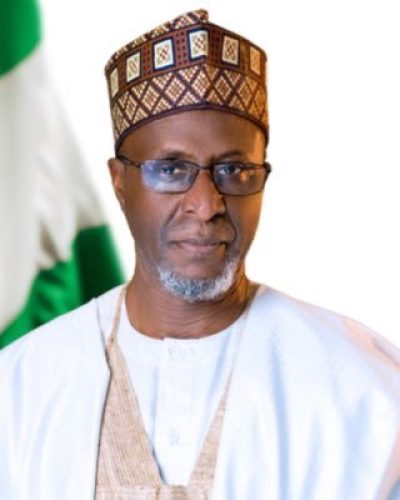
The Minister of Power, Adebayo Adelabu, at the time, said the current tariff structure is unfair, with consumers in Band B paying N63 per kilowatt-hour for 17-18 hours of electricity supply, while those in Band A pay N209 per kilowatt-hour for 20 hours of supply.
He emphasised that any adjustments to the tariff structure will not exceed the current Band A rate. Instead, the goal is to regularise the tariffs across different bands, ensuring a more equitable and sustainable system.
Highest electricity generation
In March, the Transmission Company of Nigeria (TCN) announced that Nigeria generated 5,801 megawatts of electricity, the highest ever by the country.
The Managing Director and Chief Executive Officer of TCN, Suleiman Abdulaziz, said the company successfully transmitted all the generated electricity.
“…for the first time in our nation’s history, the power sector recorded a new and unprecedented peak generation of 5,801.84 megawatts of electricity on March 4, 2025, at 21:15 hours. The TCN efficiently evacuated this bulk power to distribution load centres nationwide,” Mr Abdulaziz said.
He attributed the achievement to the hard work and dedication of engineers in the generation, transmission and distribution companies of the power sector value chain.
TCN unbundling
In April, the Nigerian government took a significant step towards reforming the country’s electricity sector by unbundling the TCN into two entities: the Independent System Operator (ISO) and the Transmission Service Provider (TSP).
Mr Adelabu, at the time, said the Nigerian Electricity Supply Industry (NESI) transmission sub-sector has been identified as a critical weak point in the electricity value chain.
“To align with the Electricity Act 2023 and the industry’s demands, it’s time to restructure the Transmission Company of Nigeria (TCN) into two entities: the Independent System Operator (ISO) and the Transmission Service Provider (TSP),” Mr Adelabu said.
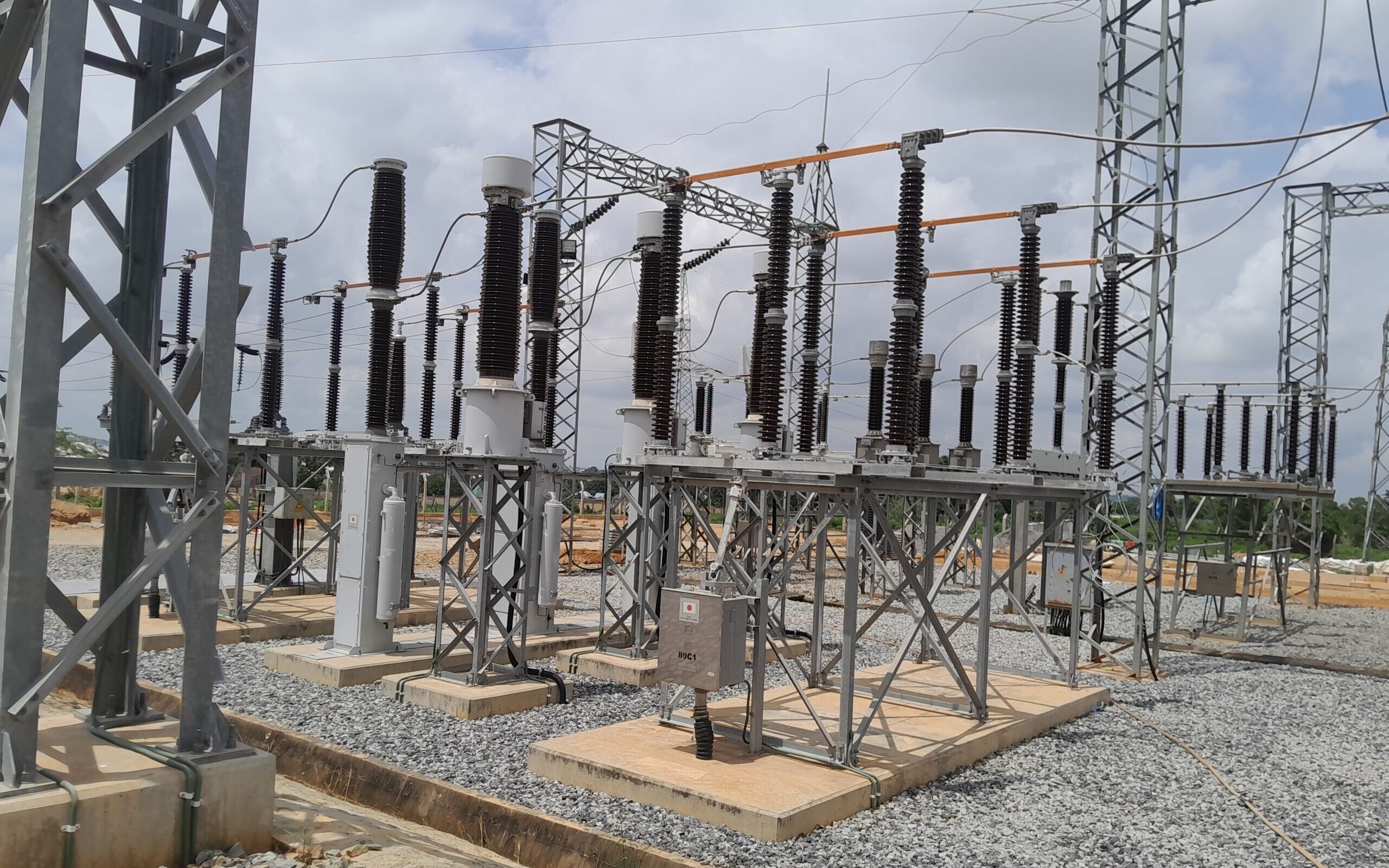
Under the new structure, the TSP oversees TCN’s physical infrastructure, including transmission towers, power lines, and substations, while the NISO takes charge of system operations, managing load allocation from generation companies to distribution companies and eligible customers.
Vandalism
Vandalism of transmission infrastructure and distribution equipment continued to be a major concern in 2025.
On 17 January, the TCN reported that its 132kV transmission line and underground cables, which supply power to the central area of Abuja and its environs, were vandalised, resulting in a power outage at the seat of the Nigerian president.
On 19 January, the TCN said over 18 transmission towers were vandalised between 9 and 14 January across Rivers, Abia, and Kano states.
Again in the month, the TCN said its Tower T195 along the Ugwuaji–Makurdi 330kV transmission line was vandalised on 25 January, at Watuolo village, Utonkon, in the Ado local government area of Benue State.
To address this, Mr Adelabu allocated N8 billion in its 2025 budget specifically for advocacy, education, enlightenment, and the provision of technology to protect power infrastructure.
He said the fund will be used to enlighten Nigerians on the importance of protecting and taking ownership of power infrastructure and other national assets.
“Dynamites were used to bring down the towers and the lines. This is just one of many such attacks across the nation. We have received support from the nation’s security agencies to address these attacks, but it has not abated,” the minister said in January.
In July, TCN said a vandal was electrocuted while attempting to vandalise transmission tower 34 along the Nkalagu-Abakaliki 132kV transmission line in Ebonyi State.
On 16 December, the Nigerian Independent System Operator (NISO) said electricity generation on the national grid dropped due to gas supply constraints caused by gas pipeline vandalism.
NISO said the incident occurred within the upstream gas supply network, affecting gas availability to several power generation facilities.
On 21 December, TCN said it recorded 131 vandalism incidents across its network from January to November 2025 alone.
Grid synchronisation
In November, Nigeria successfully conducted a grid synchronisation test connecting the national electricity grid with the interconnected West African Power Pool (WAPP) system.
At the time, Mr Adelabu said the exercise represents the first time in history that the country has operated in a unified, stable, and fully harmonised configuration with the rest of the sub-region.
He explained that the synchronisation exercise, conducted between 05:04 a.m. and 09:04 a.m., on 8 November involved the Nigerian grid, which includes the Niger Republic and parts of Benin and Togo and the rest of West Africa’s interconnected systems covering Ghana, Côte d’Ivoire, Burkina Faso, Liberia, Sierra Leone, Guinea, Senegal, The Gambia, Guinea Bissau, and Mali.
While this is not yet a permanent synchronisation, he said the successful test clearly demonstrates that regional technical alignment is feasible and marks a major step toward eventual full integration.
Electricity debt saga
In February, Mr Adelabu said the Nigerian government owes electricity generation companies (GenCos) and distribution companies (DisCos) in the country over N4 trillion in debt.
READ ALSO: Dangote Refinery speaks on shutdown rumours
In April, GenCos warned of imminent shutdown if the government failed to take definite steps to address the N4 trillion debt owed to them for the electricity generated and supplied to the national grid.
The firms, at the time, noted that the debt, which includes N2 trillion for 2024 and N1.9 trillion in legacy debts, is pushing the continued operation of their power generation plants to the brink.
In July, President Bola Tinubu appealed to the GenCos to give the government ample time to complete the verification and validation of the longstanding debt owed to them. He later gave the go-ahead to the plan to issue a N4 trillion bond to clear the debt.
Outlook
The Centre for the Promotion of Private Enterprise (CPPE), in its recent policy brief released in December, said the country’s power sector remains one of the most challenging areas of the country’s economic reform agenda.
The CPPE chief executive, Muda Yusuf, said that despite multiple reform efforts over the years, the sector continues to face deep structural, financial, and governance challenges.
“These challenges are multi-dimensional, spanning political economy constraints, tariff distortions, weak investor capacity, transmission bottlenecks, and a persistent liquidity crisis across the value chain,” he said.
Mr Yusuf said the power sector reform in Nigeria is a long-term and incremental process rather than a quick fix.
“The sector’s complexity, political economy constraints, and institutional weaknesses mean that progress will be gradual.”
However, he warned that without decisive action to address structural inefficiencies, improve governance, and ensure fiscal discipline, the current trajectory will remain unsustainable.
“A balanced approach combining short-term government support with medium to long-term structural reform is essential to building a financially viable, reliable, and inclusive power sector that can support Nigeria’s economic growth and development,” he added.