







The Nigerian Midstream and Downstream Petroleum Regulatory Authority (NMDPRA) on Wednesday said the economic reforms of President Bola Tinubu have led to a significant reduction in fiscal economic losses from importing petroleum products, amounting to over N6 trillion in the first nine months of 2025.
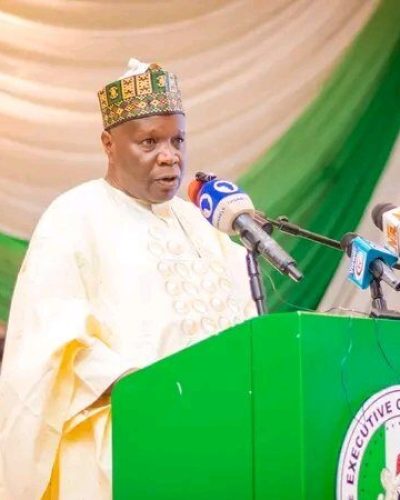
The NMDPRA Chief Executive, Saidu Mohammed, disclosed this while speaking at the ongoing Nigeria International Energy Summit (NIES 2026) on Wednesday.
He highlighted key factors driving this achievement, including the full deregulation of the downstream sector, harmonisation of the forex market, and incentivising gas use and the trading of crude and products in Naira.
“The bold economic reforms of His Excellency, President Bola Ahmed Tinubu, have created the renaissance that the downstream sector is enjoying and would continue to leverage upon for sustained sectoral growth in the future.
“The cumulative impact of the full deregulation of the downstream sector, the harmonisation of the forex market, the incentivisation and deepening the use of gas and the trading of crude and product in Naira has reduced the fiscal economic losses of importing petroleum products by over N6 trillion in the first nine months of 2025,” Mr Mohammed said.
For decades, he said, the downstream value chain has been associated with negative sectoral performance indicators such as infrastructural deficit, weak market structures, inadequate investment, sub-optimal supply, poor regulatory chain efficiency, compliance, and unacceptable operational safety and environmental indices.
“Today, I am pleased to affirm that this narrative is rapidly changing and that the sector is truly witnessing the early but irreversible signs of a renaissance-type transformation that is driven by bold reform; enabled by investment; and sustained by effective market and operational regulatory enablement,” he added.
He said in the few years of the operationalisation of the new legal framework of the oil and gas sector in Nigeria Petroleum Industry Act (PIA 2021) the Nigerian downstream sector has evolved into a fully liberalised market and is no longer defined by scarcity and supply uncertainty.
“Supply stability has consistently ensured sufficiency of all petroleum products.”
According to him, the pricing structure of the downstream sector is becoming more driven by the fundamentals of the market and generally attaining the stability level required for encouraging investment in this expansive sector of the economy.
He noted that the supply chain landscape of the sector, which depended significantly on import of nearly all petroleum products for a long time, is rapidly transforming with growing supply through the nation’s domestic refining capacity, expanding gas-based alternative fuels, improved logistics, and increased private-sector participation.
“At the heart of this transformation stands the Dangote Petroleum Refinery, the largest single-train refinery in the world with an installed capacity of 650,000 barrels per stream day (bpsd), which is currently contributing a significant portion and in some cases 100 per cent of our domestic requirement of petroleum products,” he said.
He noted that the strategic efforts of the government and the industry in this decade of gas are not merely about volumes; they are also about unlocking gas for industrial development, cleaner power, transport fuels, and manufacturing linkages that will transform Nigeria’s energy mix and broaden economic impact.
READ ALSO: NMDPRA warns against fake recruitment
Speaking further, Mr Mohammed said infrastructure alone does not create a renaissance.
“Markets flourish only where rules are clear, institutions are credible, and investors trust the system. This is why regulation sits at the heart of Nigeria’s downstream transformation.
“The downstream renaissance we seek cannot be funded by the public sector alone. It requires long-term private capital (local and international) flowing confidently into refineries, depots, pipelines, retail networks, gas infrastructure, and new energy value chains.”
He said Nigeria’s downstream renaissance is not the responsibility of regulators alone, adding that it is a shared project between government, investors, operators, financiers, and consumers.
“Our role is to set the rules, enforce them fairly, and inspire confidence. Your role is to invest, innovate, and operate responsibly.
“We will continue to collaborate with all relevant institutions and industry players to ensure that the country’s midstream and downstream petroleum sector remains healthy, competitive and attractive, and that Nigeria continues to provide the leadership required in the energy ecosystem of the continent,” he said.