











The Nigerian National Petroleum Company Limited (NNPC Ltd) said Tuesday it is targeting gas production of 10 billion standard cubic feet per day (bcf/d) by 2027 and 12 bcf/d by 2030, up from the current 7.5 bcf/d.
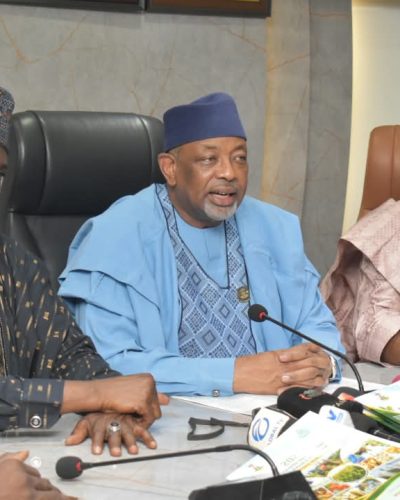
The Group Chief Executive Officer of NNPC Ltd, Bashir Ojulari, disclosed this on Tuesday in a keynote address at the Nigeria International Pipeline Technology and Security Conference (NIPITECS) 2026 held in Abuja.
Mr Ojulari, represented by NNPC Gas Infrastructure Company (NGIC) Managing Director Audu Ibrahim, said achieving the production targets would require innovative financing models, strategic partnerships, reliable pipeline infrastructure, and stronger indigenous technical capacity.
“Africa’s energy future depends as much on the partnerships we build above ground as on the resources we hold beneath the ground. Let me illustrate this with three key pipeline projects: the Obiafu-Obrikom-Oben (OB3), the Ajaokuta-Kaduna-Kano (AKK) and the West African Gas Pipeline (WAGP),” he said.
On OB3, Mr Ojulari said the project involved overcoming a difficult technical challenge, particularly the River Niger crossing, to complete a critical connection.
“It is a 105-kilometre, 48-inch pipeline designed to deliver up to two bcf/d from Rivers State to Edo State. For years, the River Niger crossing delayed this vital east-west connection. On April 26, through our subsidiary, NGIC, we completed the crossing,” he added.
This, he said, involved drilling approximately two kilometres beneath the river, using Horizontal Directional Drilling (HDD), adding that it completed pre-commissioning in August 2026, while the OB3 was ready for first gas.
He emphasised that the lesson was clear, adding that technical expertise had to be matched with contract re-engineering, indigenous capability, patience, financing and a shared determination among NNPC, NGIC and its contractors to complete the project.
On the 640-kilometre AKK gas pipeline, he said the $2.8 billion project designed to transport 2.2bcf/d had reached about 95 per cent completion, with gas delivery to Abuja targeted before the end of 2026.
He said the AKK project demonstrated the potential of innovative infrastructure financing, having secured $1.5 billion based on projected dividends.
Mr Ojulari also highlighted the West African Gas Pipeline, a 681-kilometre system transporting Nigerian gas to Benin Republic, Togo and Ghana.
He said regional gas infrastructure projects, including the proposed Atlantic African gas pipeline linking Nigeria towards Morocco, would strengthen energy integration and create opportunities for economic development across the continent.
He said that intergovernmental agreements providing a legal framework for the Atlantic coastal gas project were signed in Freetown, Sierra Leone, in July.
Oil production
On production performance, Mr Ojulari said the country’s oil production had risen to 1.71 million barrels per day, its highest level in five years.
He attributed it to improved pipeline availability, which he said had approached 100 per cent for the first time in two decades, to coordinated security efforts involving the Office of the National Security Adviser, NNPC Command Centre and community surveillance structures.
He emphasised the need to sustain the gains through stronger community engagement and effective implementation of Host Community Development Trusts under the Petroleum Industry Act (PIA).
According to him, host communities must be regarded as active partners in protecting critical energy infrastructure rather than passive neighbours.
He said building local technical expertise, alongside innovative financing and effective security arrangements, would be critical to developing sustainable pipeline infrastructure.
Mr Ojulari urged industry stakeholders to deepen collaboration and adopt practical financing solutions capable of attracting investments into Nigeria’s pipeline network.