




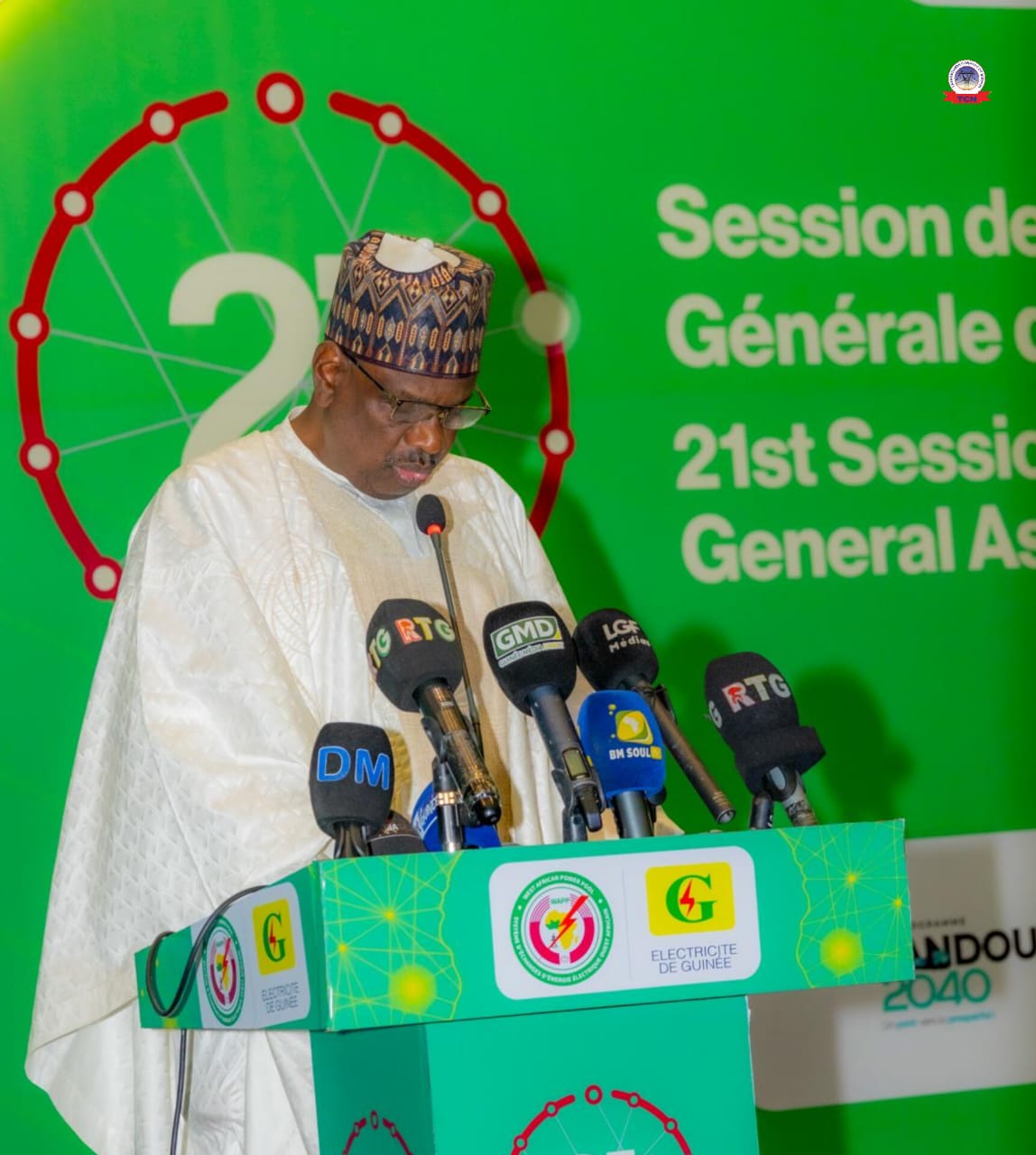
Prime Minister and Head of Government of Guinea, Amadou Oury Bah, has urged member states of the West African Power Pool (WAPP) to prioritise regional electricity complementarity over national isolation.
Mr Bah made the call as he opened the 21st session of the WAPP General Assembly in Conakry on 6 and 7 November, the Transmission Company of Nigeria (TCN) said in a statement on Wednesday.
Speaking on behalf of President Mamadi Doumbouya, the Prime Minister conveyed the President’s greetings to all delegations, executives, independent power producers and technical partners gathered in Conakry.
He called on member states to build a true West African energy community based on shared standards and performance.
He described energy as the foundation of a nation, a matter of sovereignty, competitiveness, social progress and stability, and pointed to the historic interconnection of the fifteen countries of the sub-region as proof of what collective action can achieve.
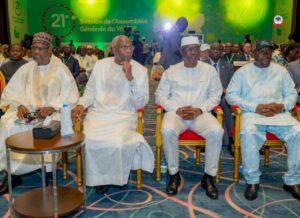
He reaffirmed Guinea’s commitment to regional integration and set out Guinea’s energy ambition.
He cited the strategic importance of the Kaleta and Souapiti hydropower dams, and future projects including Koukoutamba, Sambangou and Amaria, positioning Guinea to become a regional electricity hub able to supply the sub-region and anchor West African energy solidarity.
“The Republic of Guinea, under the leadership of His Excellency the President of the Republic, reaffirms its readiness to support this collective ambition and to contribute actively to the development of a more integrated, efficient, and united West African energy space,” he said.
Addressing the Assembly, the Minister of Energy, Laye Sékou Camara, said the 21st session must be a stage of decision and confidence, giving clear guidelines, consolidating governance and transforming commitments into tangible results.
He stressed that the vitality of WAPP depends on the discipline of its members, including compliance with commitments and the regular settlement of statutory contributions, which he described as the foundations of its autonomy, credibility and effectiveness.
He said the strengthening of national access and regional exchanges complement each other rather than oppose each other and noted that installed capacity should not be confused with capability or with the ability to transport it to the consumer.
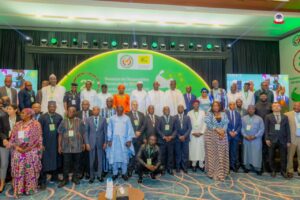
He described interconnection as mutual insurance between states, recalling that Guinea itself benefited from Senegal’s energy support after the fire at the Corinthie depot in December 2023.
He linked the regional ambition to Guinea’s Simandou 2040 programme and the objective of universal access to electricity, and called for credible liquidity support mechanisms, respected common rules, strengthened institutional capacities and greater participation of women in the sector’s professions and decisions.
Also speaking, the Chairman of the WAPP Executive Board, Sule Abdulaziz, informed the Assembly that the second phase of the regional electricity market will be launched in early 2027.
This, he noted, will introduce competition through a day-ahead market, where the price of electricity traded between countries will be determined by supply and demand within an organised, transparent and non-discriminatory framework.
“This is not merely a technical development; it represents a fundamental step forward,” he said, noting that two decades of investment in transmission lines, common rules and institutions must now translate into a market that works in practice.
He said transition will require market discipline, with rules understood and applied by all, reliable data exchanged in real time, rigorous metering, trustworthy settlement arrangements, and congestion and risk management commensurate with traded volumes.
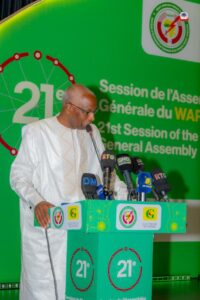
Mr Abdulaziz stated that the ongoing institutional reform will establish an independent system and market operator, separating system operation from market operation to ensure fairness in decision-making and shield the process from undue external influence.
He noted that the transition must be managed methodically, without disruption and without weakening the operational continuity ensured by the Information and Coordination Centre.
He added that no market can thrive without trust, and trust rests on the financial security of transactions, which is the purpose of the Liquidity Enhancement Revolving Fund currently under study and structuring.
“Statutory contributions are not an administrative formality; they are the foundation of our autonomy and our capacity to act,” he said, calling on chief executives to treat payment as a personal priority.
ALSO READ: Nigeria must convert hydrocarbon reserves to production to guarantee energy security – Seplat
In his address, the Secretary General of WAPP, Abdoulaye Dia, highlighted the synchronisation of the electricity networks of the fifteen West African countries as a major milestone, after they successfully achieved four hours and five minutes of synchronisation on 8 November 2025.
He said the test scheduled for November 2026, targeting forty-eight hours of synchronisation, is intended to consolidate that performance and prepare the conditions for permanent synchronisation.
Mr Dia noted that member states and electricity companies face growing expectations on quality of service, security of supply, competitiveness and access to electricity.
He said WAPP has a particular responsibility “to make interconnection an operational cooperation, a sustainable, structured and credible reality, so that electricity becomes a real lever for economic and social transformation at the regional level.”