






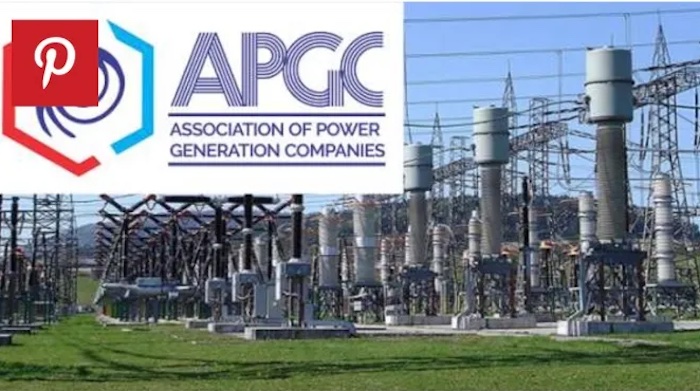
The Association of Power Generation Companies (APGC) has clarified misconceptions about capacity payments, Power Purchase Agreements (PPAs), and operational realities in Nigeria’s electricity sector.
APGC, in a statement signed by its Managing Director/Chief Executive Officer, Joy Ogaji, highlighted the challenges facing the sector, including non-payment of capacity made available, which disincentivises investment in recovering mechanically unavailable capacity.
Ms Ogaji said the current practice of only recognising called-up capacity and ignoring capacity components made available sends the wrong signal to investors and undermines the aim of the sector’s reform.
She emphasised that electricity is not stored at power plants and once produced, it leaves the generating plant and is consumed within a millisecond.
“In every electricity market, there are integral parts, and some of these parts are contained in the Power Purchase Agreements (PPA) that are major and cannot be politicised or swept under the carpet, else, a party to the agreement may be carrying a serious risk burden,” she said.
She pointed out that the lack of active PPAs has made it impossible to secure Gas Supply Agreements (GSAs), exposing them to operational and regulatory risks.
She noted that the current market design does not accurately reflect incentives and enforcement measures for performance, and that poor performance is contagious.
“The lack of PPAs also means that the Power Generation Companies (GenCos) are exposed to the vagaries in the downstream in the electricity market: when the transmission company is unable to wheel power efficiently, load rejection occurs, resulting in idle generation capacity, and when the DisCos are unable to distribute available power efficiently, load rejection also occurs.
“A third exposure the GenCos face occurs when the DisCos are unable to efficiently collect revenue for energy distributed and sold and hence cannot make payments for energy taken,” she said.
She said electricity requires huge investments, recouped over very long periods.
According to her, GenCos have not been receiving full payment for electricity supplied, while gas suppliers have also not been receiving full payments for gas supplied to the GenCos, leading to sub-optimal growth and inefficient operation.
She explained that the current state of the market, where a generation company is short-changed for the benefit of other market participants, negates the tenets of the Multi-Year Tariff Order (MYTO), a tariff model for incentive-based regulation that seeks to reward performance above certain benchmarks.
“Reduces technical and non-technical/commercial losses and leads to cost recovery and improved performance standards from all industry operators in the Nigerian Electricity Supply Industry.”
From the foregoing, she said the legacy GenCos and the National Integrated Power Project (NIPP) plants in the market have been operating without adequate sector risk protection, hence exposed to various operational and regulatory risks.
READ ALSO: Electricity: NBET announces issues of N501 billion bond to clear GenCos’ debts
Over N6.2 trillion debt is owed
She said GenCos are owed over N6.2 trillion, which doesn’t represent their full entitlement contractually.
“The foregoing goes to buttress the fact that GenCos’ outstanding amount, which is over N6.2 trillion, does not represent all their entitlement, contractually.
These debts she said continue to accumulate because GenCos are not fully paid for their output, despite incurring high costs for gas supply, plant maintenance, foreign exchange exposure, and financing obligations.
“This persistent non-payment has rendered most GenCos technically insolvent and severely constrained their ability to invest in capacity maintenance and expansion,” she added.
She stated that GenCos are not beneficiaries of the current subsidy regime but its biggest victims.
“GenCos are only requesting their receivables, which have accumulated over the years, as can be verified from the MYTO and the Nigerian Bulk Electricity Trading (NBET) documents for power generated and consumed, but only 35 per cent is paid, leaving a huge contagion that is not cash-backed since 2015 to date,” she said.