






![Nigerian food market. [Photo credit: The Guardian NG]](https://thepreviewmedia.com/wp-content/uploads/elementor/thumbs/Nigeria-Food-market0-rnhwouhomgb6qrfulkpmvgq8nzn41y6tcgi4mirafc.jpg "Nigerian food market. [Photo credit: The Guardian NG]")

The federal government has called on African countries to utilise strategic public procurement to enhance logistics systems, reduce post-harvest losses, and improve food security across the continent.
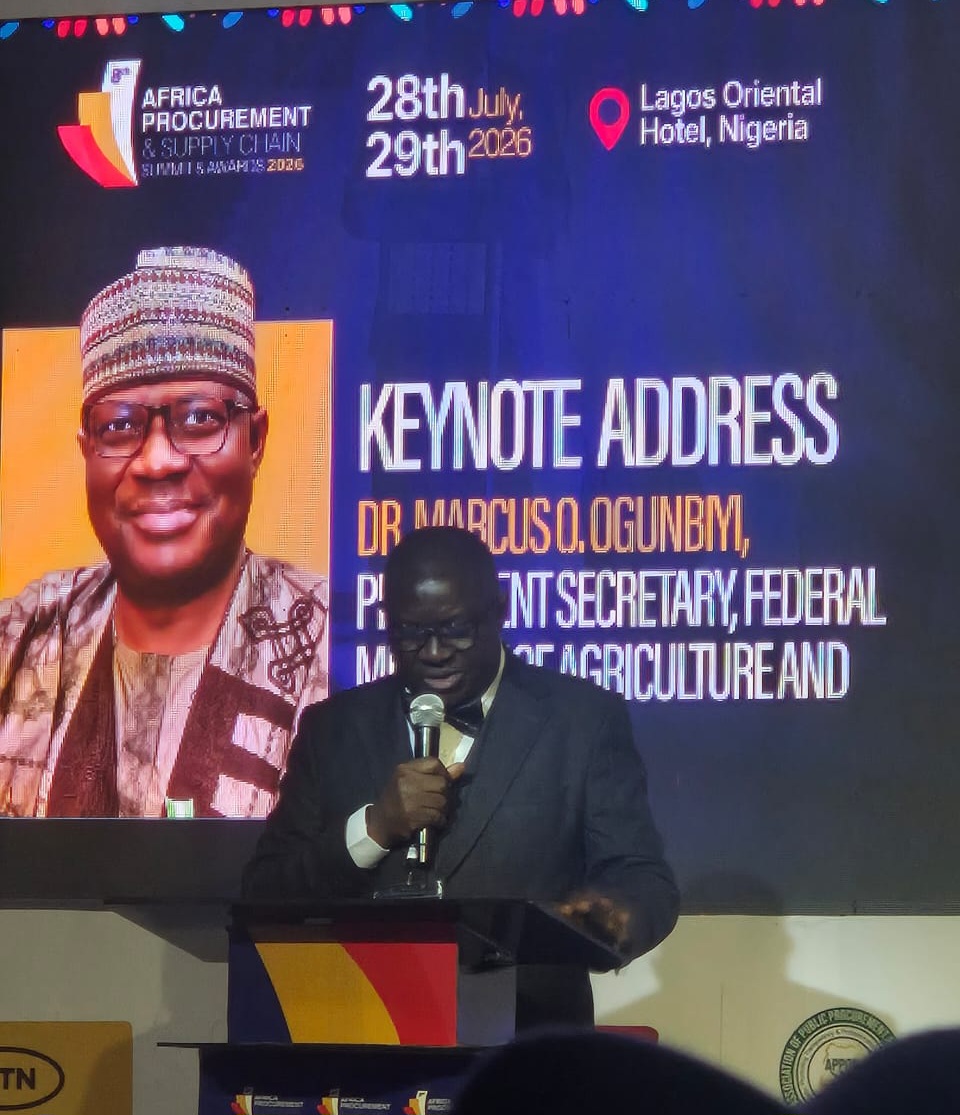
The Permanent Secretary of the, Federal Ministry of Agriculture and Food Security, Marcus Ogunbiyi, made the call on Tuesday in Lagos at the Africa Procurement and Supply Chain Summit and Awards 2026, according to a statement by Ezeaja Ikemefuna, Head of the Department of Information in the ministry.
Speaking on the theme, ‘Public Procurement is Live: Creating Opportunities for Sustainable Growth in Africa’ Mr Ogunbiyi said procurement had moved beyond a back-office function to become a strategic instrument for economic transformation and service delivery.
He said with governments spending between 12 and 20 per cent of GDP through public procurement, every procurement decision represents an investment that can stimulate industrial growth, create jobs, improve infrastructure, and deliver greater public value.
Weak logistics driving food losses in Africa
He stressed that for the agricultural sector, efficient procurement must directly address logistics and supply chain gaps that continue to drive food losses and high prices.

“This is particularly significant for Africa, where supply chain inefficiencies remain one of the greatest constraints to economic growth and regional competitiveness. Poor transport networks, inadequate logistics infrastructure, fragmented cross-border systems, high freight costs, limited warehousing capacity, and delays in the movement of goods continue to increase the cost of doing business and undermine the efficiency of public investments,” he said.
For farmers, he said these challenges are even more pronounced, noting that farmers depend on efficient logistics to receive seeds, fertilisers, machinery and extension services on time.
“Likewise, harvested produce must move quickly from farms to aggregation centres, processing facilities, storage hubs and markets. Weak logistics and transportation systems contribute significantly to post-harvest losses, reduce farmers’ incomes, increase food prices, and weaken food security across the continent,” he added.
Call for investment in digital, cold-chain infrastructure
To address the gaps, Mr Ogunbiyi urged governments to use transparent and well-planned procurement to invest in roads, railways, inland waterways, ports, cold-chain infrastructure, warehouses, and digital logistics platforms.
He said such investments will connect producers to markets and facilitate trade under the African Continental Free Trade Area (AfCFTA).

He also called for the adoption of digital procurement platforms, e-contract management, artificial intelligence, data analytics, blockchain and smart logistics solutions.
“Strengthening transparent, technology-driven procurement and resilient supply chains is critical to realising the aspirations of Agenda 2063 and maximising opportunities presented by the AfCFTA,” he added.
ALSO READ: Science, innovation key to Africa’s food security, prosperity – Minister
Mr Ogunbiyi noted that within the ministry, procurement is being treated as a strategic mechanism for delivering the Renewed Hope Agenda of President Bola Tinubu.
According to him, every procurement decision is now targeted at enhancing agricultural productivity, expanding mechanisation, strengthening irrigation systems, improving storage and processing infrastructure, and developing competitive agricultural value chains.
“As accounting officer, I remain steadfast in ensuring that every procurement process within the ministry complies with the Public Procurement Act, 2007 and is guided by integrity, due process, competition, and effective contract management,” he said.

He listed ongoing reforms to include digitalisation of procurement processes, stronger monitoring and evaluation, professionalisation of procurement officers, and increased stakeholder engagement.



![Nigerian Police [PHOTO CREDIT: Leadership News]](https://thepreviewmedia.com/wp-content/uploads/2026/03/Police-Force-1-360x320.jpg)