













The federal government stated that Nigeria is committed to developing a modern, climate-resilient, and science-driven agrifood system as part of its efforts to achieve food security and economic prosperity.
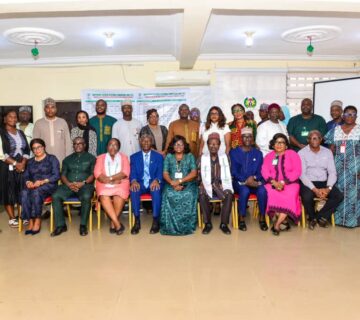
The Minister of Agriculture and Food Security, Abubakar Kyari, disclosed this on Monday in Abuja at the official opening of the 9th Africa Agricultural Science Week (AASW), and the 10th General Assembly of the Forum for Agricultural Research in Africa (FARA).
“There is an enduring truth that has shaped the history of nations: before countries became prosperous, they first learned how to feed their people; and before they transformed agriculture, they invested in science.
“Every great agricultural revolution—from Asia to Latin America and beyond was built not merely on fertile land or favourable weather, but on deliberate investments in research, innovation, strong institutions, and visionary leadership. That timeless lesson remains as relevant to Africa today as it has ever been,” Mr Kyari said.
The minister said Africa is richly endowed with fertile lands, diverse ecosystems, abundant biodiversity, and one of the youngest populations in the world.
“Yet history has shown repeatedly that natural resources alone do not create prosperity. Prosperity is created when knowledge becomes innovation, when innovation becomes enterprise, and when enterprise creates opportunities that improve the lives of ordinary people,” he added.
Mr Kyari said the administration of President Bola Tinubu, had placed agriculture at the centre of the Renewed Hope Agenda because “food security is inseparable from national security, economic prosperity, and social stability.”
“From the very beginning, this administration recognised that transforming agriculture requires much more than increasing production. It requires building a modern, competitive, climate-resilient, and market-oriented agrifood system driven by science, technology, innovation, and private-sector investment,” he added.
Reforms
The minister stated that Nigeria has undertaken far-reaching reforms and strategic investments across the agricultural value chain.
“We are expanding irrigation and all-season farming, strengthening agricultural mechanisation, improving farmers’ access to quality seeds and fertilisers, expanding agricultural finance, promoting digital agriculture, supporting agro-industrial development, and creating an enabling environment for private-sector participation.
“Equally important is our commitment to strengthening agricultural research and innovation. We continue to invest in our National Agricultural Research Institutes, universities, extension systems, and strategic partnerships because sustainable agricultural transformation can only be achieved when public policy is guided by sound scientific evidence,” he stated.
Call for investment in science, technology
Mr Kyari said Africa must move beyond adopting technologies developed elsewhere to become “a global leader in generating agricultural technologies that respond to our own ecological realities, production systems, and development aspirations.”
He said realising this ambition will require sustained investment in the National Agricultural Research Systems, universities, innovation hubs, digital infrastructure, and scientific talent.
“It will require stronger collaboration among governments, researchers, development partners, the private sector, and farmers. Above all, it will require confidence in Africa’s scientists and in the enormous creativity of our young innovators.
“The future of African agriculture will not be determined solely by the size of our farms or the extent of our natural resources. It will be determined by the strength of our institutions, the quality of our science, and our willingness to invest consistently in knowledge,” he said.
Mr Kyari said knowledge has become the most valuable agricultural resource of the twenty-first century.
“Yet knowledge achieves its greatest value only when it creates impact. Research should therefore not end with scientific publications. It should increase productivity, stimulate enterprise development, generate employment, restore degraded landscapes, improve nutrition, strengthen climate resilience, and contribute directly to economic growth and shared prosperity,” he stated.
In his remarks, the Executive Secretary, Agricultural Research Council of Nigeria (ARCN), Abubarkar Dabban, called for sustained investment in agricultural research, innovation, and technology, “We can build resilient agrifood systems, enhance productivity, ensure food and nutrition security, and improve the livelihoods of millions of Africans.”
“We are honoured to host this important continental gathering, bringing together agricultural experts, researchers, policymakers, development partners, the private sector, farmers, and innovators from across Africa. Your presence reflects our shared commitment to transforming Africa’s agriculture through research, innovation, and strategic partnerships.
“This event is particularly significant as it aligns with the Renewed Hope Agenda of the administration of President Bola Tinubu, which places agriculture, food security, and economic growth at the heart of Nigeria’s national development priorities,” he said.