







Farmers have decried the high cost of inputs like fertiliser, insecticides, high quality seeds, agrochemicals, manpower and the hiring of tractors and other machinery, amidst the low cost of foodstuffs.
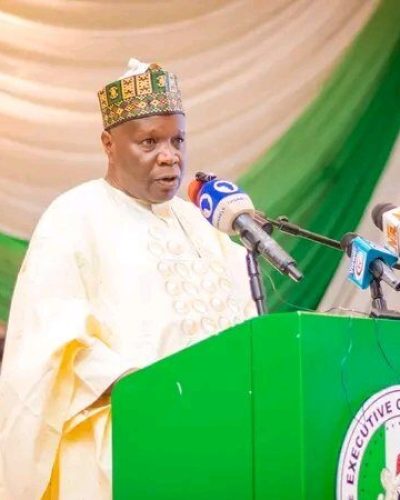
The federal government, through the Minister of Agriculture and Food Security, Abubakar Kyari, last week, revealed that prices of essential food commodities have dropped by 50 per cent nationwide, in fulfillment of President Tinubu’s mandate to achieve food security.
National President of Onion Value Chain in Nigeria, West and Central Africa, Aliyu Isah, also identified insecurity as a huge challenge.
Mr Isah noted that most farmers even contribute money to pay bandits which is not even a guarantee that the farmer would be released.
But Mr Kyari, during the quarterly citizens/stakeholders engagement retreat on agricultural transformation, said that since the present administration assumed office, security has remained top priority.
He added that food security has been on the front burner, acknowledging the critical role the ministry played in maintaining national stability and sovereignty.
Mr Kyari pointed out that, to achieve this, the government focused on boosting local production and reducing reliance on imports, with the ultimate goal of making affordable, nutritious food accessible to Nigerians, saying “our efforts are starting to pay off, with a notable impact on food prices.”
He said it was in contrast to previous years when food prices skyrocketed, way beyond what most Nigerians could afford.
“These efforts reflect our commitment to improving food security and the overall well-being of citizens. We are working to sustain this trend by addressing high input costs to ensure food remains accessible and affordable.”
The minister further stated that the government’s strategic focus on developing key value chains has positioned Nigeria as a major player in the global agricultural market.
He noted that the government has prioritised and developed the rice, maize, wheat, millet, sorghum, yam, cocoa, kenaf, cowpea, cassava, soybeans, cotton, onion, FMAFS tomato, and oil palm value chains, thereby creating opportunities for millions of smallholder farmers and other stakeholders.
According to him, the provision of high-quality seeds, agrochemicals, safety kits, pest and disease management packs, coupled with capacity building initiatives undertaken in years 2024 and 2025 has significantly bolstered the agricultural value chains.
“These interventions have empowered farmers to boost productivity, reduce losses, and improve product quality, ultimately enhancing their livelihoods and contributing to a more robust agricultural sector.
“By enhancing their productivity, we have helped these farmers to transition from subsistence farming to thriving agribusinesses, contributing to national food security, employment generation, and economic growth,” Mr Kyari said.
Speaking further, he said in the last two years, the federal government had boosted agricultural productivity and food security through various initiatives.
He cited key achievements which include the distribution of over 1.9 million bags of fertilisers to nearly 1 million farmers, promoting sustainable soil management with 12,000 liters of organic fertilisers, and strengthening regulatory frameworks.
“We have made notable collaborations and partnerships with Russia, Turkiye, India, and Canada to enhance fertiliser production and technology transfer,”
He added that 109 fertiliser inspectors were trained and equipped, and over 329 industry stakeholders were trained on regulatory compliance.
Moreso, he said efforts were made to curb fake fertilisers from the markets through persecution of offenders.
READ ALSO: Our unity remains unshakable, Tinubu assures Nigerians
“We have constructed a National Reference Laboratory and upgraded the National Fertiliser Management Platform to enhance fertiliser quality control, ensure regulatory compliance, and promote transparency in the fertiliser supply chain.
“Over 3,500 farmers were trained on organic fertilisers and soil management, promoting sustainable agriculture practices,” he added.
The minister called on stakeholders to prioritise agriculture as a key driver of economic growth, saying the efforts are yielding results.
“While challenges persist, we are working tirelessly to overcome them. However, achieving these goals requires a collective effort, sustained energy, partnership, and alignment of our initiatives and resources.
“We will continue to collaborate with stakeholders, leveraging resources and expertise to drive growth and transformation in Nigeria’s agricultural sector. Together, let us build on our achievements and tackle the challenges ahead,” he said.