



![Nigerian food market. [Photo credit: The Guardian NG]](https://thepreviewmedia.com/wp-content/uploads/elementor/thumbs/Nigeria-Food-market0-rnhwouhomgb6qrfulkpmvgq8nzn41y6tcgi4mirafc.jpg "Nigerian food market. [Photo credit: The Guardian NG]")


The Nigerian Midstream and Downstream Petroleum Regulatory Authority (NMDPRA) has called on investors and regional governments to scale up investment in energy infrastructure, saying it is the key to positioning West Africa as a credible petroleum trading hub.
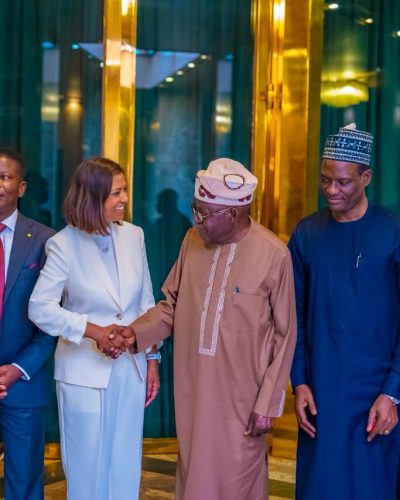
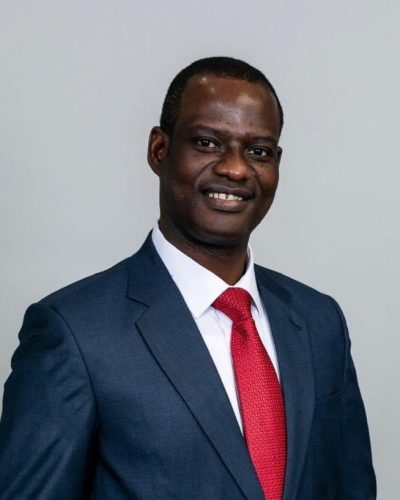
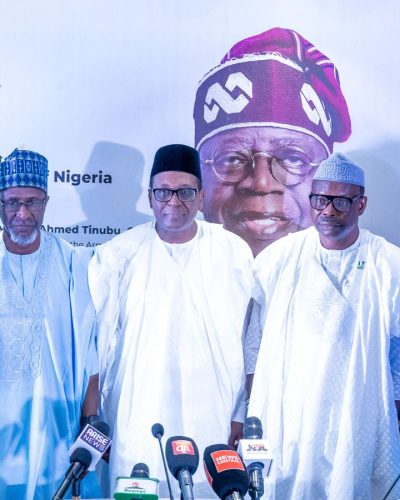
The NMDPRA Chief Executive, Rabiu Umar, made the call while speaking at the second edition of the West Africa Refined Fuel Market Conference in Abuja on Tuesday.
Mr Umar said Africa already possesses the three critical elements for a regional trading hub: resources, demand, and expanding refining capacity, noting that what is now required is infrastructure that efficiently connects them.
“Infrastructure is the bridge between production and markets. Africa possesses resources. Africa possesses demand. Africa possesses expanding refining capacity.
“What we must now build is the infrastructure that efficiently connects all three. A regional trading hub cannot function if products cannot move reliably from refinery to storage, from storage to terminal, from terminal to vessel, or across borders to demand centres,” he said.
Call for full-chain infrastructure
Mr Umar said the infrastructure conversation must encompass the entire chain: refineries, pipelines, storage terminals, jetties, ports, rail networks, road corridors, marine logistics, strategic reserves and digital trading platforms.
He said the objective is not infrastructure for infrastructure’s sake.
“The objective is infrastructure that reduces the cost of moving energy, increases security of supply, improves inventory visibility, expands the number of credible market participants and creates the physical liquidity upon which transparent pricing depends.
“This is also why we must think regionally. Not every country needs to replicate every asset,” he said.
He said a more efficient West African market should allow strategically located refining, storage, port and distribution infrastructure to serve multiple markets through predictable cross-border arrangements.
“Regional integration should help us optimise existing assets, reduce unnecessary duplication and direct scarce capital towards infrastructure with the greatest regional economic impact. To the investment community, our message is clear: Africa’s infrastructure deficit is also an investment opportunity,” he stated.
According to him, there are opportunities across pipelines and product transportation systems; strategic and commercial storage; marine terminals; refinery expansion and optimisation; road and rail logistics; gas processing and transportation; Liquified Natural Gas (LNG) and Liquified Petroleum Gas (LPG) infrastructure; digital commodity exchanges; product-tracking systems; trading platforms; and integrated regional logistics corridors.
“But capital will go where projects are bankable, risks are understood, regulation is predictable and returns can be sustained. Our responsibility as governments and regulators is therefore to create the conditions that allow capital to move confidently.
“For investors, predictability matters. For operators, efficiency matters. For consumers, affordability and reliability matter. For regulators, safety, integrity, competition and compliance matter. A sustainable market must accommodate all four.
“We cannot build an internationally credible pricing and trading hub with inefficient operations. Infrastructure without operational excellence simply creates expensive bottlenecks. Our ports must become more efficient. Our terminals must improve turnaround times. Our pipelines and storage systems must operate safely and reliably,” he added.
Mr Umar said refineries must pursue sustained utilisation, reliability and competitive yields, stating that logistics systems must reduce avoidable demurrage, delays, losses and unnecessary transportation costs.
He said the industry must deploy technology to improve inventory management, product tracking, demand forecasting, scheduling and operational visibility.
“The price discovered in a market ultimately reflects the efficiency or inefficiency of the system delivering the product. Operational excellence is therefore not separate from price competitiveness; it is one of its foundations,” he said.
Lawmakers back regional fuel benchmark
In his remarks, the Chairman, House Committee on Petroleum Resources (Downstream), Ikenga Imo Ugochinyere, said infrastructure funding and regional regulatory harmonisation are critical to ending the region’s dependence on foreign price signals.
“Storage, marine infrastructure, pipelines, road and rail evacuation, metering and automation are not the unglamorous supporting cast of the transparency agenda. They are the agenda. No tankage, no delivery point.
“No delivery point, no benchmark. The funding question and the transparency question are not two questions. They are the same question, asked twice,” he said.
Mr Ugochinyere said the committee will work with the NMDPRA and the West Africa Regulator Forum (WARF) to ensure that the price reporting architecture underpinning West African reference prices enjoys clear statutory support and enforceable compliance obligations.
ALSO READ: NMDPRA pushes for West African petroleum pricing hub to end reliance on foreign benchmarks
“A voluntary benchmark is a fragile benchmark. A fiscal climate that rewards infrastructure. We will continue to press for the incentive framework, licensing certainty and tariff clarity that make midstream and downstream infrastructure genuinely bankable, and we invite you to bring us specific, evidenced proposals rather than general appeals.
“Security of feedstock and of infrastructure,” he said.
According to him, there is no downstream market without a secure supply and an unbroken pipeline.
“This committee has taken a firm and public position on crude oil theft, pipeline vandalism and the guarantee of feedstock to domestic refineries, and we will not be moved from it. No investor can be asked to finance a pipeline the state cannot protect.
“Regional legislative harmonisation. A regional benchmark cannot survive fifteen incompatible national rulebooks. We will engage our counterpart committees across the sub-region and the Economic Community of West African States (ECOWAS) parliament so that this market is built in step, and not in fragments,” he added.