











![Nigerian food market. [Photo credit: The Guardian NG]](https://thepreviewmedia.com/wp-content/uploads/elementor/thumbs/Nigeria-Food-market0-rnhwouhomgb6qrfulkpmvgq8nzn41y6tcgi4mirafc.jpg "Nigerian food market. [Photo credit: The Guardian NG]")

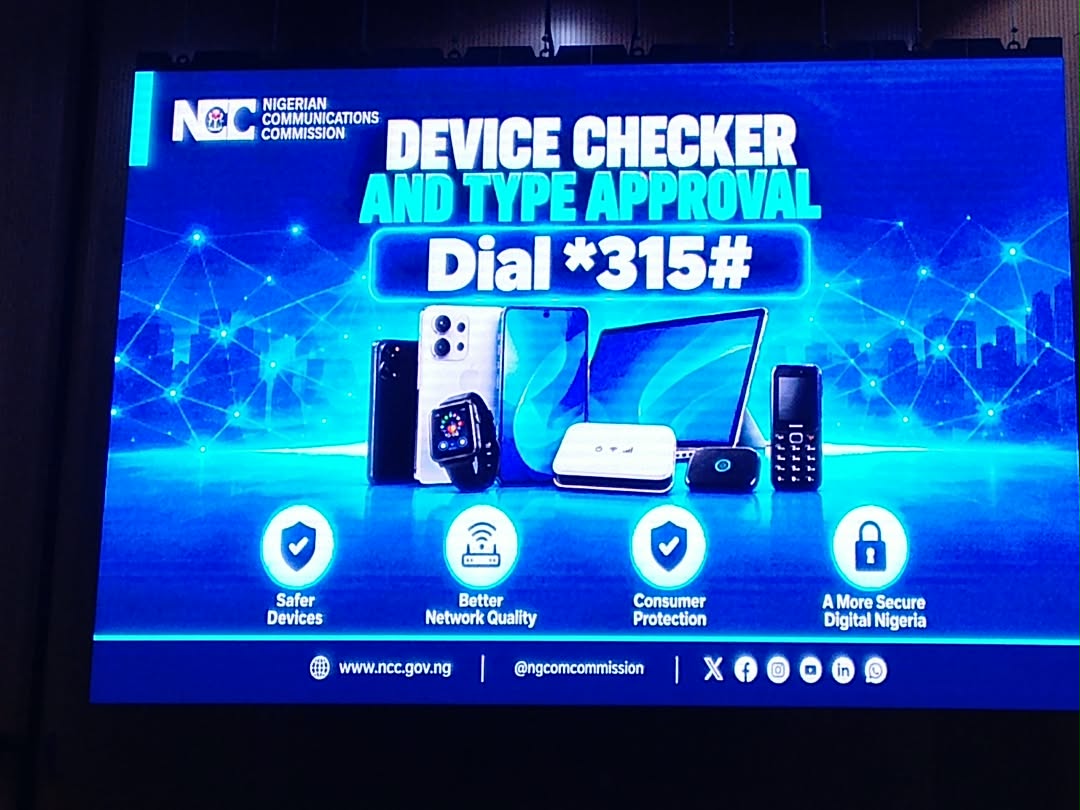
The Nigerian Communications Commission (NCC) has commenced an enhanced Type Approval Compliance framework for SIM-enabled communications devices, assuring Nigerians that the initiative is not designed for surveillance.
The Director, Technical Standards and Network Integrity at the commission, Edoyemi Ogoh, disclosed this at a media briefing in Abuja on Tuesday.
Mr Ogoh said the briefing was to deepen public understanding of the commission’s mandate to ensure that communications devices imported, sold and used in Nigeria comply with applicable technical and regulatory standards.
“This development comes at an important stage in the Commission’s ongoing implementation of enhanced Type Approval Compliance for SIM-enabled communications devices.
“As implementation has commenced, it is important that consumers, industry stakeholders and the wider public clearly understand the objectives of the initiative, their respective responsibilities and the benefits it delivers for Nigeria’s telecommunications sector,” he said.
He said the telecommunications sector has become one of the most critical pillars of Nigeria’s economic and social development, with virtually every aspect of daily life dependent on communications technology.
“From business operations and financial transactions to education, healthcare, public services and personal communications, millions of Nigerians rely on devices connected to telecommunications networks.
“The integrity of the telecommunications industry depends not only on network infrastructure but also on the quality, safety and compliance of the devices that access and are used on these networks. For this reason, Type Approval is not merely a regulatory requirement.
“It is a vital mechanism for protecting consumers, safeguarding network performance and preserving confidence in Nigeria’s digital economy. The Commission has a statutory responsibility to ensure that communications equipment deployed within Nigeria meets established standards,” he added.
He said the obligation is reflected in the requirements governing the certification and approval of communications devices intended for use within the country.
Mr Ogoh explained that under Section 132(2) of the Nigerian Communications Act 2003, licensed service providers, facilities providers, equipment manufacturers and suppliers are required to obtain Type Approval from the Commission before communications equipment may be sold or used in Nigeria.
“The purpose of this regulatory requirement is straightforward. Devices operating on Nigerian networks must meet established technical standards and comply with applicable regulatory requirements.
“This helps to ensure compatibility with network infrastructure, protect users, improve overall service quality and strengthen trust in the communications ecosystem.”
He said the new framework enables more efficient and effective monitoring of compliance obligations applicable to SIM-enabled communications devices operating within the Nigerian market through electronic verification of their Type Approval status.
“This initiative represents an important evolution in regulatory oversight. As the telecommunications industry continues to expand in scale and complexity, regulatory tools must evolve accordingly.”
According to him, the initiative will improve compliance with applicable standards, enhance network performance, facilitate identification of non-compliant devices and strengthen consumer confidence.
Mr Ogoh said the commission did not approach the initiative in isolation.
“Following the issuance of the Type Approval Business Rules in August 2024, the Commission undertook extensive stakeholder engagements, market studies, and consultations across the device value chain.
“These engagements involved Original Equipment Manufacturers, importers, dealers, service providers, government agencies, and industry associations.
“Insights arising from those consultations informed both the design and implementation approach adopted by the commission,” he said.
He said the commission has continued to work closely with the Nigeria Customs Service (NCS) and relevant market associations to ensure devices currently in stock are appropriately onboarded and that future imports are properly verified and authenticated.
“This will provide a more effective mechanism for identifying non-compliant, cloned, or fake devices and prevent them from connecting to our networks,” he said.
He urged consumers to become active participants by checking the compliance status of devices before purchase.
“When buying a phone, tablet, modem, POS terminal or any device that uses a SIM, before you pay, we encourage consumers to ask the seller if the device is NCC Type Approved,” he said.
Mr Ogoh stressed that reliable telecommunications services depend on responsive regulation, noting that non-compliant devices can present challenges to network performance and complicate regulatory oversight.
Addressing privacy concerns that have featured prominently during stakeholder engagements, he said the framework maintains device identification information, including IMEI numbers, for regulatory purposes only.
ALSO READ: NCC speaks on efforts to address poor telecoms services
“The compliance framework is designed solely to support device identification and Type Approval compliance. It does not provide the Commission with access to the content of users’ devices, nor does it enable the Commission to monitor personal communications. It is not a surveillance tool and does not provide access to personal information stored on devices.
“The Type Approval Compliance framework is not designed for surveillance and does not provide the Commission with access to the content of communications, photographs, messages, contacts, financial information or any other personal information stored on users’ devices. Consumer privacy remains fully protected in accordance with applicable laws and regulatory requirements,” he said.
Mr Ogoh said the commission will sustain and intensify stakeholder sensitisation and public awareness activities, and called on the media to support accurate reporting of the initiative.
“Nigeria’s telecommunications sector has earned a reputation as one of the most dynamic sectors of our economy. Preserving that progress requires vigilance, innovation, and effective regulation.
“Strengthening Type Approval compliance is an important step in supporting consumer protection, enhancing regulatory effectiveness, improving oversight of the device value chain and strengthening confidence in communications devices sold and used in Nigeria,” he said.