



The Nigerian government has dismissed reports of a planned increase in electricity tariffs in the country.
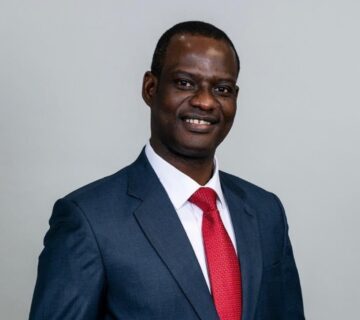
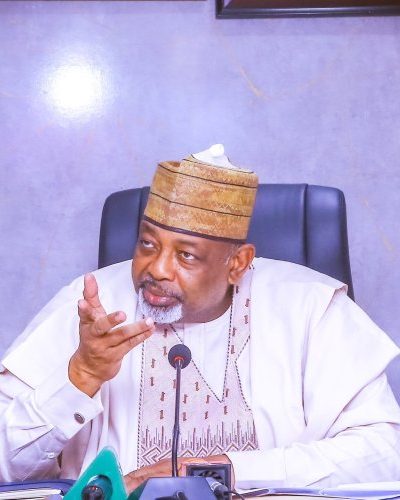
Special Adviser to the President on Power Infrastructure (Office of the Vice President), Sadiq Wanka, in a statement on Saturday, made this known in reaction to reports alleging that the federal government is planning an increase in electricity tariffs.
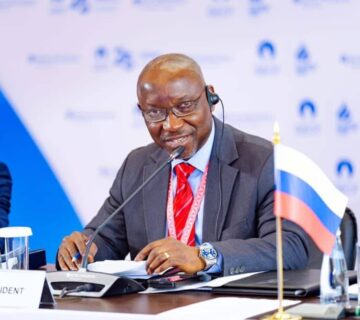
In his reaction, Mr Wanka said the report was a misrepresentation of what he said during a presentation at the Asharami Square 3.0 event in Lagos on 22nd July.
“Some media reports have misrepresented comments made by the Special Adviser to the President on Power Infrastructure (Office of the Vice President) on electricity tariffs, and it has become necessary to provide clarity.
“There is no planned tariff hike for any grid consumer across any service band,” Mr Wanka said.
He said the government remains committed to protecting vulnerable households through continued tariff support.
He explained that his presentation focused on investment opportunities in the power sector and how the federal government’s reform programme has opened new avenues for investors across the power value chain.
“The Special Adviser’s comments were made during a presentation at the Asharami Square 3.0 event in Lagos on 22nd July 2026, where he addressed investment opportunities in the power sector and how the federal government’s reform programme has opened new avenues for investors across the power value chain.”
Mr Wanka said he only reaffirmed the tariff policy direction set out in the National Integrated Electricity Policy, finalised in December 2024 and approved by the Federal Executive Council in May 2025, a long-standing, publicly available policy of gradually transitioning to cost-reflective tariffs, already implemented for ‘Band A’ electricity consumers.
For all other consumer bands, he said he was clear that there is no plan to remove subsidies. Rather, he said the government is exploring how to deliver value and support more efficiently.
“To this end, the Special Adviser highlighted the Power Consumer Assistance Fund (PCAF), enabled by the Electricity Act 2023, as a mechanism for delivering targeted subsidies directly to vulnerable consumers — through consumer electricity accounts or other identity-linked means — improving transparency and strengthening investor confidence,” the statement said.
He said the administration of President Bola Tinubu recognises the vital role journalists play in policy communication, which is why it supports platforms like Asharami Square, which has a stated aim of deepening journalists’ capacity to convey the full context of complex policy discussions to the public.
“The government counts on the continued support of the media in this important national duty,” he said.
Hike in electricity tariff
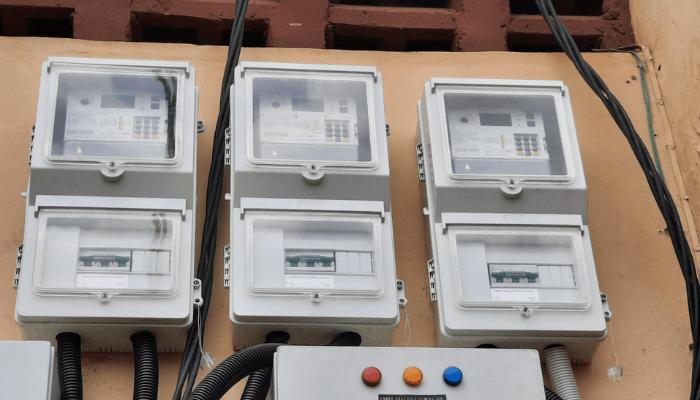
In April 2024, the Nigerian Electricity Regulatory Commission (NERC) announced a hike in the electricity tariff, affecting customers in the Band A category, who represent 15 per cent of the customers and consume 40 per cent of electricity output.
ALSO READ: FG, NASS back complementary roles for regulators in multi-tier electricity market
The policy allowed distribution companies (DisCos) to raise electricity prices to N225 ($0.15) per kilowatt-hour from N68, in return for guaranteeing 20 hours of electricity supply per day.
The government explained that the decision to implement the tariff increase was aimed at improving liquidity in the downstream power sector, as it had become difficult to sustain the subsidy in that sector.
At the time, the decision attracted criticism among Nigerians.
On 30 April 2024, the House of Representatives urged NERC to suspend the tariff hike pending the conclusion of its investigation.
Following the resolution by the House, DisCos, on 6 May, announced tariff reduction. Announcing the reduction at the time, the distribution companies said customers in Band A will now pay N206.80/kwh from N225/kwh.
In July 2024, DisCos proceeded with another hike and even upgraded more customers into the Band A category.
Announcing the upward review at the time, the distribution companies said customers in Band A will now pay N209.5/kwh from N206.80/kwh.