







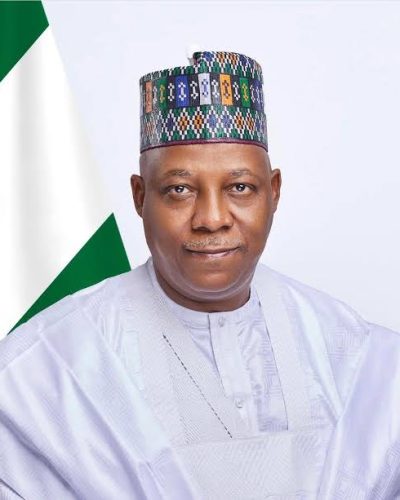



The Minister for State, Petroleum Resources (Oil), Heineken Lokpobiri, directed petroleum sector regulators to intensify oversight on petrol dispensing and pricing, saying deregulation must not be exploited to shortchange consumers or enable profiteering.
Mr Lokpobiri disclosed this while speaking at the 2026 edition of the Nigerian Midstream and Downstream Petroleum Regulatory Authority (NMDPRA) General Counsel and Legal Advisers Forum in Abuja on Monday.
The minister said the sector is now fully deregulated, adding that the decision made by President Bola Tinubu has paved the way for the operationalisation of the Dangote Refinery and other refinery projects currently underway.
“It also ensured that artificial scarcity has become a thing of the past. You can attest to the fact that since 2023, there has been availability of product in the country even with the recent challenges posed by the US/Iranian conflict,” Mr Lokpobiri said.
Beyond allowing prices to be determined by market forces, the minister questioned what the regulator is doing to ensure that consumers receive the correct quantity of product.

“When someone pays for 10 litres of Premium Motor Spirit (PMS), they should receive exactly 10 litres, not less. Furthermore, following the de-escalation of tensions between Iran and the United States, we expected to see a commensurate downward adjustment in the prices of PMS and other petroleum products.
“However, that has not yet happened. While we believe that market forces will eventually restore equilibrium, the regulator also has a statutory responsibility to ensure that deregulation does not become an avenue for profiteering. This must be done in line with the extant provisions of the Petroleum Industry Act (PIA),” the minister said.
Mr Lokpobiri said compliance, therefore, is fundamental, adding that lawyers advising licensed operators also have a critical responsibility to ensure that their clients comply with all applicable laws and regulations, thereby safeguarding their licenses and avoiding regulatory sanctions.
The minister said Nigeria’s petroleum sector is entering a new phase, noting that domestic refining capacity is expanding.

“Private sector participation is deepening. New opportunities are emerging across every segment of the midstream and downstream value chain. But opportunities alone do not guarantee investment.”
He said investors require confidence in policy direction, regulatory institutions, contractual arrangements, and confidence that disputes can be resolved fairly and efficiently.
“Building that confidence is a collective responsibility. As a government, we will continue to provide policy consistency,” he stated.
He said regulators must continue to improve transparency, stakeholder engagement, and the quality of their service delivery.
“Industry participants must maintain high standards of governance and compliance. And legal advisers must continue to serve as trusted partners, strengthening the integrity and credibility of the sector, one well-drafted regulation, one clear guideline, one honest piece of counsel at a time,” he said.

In his address, Rabiu Umar, the NMDPRA’s Chief Executive Officer, said when the authority established the general counsel and legal advisers forum, it did so in recognition of a simple reality: effective regulation cannot be achieved through regulations alone.
“The most carefully drafted law, the most comprehensive regulation, and the most robust compliance framework ultimately depend on people for their implementation,” he said.
He stressed that compliance, while essential, is not an end in itself, noting that compliance was and remains the foundation.
ALSO READ: NMDPRA issues license to construct 30,000 bpd refinery in Rivers
“The broader objective is to create a petroleum Industry characterised by certainty, predictability, transparency and confidence.
“A sector in which investors can commit capital with clarity, a sector in which operators can make long-term business decisions with confidence; a sector in which regulatory expectations are clearly understood and consistently applied, and ultimately, a sector capable of supporting Nigeria’s broader economic aspirations,” he said.

He said the Petroleum Industry Act 2021 fundamentally altered the legal and regulatory landscape of the industry.
“The Act created new institutions. It established new market frameworks. It introduced new compliance obligations. It created new investment opportunities, and it placed new responsibilities on regulators, operators and legal practitioners alike.
“Five years into the implementation of the PIA, we have reached an important stage in our journey. The focus is no longer solely on what the law says.
“The focus is increasingly on how the law is being implemented, how regulations are operating in practice, how markets are responding to reforms, how investors are assessing opportunities, and how institutions are working together to achieve the objectives that the legislation envisioned,” he said.