







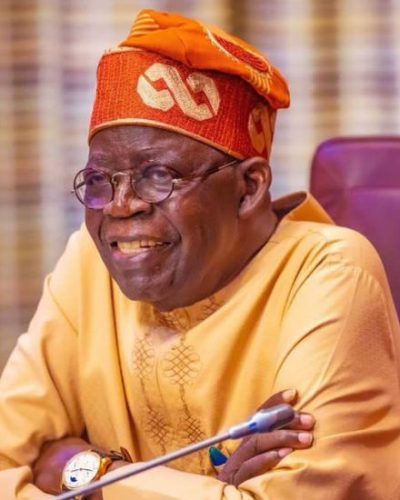




The Centre for the Promotion of Private Enterprise (CPPE) said three years into President Bola Tinubu’s administration, Nigeria has pulled back from the edge of a fiscal and foreign exchange crisis, but the economic stabilisation has not yet translated into broad-based welfare gains.
CPPE, in a statement signed by its director, Muda Yusuf, on Sunday, said the administration inherited “profound macroeconomic, fiscal and foreign exchange vulnerabilities” and focused its first term on rescuing the economy before pursuing growth.
Against this backdrop, he said the immediate task of the administration was to restore macroeconomic stability, rebuild investor confidence and avert a potentially deeper economic crisis.
“The first three years of the Tinubu administration were fundamentally about rescuing the economy from the brink and restoring macroeconomic stability,” the think tank said.
Mr Yusuf said macroeconomic stability may rescue an economy from the brink, but inclusive prosperity is what secures public confidence, strengthens social cohesion and sustains the reform journey.
Read Mr Yusuf’s full statement below
A fair assessment of the Tinubu administration’s first three years requires a proper understanding of the economic realities that confronted the government at inception. The administration assumed office at a time when the economy was facing profound macroeconomic, fiscal and foreign exchange vulnerabilities.
The foreign exchange market was characterised by acute illiquidity, multiple exchange rates, pervasive arbitrage and declining investor confidence.
Net external reserves had reportedly fallen below $5 billion, trade finance obligations were under pressure, and Nigeria’s credibility in the international trading system had weakened considerably.
Fiscal conditions were equally challenging. Ways and Means financing had become deeply entrenched, effectively institutionalising monetary financing of fiscal deficits.
At the same time, the fuel subsidy regime had evolved into a major channel of fiscal leakage, corruption and economic distortion. The economy was approaching a tipping point as the fiscal, monetary and structural foundations of the prevailing model became increasingly unsustainable.
Against this backdrop, the immediate task of the administration was to restore macroeconomic stability, rebuild investor confidence and avert a potentially deeper economic crisis.
Growth acceleration could only follow once the foundations of stability had been secured.
The Reform Imperative
In response to these mounting macroeconomic pressures, the administration embarked on two transformative reforms that became the pillars of its economic stabilisation agenda: fuel subsidy removal and exchange rate unification.
Fuel Subsidy Reform
The removal of fuel subsidy was arguably the most consequential fiscal reform undertaken by the administration. The subsidy regime had become a major drain on public finances, encouraging smuggling, arbitrage and rent-seeking while crowding out productive public investment.
The reform halted a significant source of fiscal haemorrhage and created the foundation for a more transparent and sustainable downstream petroleum sector.
Exchange Rate Unification
Similarly, exchange rate unification addressed one of the most distortionary features of the Nigerian economy. The multiple exchange rate system had created extensive arbitrage opportunities, weakened transparency and discouraged investment.
The reform improved price discovery in the foreign exchange market, reduced rent-seeking and restored a measure of credibility to the exchange rate framework.
These reforms, however, came with substantial adjustment costs.
The Cost of Adjustment
The immediate consequence of the reforms was a significant inflationary shock. Energy prices surged, transportation and logistics costs escalated, production expenses increased sharply, and the depreciation of the naira amplified imported inflation pressures.
The welfare impact was considerable. Real incomes declined, poverty conditions worsened, and the cost-of-living crisis emerged as one of the most difficult consequences of the reform process. While the reforms were inevitable, the social costs have been substantial and remain a major policy concern.
Evidence of Macroeconomic Recovery
Despite the adjustment pains, there is growing evidence that the reforms have delivered important stabilisation outcomes.
External reserves have improved significantly, with gross reserves approaching the $50 billion threshold. The balance of trade has remained in surplus, investor confidence has strengthened, and exchange rate volatility has moderated considerably since 2025.
The economy experienced eleven consecutive months of disinflation from early 2025 through February 2026, reflecting the positive impact of macroeconomic stabilisation measures.
However, this disinflation trajectory was disrupted in March 2026 by the outbreak of the Iran–US–Israel conflict, which triggered a sharp surge in global crude oil prices, elevated domestic energy and transportation costs, and reignited inflationary pressures across the economy.
The capital market also recorded remarkable gains. The NGX All Share Index rose from about 55,700 points in 2023 to over 254,000 points in 2026, representing growth of more than 350 per cent. Market capitalisation similarly increased from about ₦30 trillion to over ₦160 trillion, reflecting stronger investor sentiment and improved confidence in the economy.
The discontinuation of Ways and Means financing has also contributed to improved monetary discipline and macroeconomic stability while exposing the structural weaknesses of public finance management.
Another notable achievement has been the emergence of domestic refining capacity, led by the Dangote Refinery. Reduced dependence on imported petroleum products has strengthened foreign exchange conservation, improved energy security and contributed to exchange rate stability.
An economy that produces more of what it consumes is inherently more resilient than one that depends excessively on imports.
THE UNFINISHED REFORM AGENDA
Notwithstanding these gains, several critical challenges remain.
Welfare and Poverty Concerns
The most significant concern is that macroeconomic stabilisation has yet to translate into broad-based welfare gains. Inflation remains elevated, purchasing power remains weak, and consumer confidence continues to be fragile.
The challenge before the administration is no longer merely one of economic stabilisation; it is the imperative of converting reform gains into jobs, higher incomes, lower poverty and a better quality of life for Nigerians.
Insecurity and Food Security
Insecurity remains a major threat to economic recovery. Its adverse effects on agriculture, food production, rural livelihoods and investment continue to undermine productivity and contribute to inflationary pressures. No economy can achieve food security when farmers face persistent threats to their lives and livelihoods.
Insecurity imposes costs that extend beyond economic losses. It creates deep psychological trauma, weakens social cohesion and undermines the confidence of citizens in their personal safety and future.
Structural Constraints to Competitiveness
The productive sectors continue to contend with high energy costs, logistics bottlenecks, policy inconsistency, weak infrastructure and elevated interest rates. These structural constraints remain significant impediments to industrial competitiveness, productivity and job creation.
The power sector, in particular, remains one of the most binding constraints on economic growth.
Fiscal Sustainability Risks
Fiscal sustainability remains a concern. Although Ways and Means financing has been curtailed, revenue growth has not sufficiently closed the financing gap created by its discontinuation.
A major consequence of the macroeconomic adjustment process has been the expansion of the public debt profile, which rose to N159.3 trillion as of December 2025. While debt service obligations remain elevated, the sharp depreciation of the naira has significantly increased the domestic currency value of external debt. This has been compounded by the securitisation of the legacy ₦23 trillion Ways and Means liabilities, resulting in a markedly larger public debt stock.
Consequently, debt sustainability and fiscal space remain important policy challenges. The implementation of the tax reforms would, hopefully, enhance the government’s fiscal capacity and mitigate fiscal sustainability concerns that have become increasingly evident at the federal level.
Governance and Public Trust
The success of economic reforms also depends on the quality of governance. Concerns about fiscal leakages, public-sector efficiency, and expenditure discipline continue to affect public perception.
As citizens continue to make significant sacrifices in support of economic reforms, expectations for fiscal prudence, transparency and accountability in the management of public resources have risen correspondingly.
The social contract underpinning reform is strengthened when the government demonstrates restraint, efficiency and a commitment to ensuring that every naira of public expenditure delivers tangible value to citizens.
READ ALSO: Three Years of Tinubu: What the president said about his administration
The long-term sustainability of economic reforms rests on the principle of shared sacrifice. Public confidence is strengthened when citizens perceive that the costs of adjustment are borne not only by households and businesses, but also by the political and governing elite.
In the final analysis, public trust is the currency that sustains difficult reforms, and that trust is built on fairness, accountability and shared responsibility.
From Stabilisation to Inclusive Growth
The first three years of the Tinubu administration were fundamentally about rescuing the economy from the brink and restoring macroeconomic stability. The administration confronted structural distortions that had accumulated over many years and implemented reforms that previous governments had repeatedly deferred.
However, stabilisation is only the beginning. The next phase of reforms must focus on translating macroeconomic stability into inclusive growth through accelerated investment, improved productivity, stronger energy security, security of life and property, enhanced food security, industrial competitiveness and poverty reduction.
Ultimately, the success of the reform agenda will not be measured solely by reserve accumulation, exchange rate stability or stock market performance. It will be judged by its impact on jobs, incomes, living standards and the quality of life of ordinary Nigerians.
Macroeconomic stability may rescue an economy from the brink, but inclusive prosperity is what secures public confidence, strengthens social cohesion and sustains the reform journey.
DR MUDA YUSUF
CHIEF EXECUTIVE OFFICER
CENTRE FOR THE PROMOTION OF PRIVATE ENTERPRISE [CPPE]
31ST MAY 2026