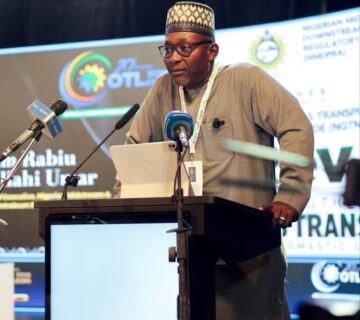













The Centre for the Promotion of Private Enterprise (CPPE) has warned against growing calls for unbridled importation of petroleum products.
CPPE, in a statement signed by its director, Muda Yusuf, on Sunday, argued that such a policy could undermine Nigeria’s industrialisation drive, weaken domestic refining investments, and deepen economic vulnerability.
“CPPE is deeply concerned by the growing advocacy for unbridled importation of petroleum products at a time when Nigeria should be consolidating domestic refining capacity and accelerating its industrialisation journey,” Mr Yusuf said.
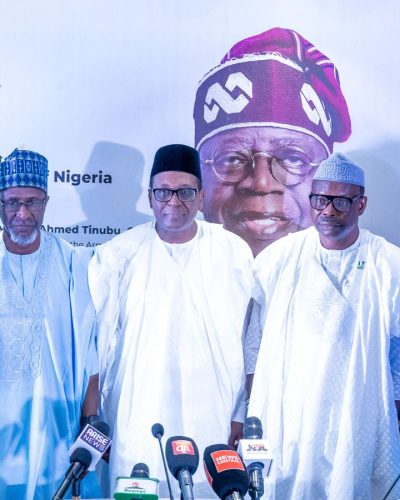
The advice comes amid an ongoing legal dispute between Dangote Refinery and the federal government following the issuance of fresh fuel import licences to major petroleum marketers by the Nigerian Midstream and Downstream Petroleum Regulatory Authority (NMDPRA).
Dangote refinery had recently filed a fresh lawsuit against Nigeria’s Attorney-General, seeking the reversal of fuel import licences issued to oil marketers and the Nigerian National Petroleum Company Limited (NNPC Ltd).
In response, NNPC Ltd accused the refinery of attempting to dominate Nigeria’s downstream petroleum sector through the legal action challenging the import licences granted to competing marketers.
In its statement, the think tank said the current debate “goes far beyond petroleum products” and touches on Nigeria’s economic philosophy, industrial future, macroeconomic resilience, and “ultimately, the preservation of the country’s economic sovereignty.”
“No nation has ever imported its way to industrial greatness. Prosperous economies are built on production, refining, manufacturing, value addition and the strengthening of domestic productive capacity,” the group said.
Mr Yusuf said countries that become excessively dependent on imports inevitably export jobs, weaken domestic industries, erode local investments and mortgage their economic sovereignty.
“Nigeria must therefore avoid drifting into a policy regime that undermines domestic production in the name of competition or liberalisation,” he added.
Import dependence eroded sovereignty
The CPPE said import dependence carries profound economic consequences.
For decades, the group said Nigeria’s dependence on imported petroleum products created deep distortions within the economy.
“It exerted enormous pressure on foreign reserves, weakened the naira, accelerated the collapse of domestic refineries, entrenched a rent-seeking ecosystem, worsened FX illiquidity, fuelled corruption within the subsidy regime and imposed severe fiscal burdens on public finances.
“It would therefore be economically imprudent to recreate the very conditions that previously weakened the economy,” Mr Yusuf said.
Self-reliance a pillar of economic resilience
The CPPE said every serious economy protects its strategic sectors.
“A country that cannot refine its own petroleum products despite being a major crude oil producer exposes itself to profound economic vulnerability. Energy security is national security.
“A nation that persistently imports what it should ordinarily produce locally gradually weakens its productive base, destroys industrial capabilities and compromises long-term economic stability,” the group said.
Support for domestic refining
The Centre pointed to the Dangote Refinery and growing modular refineries as “one of the most consequential industrial investments in Africa.” It warned that pressure for unrestricted refined product imports contradicts Nigeria’s industrial aspirations and sends “troubling contradiction in policy signalling” to investors.
Mr Yusuf questioned what message is sent “if a multi-billion-dollar refinery investment of continental significance is confronted with regulatory uncertainty and policy headwinds.” He argued the path to competition is more domestic refining, not more imports.
CPPE noted Nigeria already protects other sectors through an Import Adjustment Tax covering 192 tariff lines for pharmaceuticals, textiles, iron and steel, cement, automobiles, food processing, and others. “The same strategic policy support should naturally extend to domestic refining because refining is not merely a commercial activity; it is a critical industrial, economic and national security investment,” he said.
Monopoly narrative
The CPPE said attempts to portray Dangote Refinery as a monopolistic threat are simplistic, fundamentally flawed and grossly unfair.
Mr Yusuf said the refinery did not prevent other investors from entering the sector.
READ ALSO: DAPPMAN opposes Dangote’s fresh lawsuit on fuel import licences
“It did not cause the collapse of state-owned refineries. It simply undertook an extraordinary industrial investment at a scale unprecedented in Africa.
“Nigeria should not demonise audacious investment, industrial courage, scale and risk appetite. A country that undermines transformative investment sends deeply troubling signals to both domestic and foreign investors,” the think tank said.
According to the CPPE, Nigeria cannot achieve meaningful industrialisation without deliberate and sustained support for domestic production.
He said industrial transformation requires strategic protection, policy consistency, strong domestic value chains, support for local investors and reduction in import dependence.
“No economy becomes prosperous by importing what it can produce domestically. The future of Nigeria’s economic resilience lies in production, refining, manufacturing and value addition — not in the perpetuation of import dependence.
“Nigeria must therefore decide whether it wishes to build a production economy or remain trapped within a consumption economy.
“History has repeatedly shown that nations which neglect domestic production eventually weaken their currencies, compromise economic sovereignty and expose themselves to severe external vulnerabilities,” he said.