













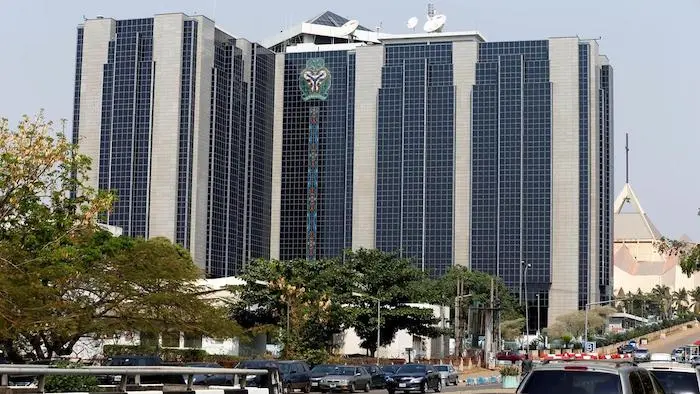
The Central Bank of Nigeria (CBN) on Wednesday kept its key interest rate unchanged at 26.5 per cent.
Governor Olayemi Cardoso announced the decision at the end of the bank’s two-day monetary policy meeting in Abuja.
In February, the CBN reduced the benchmark interest rate to 26.5 per cent. The CBN cut its lending rate by 50 basis points from the 27 per cent it maintained in November 2025.
At the time, Mr Cardoso revealed that the committee’s decision was based on a balanced evaluation of risks and sustained exchange rates.
The benchmark interest rate, formally known as the Monetary Policy Rate (MPR), is a key tool used by central banks to influence borrowing costs, inflation, and overall economic activity.
Speaking after the meeting, the CBN boss said that the committee’s decision is based on the recent surge in inflation and external shocks.
“The decisions of the MPC were anchored on a comprehensive assessment of risk to the outlook, although inflation has risen marginally for two consecutive months, largely induced by external shocks.
“The MPC recognises its transitory nature and remains confident. confident that the current macroeconomic environment is sufficiently robust to support a return to disinflation,” Mr Cardoso said.
At the meeting on Wednesday, the MPC adjusted the asymmetric facilities corridor around the MPR at +50/-450 basis points, a move aimed at discouraging banks from keeping idle funds with the CBN and encouraging more lending into the economy.
It also retained the Cash Reserve Ratio (CRR) for commercial banks at 45 per cent and retained merchant banks at 16 per cent.
The committee also left the CRR on non-TSA public sector deposits for liquidity management considerations at 75 per cent.
The borrowing rate was retained amid a continual rise in Nigeria’s inflation rate. Nigeria’s annual inflation rate rose to 15.69 per cent in April from 15.38 per cent in March 2026, according to the National Bureau of Statistics (NBS).
The statistics office said the April 2026 headline inflation rate showed an increase of 0.31 per cent compared to the March 2026 headline inflation rate.