












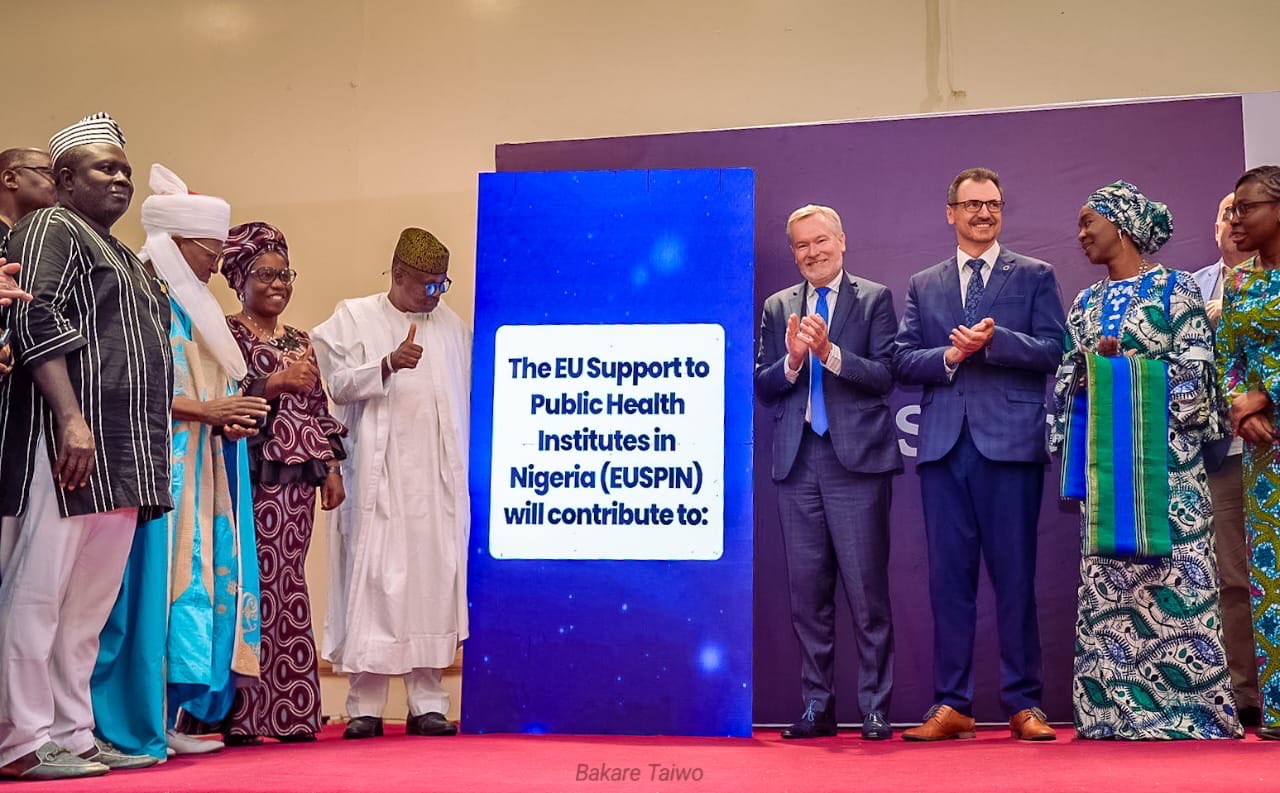
The federal government has launched the EU Support to Public Health Institutes in Nigeria (EUSPIN) initiative as part of ongoing efforts to strengthen disease surveillance, emergency preparedness, and institutional response systems across the country.
The four-year €4.2 million initiative, launched in partnership with the European Union (EU) and the World Health Organisation (WHO), is designed to strengthen Nigeria’s capacity to detect, report, and respond more effectively to disease outbreaks and other public health threats.
Speaking at the official launch in Abuja, the Minister of State for Health and Social Welfare, Iziaq Salako, described the initiative as a strategic intervention aligned with the Nigeria Health Sector Renewal Investment Initiative (NHSRII) and the Renewed Hope Agenda of the Tinubu administration.
According to the minister, the initiative will help address existing surveillance and coordination gaps within the health sector by improving laboratory systems, enhancing data sharing and digital health capacity, strengthening collaboration across federal and state institutions, and supporting leadership development for public health personnel nationwide.
He noted that the project comes at a critical time as Nigeria continues to respond to recurrent public health challenges, including outbreaks such as cholera and Lassa fever, alongside the growing burden of non-communicable diseases.
“Health infrastructure alone cannot deliver effective healthcare outcomes without strong surveillance systems, coordinated emergency response mechanisms, reliable data, and resilient public health institutions,” Mr Salako stated.
He reaffirmed the federal government’s commitment to building a resilient, people-centred health system capable of delivering equitable and quality healthcare for all Nigerians.
READ ALSO: NNPC foundation wins 2025 health CSR champion award
The minister further disclosed that the initiative aims to strengthen the core functions of selected public health institutions and support the training of up to 75 per cent of public health personnel in leadership and digital competencies critical to modern public health management.
Speaking at the event, European Union Ambassador to Nigeria, Gautier Mignon, reaffirmed the EU’s commitment to supporting Nigeria’s health sector reform priorities through stronger public health systems and institutional partnerships.
Similarly, the WHO Representative in Nigeria, Pavel Ursu, stated that strengthening national public health institutions remains critical to improving preparedness, early detection, and rapid response to health emergencies.
The initiative will be implemented by the WHO in collaboration with the Federal Ministry of Health and Social Welfare.
Ado Bako
Assistant Director, Information & Public Relations