


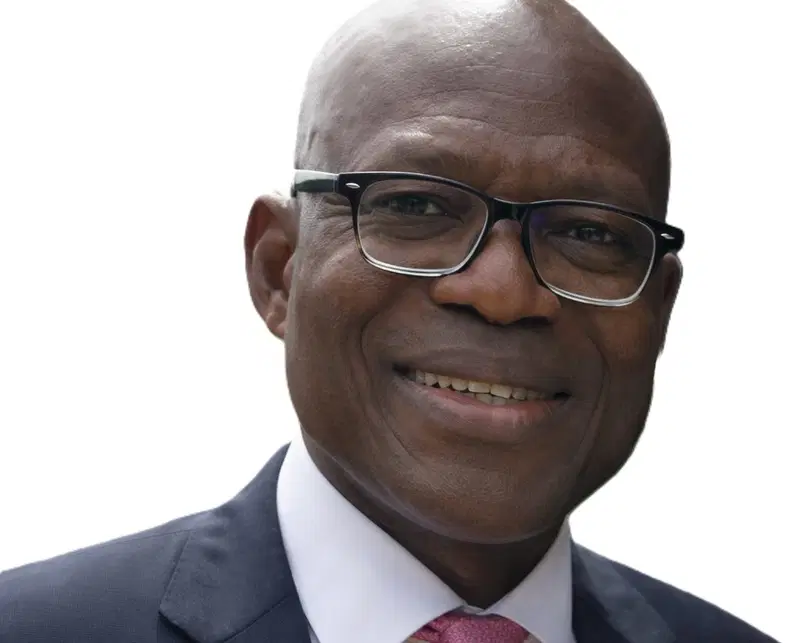
Energy expert, Dan Kunle, has criticised the Nigerian National Petroleum Company Limited (NNPC Ltd) for signing a Memorandum of Understanding (MoU) with two Chinese companies to revive the Warri and Port Harcourt refineries.
On Monday, the NNPC said it has signed an MoU to advance the restart and expansion of both refineries.
The chief corporate communications officer of NNPC Ltd, Andy Odeh, said the MoU, signed on Thursday, 30 April in Jiaxing City, China, establishes a framework for collaboration through a potential Technical Equity Partnership (TEP) with Sanjiang Chemical Company Limited and Xingcheng (Fuzhou) Industrial Park Operation and Management Co. Ltd.
Mr Odeh said the potential framework would cover completion of outstanding work at the two refineries, together with operating and maintaining both facilities to achieve best-in-class, sustainable performance.
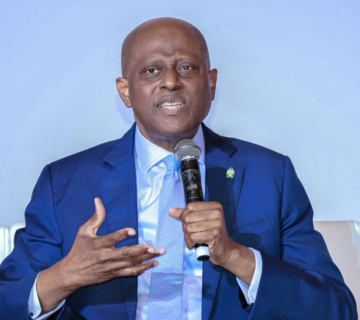
Reacting to the latest development in an interview with ThePreview Media on Monday night, Mr Kunle described the process as a “futile exercise” and a “waste of national resources.”
“This exercise is futile. This is my personal opinion and a very professional opinion,” Mr Kunle said.
Call for open privatisation
He urged NNPC management to hand over the refineries to the National Council on Privatisation (NCP) for an open and transparent sale “as is,” rather than pursuing backdoor deals with firms which he alleged lack refinery ownership or operational experience.
“This MoU means Memorandum of Understanding with a company that does not own and operate a refinery. Sanjiang Chemical Company Limited owns a petrochemical company in China… they have never built a refinery, nor do they own a refinery.
“They are not an original equipment manufacturer. The two companies are not state-owned. They are privately owned companies in China,” he said.
MoU ‘uncalled for’
“And we must correct this error now. This MoU must immediately be aborted. Our resources that they are wasting, the national resources, the energy and the time, the distraction that the manager of NNPC is embarking upon is uncalled for.
“They should look for investment in gas production, in oil production, and in energy supply for the country. Not looking for a company to sign with you to rehabilitate the refinery that is qualified for privatisation and liquidation,” Mr Kunle said.
He noted that such ambiguity creates room for future contractual disputes and government breaches, citing past failures.
“When there is a contractual breach, they will now start claiming money again. This is how some of us screamed before to privatise the refineries in 2017, 2018, 2019, and nobody listened to us. Today, we still don’t have a functional government refinery.”
Mr Kunle insisted that selling the refineries in their current state would be the most transparent route, allowing any buyer to decide whether to rehabilitate, expand, or upgrade the facilities.
“The refinery should be sold ‘as is.’ Anybody who buys it can now decide to expand, to upgrade it, to do anything they like with it. That’s the most transparent way to go about this,” he added.
The refineries
Nigeria operates four state-owned refineries with a combined capacity of 445,000 barrels per day (bpd). The Port Harcourt Refining Company, made up of two plants, accounts for 210,000 bpd.
The Kaduna Refining and Petrochemical Company has an installed capacity of 110,000 bpd, while the Warri Refining and Petrochemical Company has an installed capacity of 125,000 bpd.
Despite billions invested in rehabilitation, the refineries have underperformed for decades. This failure forced Nigeria to rely on imported petroleum products for many years, draining foreign reserves.
Recent efforts to revive operations have stalled. The Warri Refinery reopened in December 2024 but shut down a month later over safety concerns. The Port Harcourt refinery resumed production in November 2024 after a long period of rehabilitation, only for NNPC to announce another shutdown in May 2025.
In May 2023, the House of Representatives ad-hoc committee on the state of refineries in the country said the federal government spent over N11 trillion on the rehabilitation of the refineries from 2010 to 2023.
In February, the Group CEO of NNPC Ltd, Bashir Ojulari, said the state-owned refineries were shut down because they were not commercially viable in their current condition.