







An Abuja-based policy think tank, Agora Policy, said Nigeria’s electricity sector remains in a state of arrested development more than a decade after the 2013 privatisation exercise.
The power sector was privatised in 2013, with the distribution and generation sub-sectors split and sold to private owners. This was aimed at enhancing the power distribution in the country.
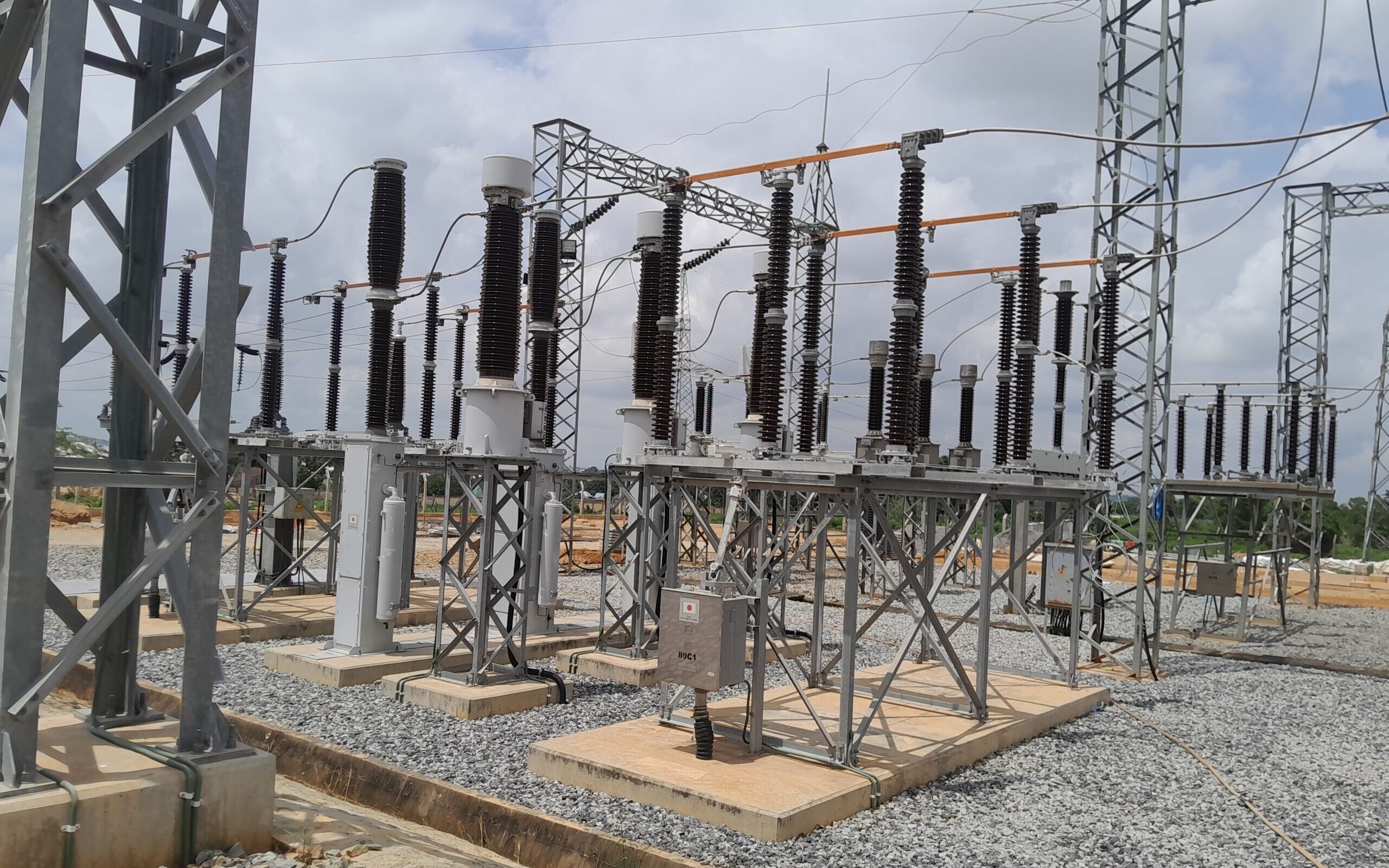
Only the transmission component, through the Transmission Company of Nigeria (TCN), remains a public property.
In a maiden report titled “Beyond Tariff Adjustments, Nigeria’s Electricity Sector Requires a Structural Reset” released on Monday, the policy think-tank said that despite the resulting industry structure, alongside a myriad of presidential initiatives, these interventions have not produced the level of reliable electric power for Nigerian homes and businesses that the original reforms were expected to deliver.
“By year-end 2025, Nigeria’s electricity system still reflected the central weakness of the post-privatisation market: significant installed capacity but limited dependable supply. Across 28 grid-connected plants, installed capacity stood at 13,625MW, yet actual output remained far below this level, with average electricity generated across the four quarters of about 4,474MW/h slightly above 2024’s level of 4,223MWh/h,” the report said.
The think tank said Nigeria privatised distribution before the distribution business had been made commercially knowable.
“It used an Aggregate Technical, Commercial, and Collection (ATC&C ) bidding model that rewarded aggressive promises despite uncertain baselines; it attracted a bidder universe shaped more by domestic financial and political capacity than by deep strategic utility expertise; it allowed dollar-denominated leverage to place debt-service pressure on utilities that needed patient turnaround capital.
“It used Nigerian Bulk Electricity Trading (NBET) as a sovereign-backed credit wrapper that made generation companies (GenCos) bankable while disguising downstream payment weakness, and it attempted to build a liquid electricity market after many of the industrial customers needed to anchor that liquidity had already moved off-grid.”
The policy think-tank said the central lesson is that reform design must be adapted to starting conditions; countries with weak institutions, high losses, low access, fragile utilities, poor payment discipline, and politically constrained tariffs are unlikely to succeed simply by adopting the formal structure of a liberalised electricity market.
“It is not that private participation is inherently unsuitable for electricity markets, but that private participation becomes fragile when introduced into a market that lacks the enabling conditions required for private ownership to translate into performance.
“Nigeria’s privatisation changed ownership faster than it changed incentives, operating capability, data quality, payment discipline, customer confidence, and regulatory credibility,” the report said.
Agora policy said what it ultimately achieved was a formal electricity-market architecture without the commercial foundations of a functioning electricity market.
It noted that this gap between legal restructuring and market readiness became one of the structural reasons the post-privatisation sector struggled to deliver reliable power, retain industrial users, attract sufficient investment, or achieve financial sustainability.
Call for structural reforms
Agora policy said Nigeria’s power-sector crisis cannot be solved by tariff adjustment alone because the market’s weakness is structural.
It added that tariff increases can reduce subsidies and improve revenue where customers are metered and reliably supplied, but it cannot salvage a sector in which distribution companies (DisCos) lose over one-third of commercial value through ATC&C losses, gas suppliers remain unpaid, transmission cannot deliver power, and industrial users and households continue to exit the grid.
“The key lesson from Nigeria’s post-privatisation experience is not that private participation is inherently wrong, nor that the country should return to the old National Electric Power Authority (NEPA) model.
READ ALSO: NISO meets presidential adviser on power, pledges commitment to grid stability
“Rather, that ownership change is not a substitute for market readiness. While the 2013 reforms created a new electricity market, it did not sufficiently address the conditions required for that architecture to work: credible distribution companies, adequate transmission capacity, and a customer base broad and creditworthy enough to support investment,” the report said.
It said Nigeria’s unfinished power sector reform therefore requires a shift from tariff fixation to sector reconstruction.
“Policymakers must focus on restoring financial discipline, reforming distribution, and securing cheaper gas-to-power supply as a means towards integrating industrial captive capacity.
“To complete the loop, Nigeria must do a lot to better coordinate state electricity markets, execute a national metering for all customers, protect weaker states, and expand alternative energy for rural underserved households.
“Anything less will leave the sector trapped in the same cycle that has defined the post-privatisation decade: higher tariffs without adequate reliability, private ownership without market discipline, and reform announcements without electricity transformation,” the think tank said.