








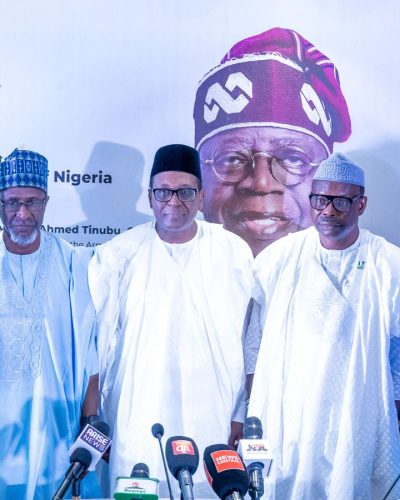




The President of the Petroleum Products Retail Outlets Owners Association of Nigeria (PETROAN), Billy Gillis-Harry, has explained the reason petrol price reductions often take longer to reach consumers than price increases.
Mr Gillis-Harry disclosed this while speaking during an interview on Channels Television’s The Morning Brief breakfast programme on Wednesday.
When asked why petrol price reductions take longer to reach consumers than increases, he said the reason is that the retailers must first exhaust old stock and recover capital before buying new, cheaper products.
“There must always be that advantage to look for that cushion of price that will be able to pay for the new supplies. That’s one thing. The other is that maybe at the time the change of price was made, the particular retail outlet that you’re referring to had quite a lot of stock.
“And if he has stock, assuming there’s a 10 naira difference and he has about 100,000 litres in storage, calculate that amount of money. And if that amount of money is lost to just this particular price reduction, then he has lost capital to buy more petroleum products that are going to wet his station, which is going to affect Nigeria.
“So we will appeal to Nigeria to also understand this dynamic to be able to help us to work,” he said.
On why price hikes reflect immediately even on old stock, the PETROAN president said retailers raise prices to create a cushion for the next, more expensive purchase. Without that margin, they can’t afford to restock when the market moves up.
“So, the fact that Dangote changed prices yesterday, certainly some of us will buy products from the depots. I mean Premium Motor Spirit (PMS), not Automotive Gas Oil (AGO). AGO we can get from any source, you know, but for PMS today, we are getting our PMS directly from the depots.
“So by the time we take our product, it’s going to take a little time to transport the logistics costs to get to our retail outlets. And when it gets there, that is the issue. So we are willing to make sure that prices reflect… So that we have a clear understanding,” he said.
On Tuesday, the Dangote Petroleum Refinery announced a reduction in its petrol gantry price by N75, reducing the ex-depot rate from N1,250 to N1,175 per litre.
The refinery said the price adjustment followed the de-escalation of the tension in the Middle East, which had impacted energy prices.
The reduction is part of the market’s response to recent fluctuations in global crude oil prices.
On Tuesday, oil prices slid to fresh three-month lows as markets weighed prospects for a resumption of supplies through the Strait of Hormuz.
Brent crude futures were down $1.44, or 1.7 per cent, at $81.73 a barrel, the lowest since March 10, at 0906 GMT. U.S. West Texas Intermediate was down $1.55, or 1.9 per cent, at $79.20 a barrel, also the lowest since March 10.
Oil prices had already dropped nearly 5 per cent on Monday to their lowest close since March 4 after U.S. President Donald Trump said a memorandum of understanding had been signed to end the U.S.-Israeli war with Iran.
With Dangote Refinery’s price drop, oil marketers are expected to follow suit by lowering their pump prices, potentially leading to reduced retail fuel costs for consumers. So far, petrol retail prices remain unchanged.