


Nigeria took more than half a century to move the IMA gas field from discovery to investment decision, a delay the presidency says shows how poor investment conditions held back the country’s oil and gas sector.
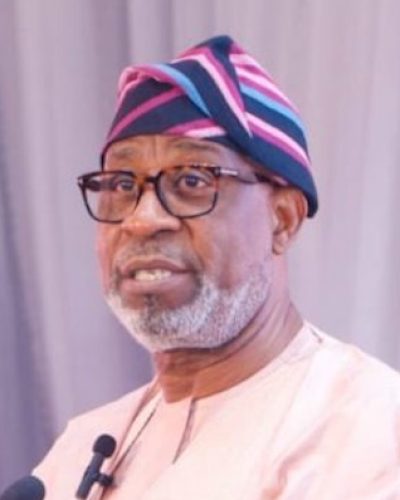
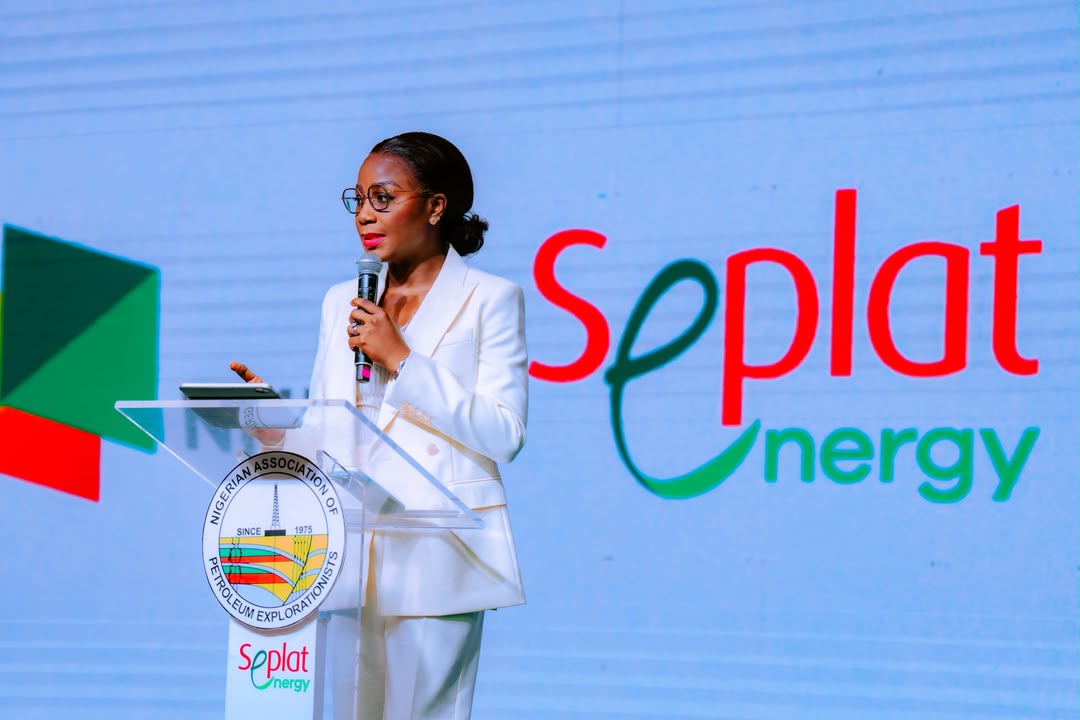
The Special Adviser to the President on Oil and Gas, Olu Verheijen, disclosed this on Monday while delivering the keynote address at the 44th Annual International Conference and Exhibition of the Nigerian Association of Petroleum Explorationists (NAPE) in Lagos.
A 53-year wait
Ms Verheijen said IMA was discovered in 1973 and only reached a Final Investment Decision (FID) in September 2026.
“More than half a century. A child born when that gas was discovered could have finished school, entered the workforce and raised a family before the decision to develop it was taken. The gas did not suddenly appear in 2026. The conditions for investing in it changed,” she said.
She said for too long, Nigeria asked for excellent geology to compensate for weaknesses elsewhere in the investment proposition: uncertain responsibilities, slow contracting, uncompetitive economics and unreliable routes to paying customers.
Under President Bola Ahmed Tinubu’s leadership, she said, the government set about changing that proposition.
“The President provided the mandate and political backing. Our team’s work began with the reform blueprint and continued through fiscal design, negotiations and implementation, alongside ministries, regulators, NNPC, operators and investors,” she stated.
What changed
Ms Verheijen said the government examined actual projects, benchmarked Nigeria against competing destinations and worked to remove the obstacles preventing investment decisions.
She noted that the fiscal principles were deliberate: reward production, protect existing revenues, keep the rules workable and tailor incentives to the resource. Time-bound eligibility encouraged investors to bring Nigerian projects forward in their portfolios.
In gas, she said, fiscal reform and commercial negotiation had to move together. Incentives could support development, but access to customers and prices that justified investment could make it financeable.
“That is why opening opportunities for third-party gas supply to NLNG mattered. Policy earns its value by changing a decision and enabling something real to proceed,” she said.
Projects now moving
She listed Ubeta and Bonga North, which reached FID in 2024, and IMA, which joined them in 2026, as evidence that reform was working.
“These decisions move projects into execution, commit capital and begin the work that will support future production,” she said. “Our responsibility is to carry them through while improving output from assets already operating.
“We have begun to change the investment story. We must now change the production story, and through it, the economic story,” she said.
Mandates
Ms Verheijen said this year’s theme gave the industry three practical responsibilities: exploration, local capability and adaptive technology.
She said Nigeria must replenish the opportunity.
“A country cannot produce tomorrow what it does not discover, appraise or develop today. Nor can it sustain growth by celebrating the same discoveries for another generation.”
She called for reliable geological data, credible exploration programmes and development plans that account for infrastructure and markets from the outset.
Better reservoir understanding, infill drilling and improved recovery can deliver nearer-term gains, she said, but those gains must finance ambition, not replace it.
To operators, she said: “Bring forward the programmes that replenish your portfolios. Identify the government decisions needed to unlock them. And demonstrate the capital, people and execution plans behind your proposals.”
She said Nigeria must build capability worthy of its ownership.
“The rise of Nigerian independents creates an opportunity to drive near-term onshore and shallow-water growth, while international companies concentrate on deepwater and integrated gas.
According to her, success depends on what each owner does with those assets, noting that it requires sound governance, strong balance sheets, technical competence and obligations honoured to workers, communities and the environment.
“Local content should leave Nigeria more capable after a project than before it began. It should mean engineers who can lead the next development and fabrication companies that can win work beyond our borders. It should give a young Nigerian the chance to master difficult work, not simply stand beside someone else doing it.
“We should be proud of Nigerian ownership. We should be ambitious enough to demand Nigerian excellence. We must use technology to change performance. Better seismic interpretation can reveal what an older model missed. Reservoir modelling can improve recovery. Digital monitoring can reduce downtime and losses,” she added.
Speaking further, she said methane measurement can help preserve valuable gas.
ALSO READ: Nigeria to open 2026 bid portal for 40 oil, gas blocks, NUPRC woos investors
The test, she said, is what changes in the field: uncertainty reduced, costs lowered, and operations made safer.
“Artificial intelligence will expand what our professionals can do. It will not remove the need for good data and sound judgement.”
She stated that new developments in Guyana and across Africa remind Nigeria that it must compete through the quality of its proposition.
“A disruption elsewhere may create an opening. It cannot be our business plan. Our projects must remain competitive when prices fall, and new supply arrives. Our greatest opportunity is larger than the next cargo. It is a more productive Nigeria and a more industrialised Africa.”
She said energy poverty is also an industrialisation problem.
“More than half a century separated the discovery of IMA’s gas from the investment decision to develop it. The young professionals here should not wait a working lifetime to see their country’s promise put to work.
“Let them inherit more than a catalogue of resources: an industry with the competence to develop them, institutions with the discipline to steward them, and an economy in which their talent has a future. Let us unlock more barrels, and with them, a greater future for Nigeria,” she said.