![Nigerian food market. [Photo credit: The Guardian NG]](https://thepreviewmedia.com/wp-content/uploads/elementor/thumbs/Nigeria-Food-market0-rnhwouhomgb6qrfulkpmvgq8nzn41y6tcgi4mirafc.jpg "Nigerian food market. [Photo credit: The Guardian NG]")

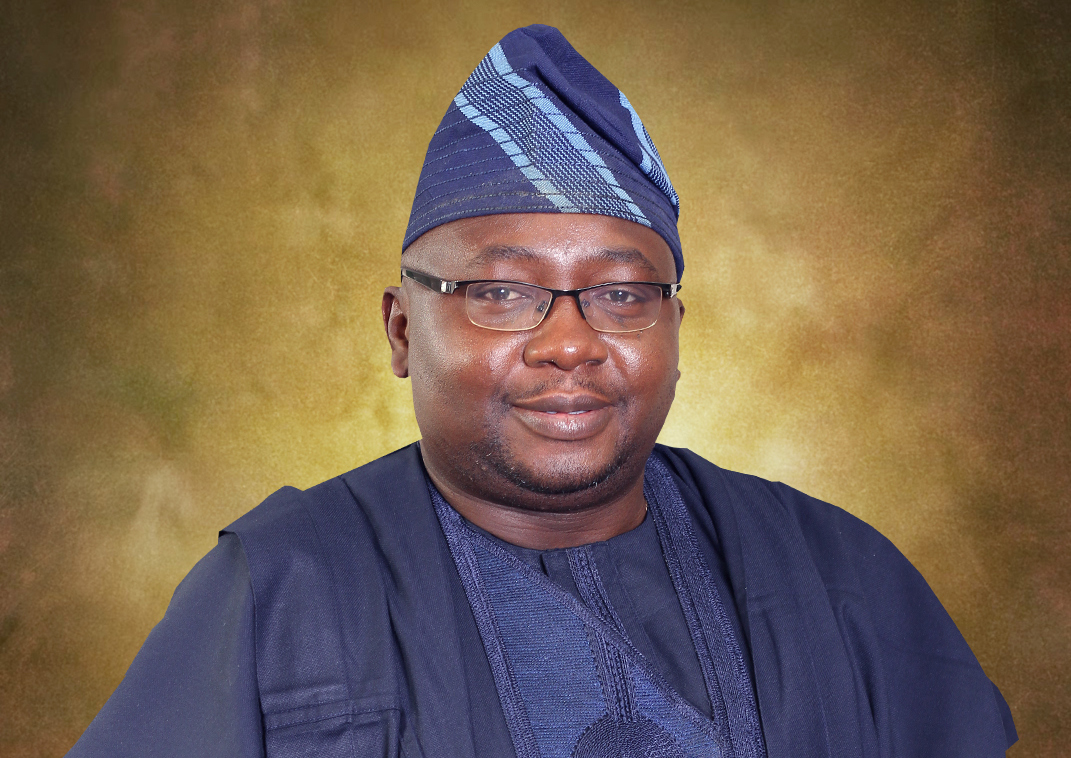
Adebayo Adelabu, on 22 April 2026, officially tendered his resignation as Nigeria’s Minister of Power, ending his tenure, which was defined by ambitious reform pledges but overshadowed by persistent grid instability and infrastructure sabotage.
He said the decision to step down is informed by his intention to focus fully on his gubernatorial ambition in Oyo State. President Bola Tinubu swore Mr Adelabu in on 21 August 2023, as one of 45 ministers cleared by the Senate.
Mr Adelabu, with a finance background, took charge of a sector plagued by chronic underperformance, with a mandate to stabilise electricity supply and expand access.
He was appointed Deputy Governor, Operations, at the Central Bank of Nigeria (CBN) by former President Goodluck Jonathan in February 2014, resigning in May 2018 to contest the Oyo State governorship in 2019, a race he lost.
Professionally, he trained at PricewaterhouseCoopers (PwC) and handled audit and consultancy engagements for large banks and non-bank financial institutions in and outside Nigeria.
He spent a year on secondment to the CBN in 1999, leading the Finance team on the bank’s re-engineering and corporate renewal project and later left the firm in 2000 as an Audit Manager and Senior Consultant to join First Atlantic Bank as the Financial Controller and Group Head of Risk Management and Controls.
At First Atlantic Bank, he also served as Chief Inspector in 2002 and Group Head of National Public Sector Business in 2003.
Promises made
On assumption of office, Mr Adelabu pledged that the federal government would empower Nigerians through stable and accessible electricity. He said the Ministry of Power would leverage the Nigerian Electricity Act 2023 to boost power supply.
“The ministry will diligently provide optimal solutions for Nigeria’s power needs nationwide,” he said.
“This responsibility weighs heavily upon us, and it is with conviction, divine guidance, and the support of President Tinubu, the National Assembly, government agencies and Nigerians that I pledge my commitment to achieve success in the power sector. Key to success will be an unwavering dedication to efficiency and collaboration,” Mr Adelabu said at the time.
He promised robust public-private partnerships to improve the nation’s economic and social well-being. The ministry, he added, would harness technology and the energy of young Nigerians, deploying its ICT infrastructure and emerging ideas from youth to accelerate transformation.
Policy moves under his watch
End of subsidy for Band A
In April 2024, the Nigerian Electricity Regulatory Commission (NERC) hiked tariffs for Band A customers. The commission said Band A users make up 15 per cent of consumers but use 40 per cent of the nation’s electricity.
The policy allowed distribution companies (DisCos) to raise electricity prices to N225 ($0.15) per kilowatt-hour from N68, in exchange for guaranteeing 20 hours of electricity supply per day.
NERC said the new tariff would cut 2024 subsidies by about N1.14 trillion.
“With the newly approved tariffs, subsidies for the 2024 fiscal year are expected to reduce by about NGN1.14 trillion in furtherance of the federal government’s realignment of the subsidy regime,” Musliu Oseni, the then NERC vice-chairman, said to justify the electricity tariff at the time.
In July 2024, DisCos raised tariffs again and moved more customers into Band A. Announcing the upward review at the time, DisCos said customers in Band A will now pay N209.5/kwh from N206.80/kwh.
Despite the hikes, electricity supply to homes and businesses continued to dwindle under Mr Adelabu’s watch.
TCN unbundling
In December 2023, Mr Adelabu hinted at plans to restructure the Transmission Company of Nigeria (TCN) into two entities. At the time, he said the Nigerian Electricity Supply Industry (NESI) transmission sub-sector has been identified as a critical weak point in the electricity value chain.
In May 2024, NERC officially unbundled TCN into two entities, namely the Nigerian Independent System Operator Nigeria Limited (NISO) and the Transmission Service Provider (TSP), in line with the provisions of the Electricity Act, 2023.
A tenure defined by grid collapses
Grid collapses became the defining challenge of Mr Adelabu’s term. Between September 2023 and January 2026, the national grid collapsed at least 21 times.
Breakdown of incidents by year
2023
The grid recorded its first collapse under Mr Adelabu on 14 September, barely a month into his tenure. At the time, Mr Adelabu said the collapse of the grid was caused by a fire outbreak on the Kainji/Jebba 330kV line, leading to about 356.63MW generation loss. Two more collapses followed quickly on 19 September and 11 December.
2024
In 2024, the national grid recorded 12 collapses.
The first collapse occurred on 4 February, following a reported system failure by electricity distribution companies (DisCos).
On 28 March, the country was thrown into darkness again following the collapse of the electricity grid controlled from Osogbo, Osun State. At the time, the TCN said the system disturbance was triggered by a significant reduction in generation capacity, primarily due to gas constraints.
Another collapse occurred on 15 April, throwing several cities into darkness. The collapse, according to TCN, was caused by a fire incident at the Afam power generating station, leading to a sudden generation loss of 25 MW and 305 MW, respectively.
On 6 July, the grid collapsed yet again, marking the fourth disruption. The fifth collapse hit on 5 August, leaving the nation in darkness once more.
The grid collapsed yet again on 14 October. A day later, a partial collapse occurred. At the time, the Labour Party (LP) presidential candidate in the last election, Peter Obi, described the incident as a failure of leadership and policy implementation.
On 19 October, the grid faced another disturbance. The TCN explained that the incident was a precautionary measure to prevent an explosion at the Jebba transmission substation.
On 22 October, the grid collapsed again, leaving some states in northern Nigeria without power. At the time, the TCN blamed the disturbance on vandalism and transmission line malfunctions.
On 5 November, the TCN announced that the grid experienced a partial disturbance at about 1:52 p.m. At the time, the TCN explained that this followed a series of lines and generator trippings that caused grid instability and, consequently, the partial disturbance of the system.
Just two days after the incident, another collapse occurred on 7 November. The collapse, which occurred on 11 December, marked the twelfth collapse witnessed in the year.
Following the incessant grid collapses in the year, Mr Adelabu ordered the TCN and other relevant agencies of the ministry to begin the immediate implementation of the recommendations of the inter-agency committee.
At the time, the committee recommended the audit and testing of existing equipment and improvement in the maintenance of the transmission equipment and lines. The committee also recommended the replacement of aged and obsolete equipment, as well as enhancing telecommunication tools.
It also called for the development and implementation of measures to combat vandalism and energy theft, among others.
Speaking at the time, Mr Adelabu said the agency is working to ensure the full and immediate implementation of the recommendations of the committee to save Nigeria from the incessant grid collapses.
2025
The frequency eased, but the grid still collapsed four times. Incidents in February, March, September, and December were linked to transmission line trips.
On 12 February, Nigeria’s electricity grid collapsed, throwing several cities into darkness. At the time, the TCN noted that a transmission line trip at the Omotosho end of the Omotosho-Ikeja West 330kV line was the cause of the power outage.
The TCN added that the tripping resulted in a cascaded outage, causing loss of supply within the Abuja, Lagos, and Osogbo axis.
On 7 March, the country was again thrown into darkness after the electricity grid collapsed.
On 10 September, the Nigerian Independent System Operator (NISO) said the national grid experienced a system disturbance at 11:20 a.m. At the time, it said the disturbance was caused by the tripping of a generation company (GenCo), resulting in a significant load drop that cascaded to other GenCos, leading to a system disturbance.
On 29 December, Nigerians were yet again thrown into darkness due to a ‘system outage’ from the national grid. At the time, NISO said the disturbance involved the tripping of several generating units and critical 330kV transmission lines, resulting in a widespread impact on electricity supply across parts of the country.
2026
The grid collapsed twice in five days on 23 January and 27 January.
On 23 January, NISO said the national grid experienced a system disturbance at 12:40 p.m. It said the disturbance was caused by the tripping of multiple 330kV transmission lines, alongside the disconnection of some grid-connected generating units.
On 27 January, Nigeria’s electricity grid collapsed yet again, throwing several cities into darkness. Confirming the collapse at the time, electricity distribution companies said the grid collapsed around 10:48 a.m., with generation dropping significantly.
Vandalism
Vandalism emerged as a major threat to infrastructure. In January 2025, Mr Adelabu disclosed that over N9 billion was spent in 2024 alone to restore vandalised assets in northern Nigeria.
Earlier in February 2024, the TCN said its tower number 388 along the Jos-Bauchi 132kV single circuit transmission line was vandalised. The company said the incident, suspected to have occurred on the 1st of February, at about 10 p.m., led to a power outage in Yobe and Borno states.
Again in February 2024, the TCN said tower 70 along its 330kV Gwagwalada-Katampe transmission line was vandalised on 26 February, at about 11.32 p.m., reducing bulk power supply flexibility and the volume of power into Abuja by 250MW.
In March 2024, the TCN said one of its critical infrastructures, the Shiroro-Katampe 330 kilovolt (kV) transmission line, was vandalised, the fifth such incident between February and March.
Reacting to the frequent vandalism of power infrastructure across Nigeria at the time, Mr Adelabu recommended the death penalty for persons who steal power infrastructure.
The activities of vandals in 2024 threw the entire Bayelsa State into darkness for months. At the time, the Bayelsa State Government described the vandalisation of the electricity power towers as a sabotage of the state’s economy.
In June 2024, the TCN said two of its towers, T193 and T194, along the Damaturu–Maiduguri 330 kilovolt (KV Single Circuit) transmission line that was vandalised on 28 December 2023, were again destroyed by vandals.
In August 2024, the TCN said two transmission towers, T98 and T99, along the Ahoada/Yenagoa 132kV line in the Igbooghene community of Bayelsa, were destroyed by vandals.
At the time, the TCN said the incident caused the collapse of both towers, cutting off power supply to Bayelsa, including its Yenagoa Substation and the Gbarain Power Station.
In September 2024, TCN said its tower T372, along the Gombe -Damaturu-Maiduguri 330 Kilovolt (kV) transmission line, was brought down by vandals. At the time, the TCN said the development disrupted power supply to Damaturu in Yobe and Maiduguri in Borno.
Again in October 2024, the TCN said its Shiroro-Mando transmission line was damaged due to sabotage, causing a power outage in many northern states.
Expressing deep concern over the rising number of cases of vandalism targeting transmission lines and towers at the time, the TCN warned that this trend was severely disrupting the nation’s power grid and infrastructure.
In November 2024, the Nigerian government said it had spent about N8.8 billion to repair transmission towers vandalised across the country.
The Managing Director and Chief Executive Officer of TCN, Suleiman Abdulaziz, who disclosed this at the quarterly power sector working group meeting at the time, explained that between 13 January and 27 November, 128 transmission towers were destroyed by vandals or bandits across the country.
On 18 December 2024, the TCN said its 330kV Shiroro-Katampe transmission line had been vandalised again.
On 17 January 2025, the TCN said its 132kV transmission line and underground cables taking power to the central area of Abuja and its environs were vandalised, causing a power outage to the seat of the Nigerian president.
On 19 January 2025, the TCN said over 18 transmission towers were vandalised between 9 and 14 January across Rivers, Abia, and Kano states.
Again in the month, the TCN said its Tower T195 along the Ugwuaji–Makurdi 330kV transmission line was vandalised on 25 January, at Watuolo village, Utonkon, in the Ado local government area of Benue State.
In December 2025, TCN said it recorded 131 vandalism incidents across its network from January to November 2025.
Liquidity/gas shortages/supply gaps
The sector continued to grapple with liquidity constraints and gas supply shortages that limited generation output.
When Mr Adelabu assumed office, Nigeria had 13,000MW of installed capacity, but only about 4,000MW was being generated, transmitted, and distributed.
This, at the time, he said, was quite low and unacceptable given the population and level of economic activities.
“Almost all customers, both residential and commercial, could not be guaranteed 12-15 hours of supply,” Mr Adelabu said in September 2024 while reviewing his first year. By March 2026, as outages intensified between February and March, he issued a public apology to Nigerians.
Mr Adelabu leaves office with structural reforms like TCN unbundling in place, but with little to show in terms of improved electricity supply.
The gap between policy intent and execution, compounded by infrastructure sabotage and gas constraints, meant the electricity supply to homes and businesses remained erratic throughout his tenure.