













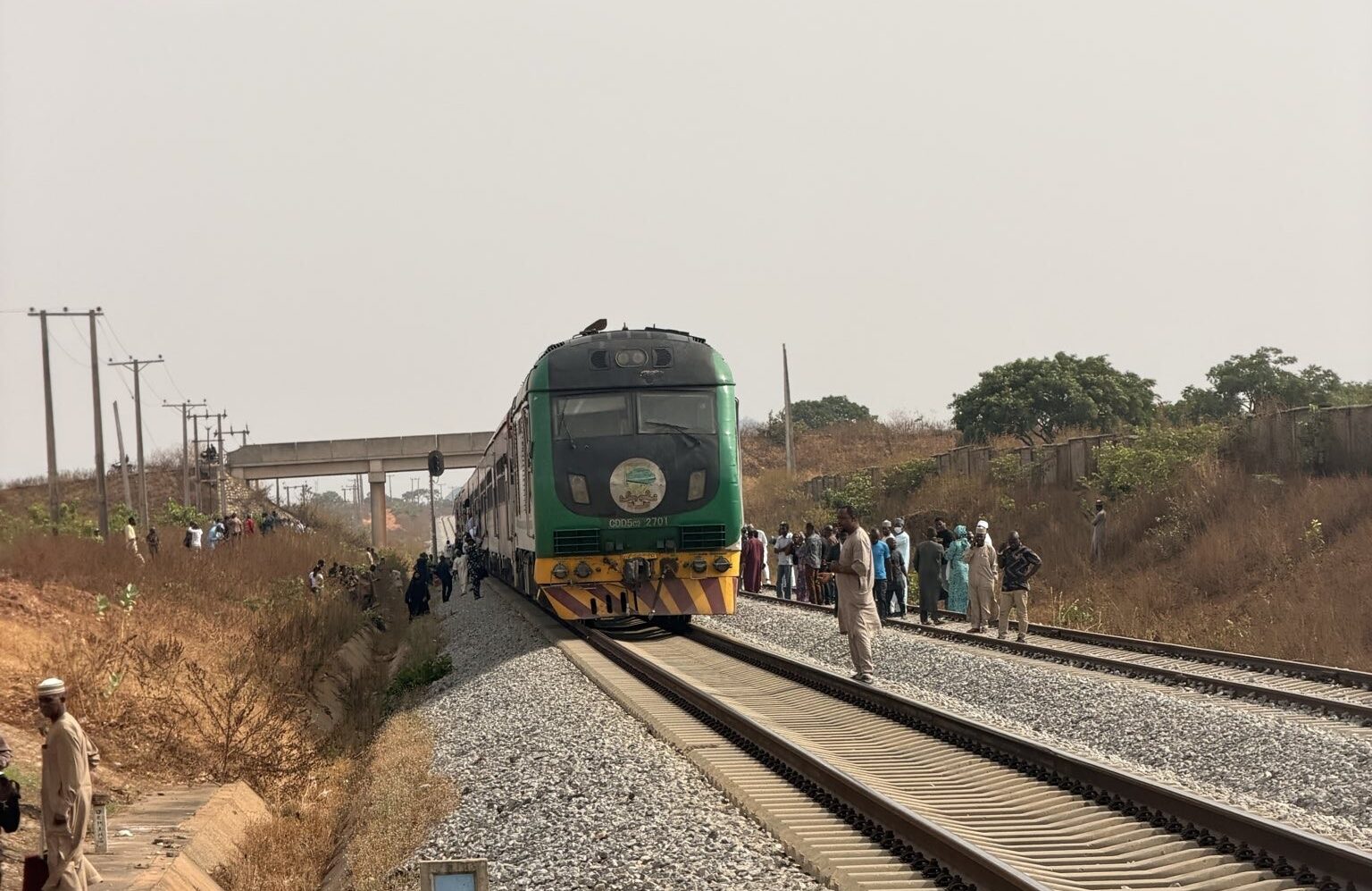
The Nigerian Railway Corporation (NRC) has confirmed that an incident involving the Warri-Itakpe Train Service (WITS) occurred on Monday.
The corporation, in a statement issued by its Managing Director and Chief Executive Officer, Kayode Opeifa, said emergency response teams and relevant authorities are currently at the scene attending to the situation and providing necessary assistance.
“The Corporation is closely monitoring developments, and a detailed statement will be issued as soon as more information becomes available,” the statement said.
The NRC urged the public to remain calm and rely only on official channels for verified updates.
The corporation did not disclose the reason for the incident, the number of passengers affected, or whether there were any casualties or injuries.
The Warri-Itakpe standard gauge rail line, which connects Delta and Kogi states, is one of the country’s major rail corridors and has become popular among passengers travelling between southern and north-central Nigeria.
In May, NRC suspended operations on the WITS, citing “operational exigencies” and technical advice from its engineers.
The suspension at the time came six months after operations resumed on 29 October 2025.
READ ALSO: Rail transport revenue drops by 16% in Q4 2025 – NBS
In November 2025, the Warri-Itakpe train service derailed three days after operations resumed.
Such problems are, however, not peculiar to the Warri-Itakpe section of Nigeria’s railway.
In August, the Abuja-Kaduna train, carrying over 500 passengers, bound for Kaduna, derailed.
“A total of 618 persons, comprising 583 passengers, 15 NRC crew members, one medical personnel, eight cleaners, and 11 catering staff, were successfully evacuated from the train,” the NRC said at the time.
“Out of this number, seven passengers sustained varying degrees of injury and were immediately transported by ambulances to hospital facilities by medical personnel mobilised to the site.”
In recent times, vandalism, old, poorly maintained facilities, sabotage, and terrorism have hindered the efficient operation of inter-state trains in a country where road transport is the overwhelmingly popular mode of transportation.