












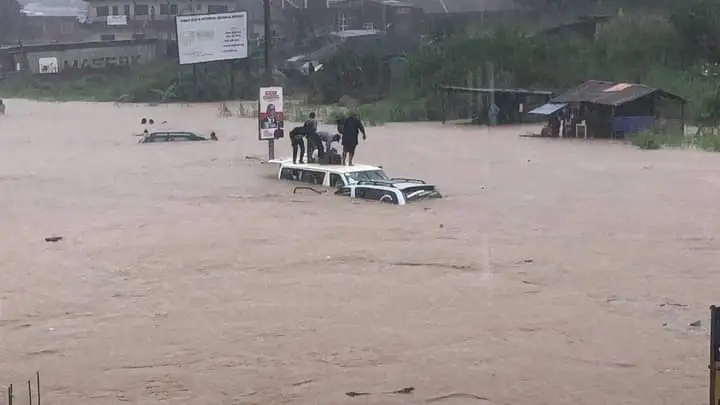
The Nigerian Meteorological Agency (NiMet) has warned of a high probability of flash floods across many Nigerian states in the first 10 days of July, citing saturated soils and the onset of peak rainfall.
In a weather advisory released on Saturday, NiMet said widespread rains recorded across many parts of Nigeria in June have left soils heavily saturated, reducing their ability to absorb additional rainfall.
“As July marks the beginning of the peak rainy season, the risk of flash flooding is expected to increase, particularly in low-lying, urban, coastal, and poorly drained areas,” NiMet said.
States at risk
According to the agency, the states likely to be affected include: Taraba, Sokoto, Borno, Zamfara, Kebbi, Katsina, Kaduna, Nasarawa, Plateau, Adamawa, Kwara, Kogi, Oyo, Ogun, Lagos, Osun, Ekiti, Delta, Edo, Abia, Imo, Anambra, Enugu, Akwa Ibom, Cross River, Rivers and Bayelsa.
Possible impacts
NiMet listed several potential impacts residents and authorities should prepare for between 1 – 10 July.
This includes localised flash flooding in urban centres, low-lying and flood-prone communities, traffic congestion, road inaccessibility, and transport disruptions, temporary power and telecommunication outages.
“Reduced visibility during heavy rainfall, affecting road users and aviation operations and waterlogging of farm lands with possible crop damage.
“Damage to roads, bridges, drainage systems, and other critical infrastructure, increased risk of waterborne diseases due to stagnant floodwaters and poor sanitation,” it said.
ALSO READ: NiMet inaugurates service innovation committee to drive research, digital transformation
Safety advisory
It urged the public to follow weather forecasts and flash flood advisories issued by NiMet and keep drains, gutters, and waterways free of refuse to ensure the free flow of water.
“Secure loose outdoor objects and reinforce vulnerable structures, avoid walking or driving through floodwaters,” it said.
NiMet further said State Emergency Management Agencies (SEMAs), the National Emergency Management Agency (NEMA), community leaders, and relevant stakeholders should strengthen preparedness and response measures.
The agency added that early preparedness and timely action remain essential in reducing the impacts of flash flooding.
“An informed community is a prepared community. Know the risks and act early,” it said.