











![Nigerian food market. [Photo credit: The Guardian NG]](https://thepreviewmedia.com/wp-content/uploads/elementor/thumbs/Nigeria-Food-market0-rnhwouhomgb6qrfulkpmvgq8nzn41y6tcgi4mirafc.jpg "Nigerian food market. [Photo credit: The Guardian NG]")

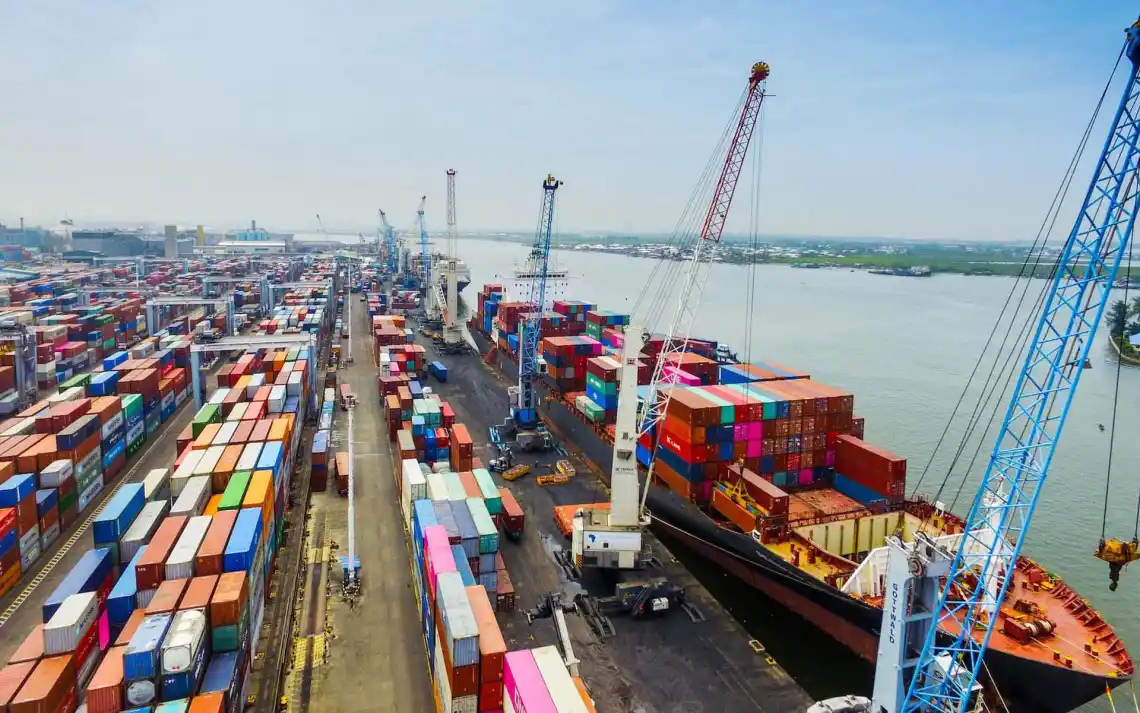
Nigeria’s Apapa and Tin-Can Island ports have been ranked among the World Bank’s top 20 most-improved ports globally between 2020 and 2025, according to the 2025 Container Port Performance Index (CPPI).
The report produced jointly by the World Bank and S&P Global Market Intelligence, released on Saturday, provides a consistent, data-driven measure of global port efficiency by focusing on vessel time in port.
It enables comparisons across ports and over time, helping identify where performance is improving and where challenges remain.
The WorldBank said over the period covered by the report, container shipping and port systems have faced unprecedented disruptions, including the COVID-19 pandemic, sharp swings in demand, congestion cascades, and, more recently, geopolitical rerouting and climate-related events.
These developments, it said, have highlighted the central role of ports in the functioning of global trade systems, noting that ports influence not only local efficiency outcomes but also the reliability, cost, and resilience of international supply chains.
Top 20 ports in terms of improved CPPI between 2020 and 2025
Data from the report showed that Tin Can Island Port improved its CPPI score by 42 points, moving from a score of -68 in 2020 to -26 in 2025, while Lagos Port also recorded a notable improvement of 35 points, rising from -61 in 2020 to -26 in 2025.
The performance placed Nigeria among a select group of countries that have made substantial progress in enhancing vessel turnaround times, port efficiency and cargo handling operations over the past five years.
Nigeria outperformed several major ports in the global improvement rankings, including France’s Marseille Port, which ranked 11th with a 39-point improvement; Türkiye’s Iskenderun Port, which placed 13th with a 34-point increase; and India’s Jawaharlal Nehru Port, which ranked 14th with a 32-point gain.
Peru’s Paita Port occupied 15th position with 32 points, while China’s Keelung and Fuzhou ports shared 16th and 17th positions, respectively, recording 27 points each.
Other ports on the list include the United States’ Philadelphia Port, which ranked 18th with 26 points; Brazil’s Itapoa Port in 19th place with 23 points; and Egypt’s Port Said, which placed 20th with a 21-point improvement.
South Africa’s Port Elizabeth topped the global improvement rankings, recording an 80-point increase; Bahrain’s Khalifa Bin Salman Port followed with a 75-point improvement, while Ecuador’s Posorja ranked third with a 70-point gain and Sweden’s Göteborg Port placed fourth with 68 points.
Other ports that featured prominently on the list include Pakistan’s Muhammad Bin Qasim Port and Vietnam’s Haiphong Port, which ranked fifth and sixth, respectively, with 52 points each.
Italy’s Savona-Vado Port and China’s Mawan Port occupied seventh and eighth positions with 51 points apiece, while Japan’s Kobe Port ranked ninth with 48 points.
Trends in Vessel Time in Ports in 2025
In 2025, according to the report, the global average CPPI shows a slight deterioration relative to the 2024 benchmark, indicating longer vessel time in port on average.
This overall movement, it said, reflects a combination of regional patterns, adding that the aggregate result is not driven by a uniform global shift, but by offsetting developments across regions and individual ports, with external shocks and structural factors shaping outcomes differently across locations.
The report noted that the vessel time in port in 2025 continued to show clear regional and income‑related differences.
It said ports in upper‑middle‑income and high‑income economies maintained shorter turnaround times on average, supported by stronger infrastructure, higher crane intensity, more advanced digital systems, and better coordination among stakeholders.
READ ALSO: Nigeria, UK sign £746 million deal to refurbish two major ports
“Several ports in upper‑middle‑income countries, particularly in East and South Asia, again outperformed many high‑income peers, reflecting export orientation, inter‑port competition, and sustained investment momentum.
“Ports in Europe and North America continued their recovery from earlier disruption, but some remained affected by congestion, labour constraints, and hinterland bottlenecks,” the report said.
It said ports in Sub‑Saharan Africa generally recorded longer vessel times in port, often linked to import‑dominated trade structures, capacity constraints, and limited competition.
“The Middle East experienced a deterioration in performance following schedule disruptions associated with the Red Sea crisis, illustrating the vulnerability of even well‑equipped ports to geopolitical shocks.”
Responding to the reports, the Managing Director of the Nigerian Ports Authority (NPA), Abubakar Dantsoho, said: “With the investor-friendliness of President providing the gravitas needed for increased investment to implement our port infrastructure and equipment modernisation drive coupled with the unflinching support from the Honorable Minister of the Federal Ministry of Marine and Blue Economy, Adegboyega Oyetola, we have all it takes to advance the fortunes of trade and boost the national economy.”