






![Nigerian food market. [Photo credit: The Guardian NG]](https://thepreviewmedia.com/wp-content/uploads/elementor/thumbs/Nigeria-Food-market0-rnhwouhomgb6qrfulkpmvgq8nzn41y6tcgi4mirafc.jpg "Nigerian food market. [Photo credit: The Guardian NG]")


The federal government on Thursday announced the introduction of price modulation in the petroleum industry to check rising prices of petroleum products in the country.
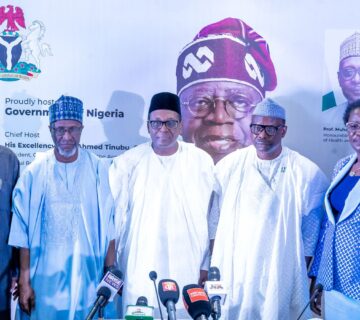
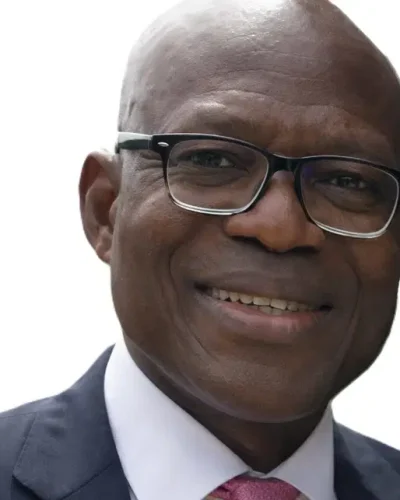
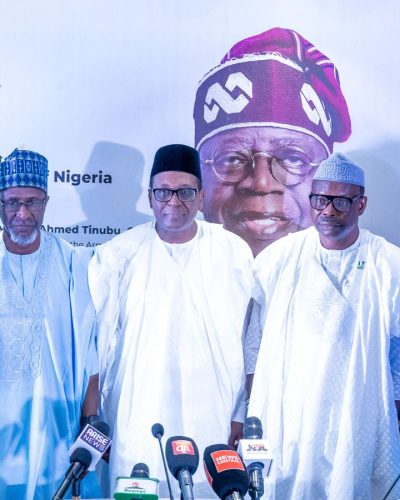
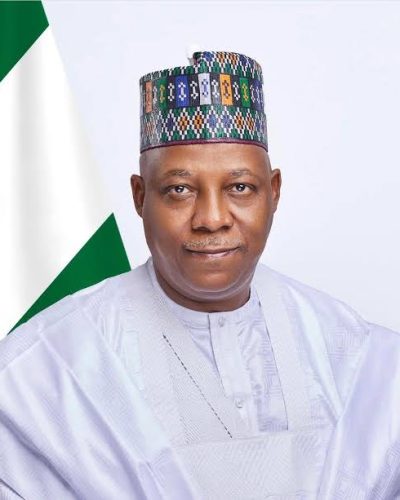
The Minister of Finance and Coordinating Minister of the Economy, Taiwo Oyedele, made the announcement in a press briefing in Abuja.
He said a negotiated ceiling of N1,350 per litre on the ex-gantry or landing cost of petrol has been introduced, subject to monthly review.
“Pump prices should not have to follow every swing in global crude or the exchange rate. Where costs rise above the ceiling, refiners and importers will carry the shortfall and recover it later, when crude prices or the exchange rate allow, without breaching the ceiling,” Mr Oyedele said.
He said that the measure is not a return to subsidy.
“This is neither a subsidy nor a price control. It is designed to smooth prices over time rather than suppressing them.”
Explaining the reasoning behind the policy, he said, “N1,400 a litre today and N1,400 tomorrow is better than N1,500 today and N1,300 tomorrow, because volatility itself adds to uncertainty and cost.”
The ceiling, he added, will be reviewed every month, reset where costs require, and the figures published for transparency.
Mr Oyedele argued that rising prices are driven by a global supply shock and not by a domestic policy choice. He said shipping through the Strait of Hormuz was running at roughly 13 per cent of its pre-war level by mid-September, while Brent crude was trading above 100 dollars a barrel, almost 50 per cent higher than before the conflict.
On domestic prices, he said petrol sold for about N830 per litre before the conflict, when crude was near 70 dollars a barrel, but now averages about N1,400.
“That increase was caused by a global conflict in which we had no say. Ironically, without the removal of subsidy, the impact would have been far greater,” he added.
He acknowledged the burden on citizens.
“Prices have risen, and Nigerians are feeling it. That concern is legitimate, and this government recognises it,” he said. He noted, however, that fuel has remained available in every state. “In a crisis of this kind, availability is the first form of affordability,” he said.
Mr Oyedele also addressed proposals to bring back subsidy, including one described as a production subsidy for local refining, noting that such a move would worsen the situation.
“A subsidy does not lower the cost of fuel. It only changes how it is paid, and when,” he said.
Speaking further, he said Nigeria consumes roughly 50 million litres of petrol a day, and returning petrol to its pre-reform price would cost more than N20 trillion a year, before any allowance for inflated consumption and smuggling.
He added that even a N500 per litre price that some have promised would cost over N16 trillion annually.
He warned that a return to subsidy could weaken the naira.
“Our estimate is that the exchange rate could approach 3,000 naira to the dollar within months, and so-called subsidised petrol would cost at least 2,000 naira a litre.”
The minister said the government remains open to ideas but expects any proposal to answer three questions. “What will it cost? How will it be funded sustainably? And what pump price will it deliver?” he asked.
Beyond price modulation, Mr Oyedele listed other measures the government is taking to ease the burden on Nigerians.
These, he said, include a 30-day margin discount on petrol sold at NNPC stations with priority for public transporters, forward sales of crude to domestic refineries, removal of illegal levies in collaboration with the states, and more funding for cash transfers to vulnerable households and subsidised credit to small businesses.
READ ALSO: 2027: I will restore petrol subsidy if elected president – Atiku
He also said the government will consider an excess profit tax on operators who take undue advantage of consumers, with proceeds to be used for transport support or vouchers for urban minimum wage earners.
Other measures include a faster rollout of compressed natural gas (CNG) vehicles, a National Strategic Fuel Reserve, reduced regulatory costs, and better traffic and logistics management.
Mr Oyedele said the government will also work with the National Assembly on enhanced tax relief for low-income earners under the 2027 Finance Bill.
“None of these measures restores a blanket subsidy. Each measure is designed to reach the people who need help, without putting the wider economy at risk,” he said.
He added that the federal government is working on a comprehensive package of fiscal measures to bring inflation down to single digits in the near term, and promised to share further details in the coming months.