




![Nigerian food market. [Photo credit: The Guardian NG]](https://thepreviewmedia.com/wp-content/uploads/elementor/thumbs/Nigeria-Food-market0-rnhwouhomgb6qrfulkpmvgq8nzn41y6tcgi4mirafc.jpg "Nigerian food market. [Photo credit: The Guardian NG]")

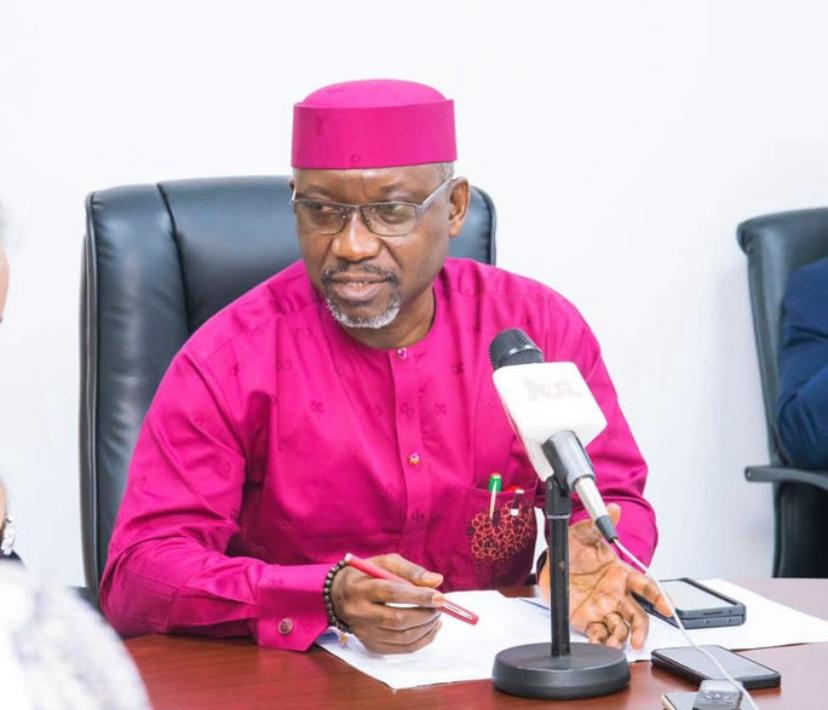
The Minister of State for Petroleum Resources (Gas), Ekperikpe Ekpo, on Friday said four major gas projects worth about $3.5 billion have reached Final Investment Decision (FID), signalling renewed investor confidence in Nigeria’s gas sector.
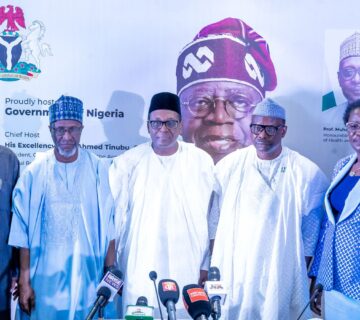
Mr Ekpo disclosed this on Friday in Abuja while briefing journalists on his administration’s three-year review.
He said the projects are the Iseni Project at about $122 million, Ubeta Project at $566 million, HI Project at $2 billion and Ima Project at $800 million.
“Together, they account for approximately $3.5 billion in committed investment,” Mr Ekpo said.
The minister added that the $3.5 billion Brass Methanol Project has also advanced toward execution after resolving its Gas Sales and Purchase Agreement.
“These are not merely project milestones; they are evidence that responsible investment can create enduring domestic value, strengthen productive capacity and generate employment,” he said.
On 21 August 2023, President Bola Tinubu named Mr Ekpo, a former member of the House of Representatives, as the Minister of State for Gas Resources.
He was tasked with executing the policies passed by Mr Tinubu’s administration that are geared towards making the country utilise its gas potential for power generation and distribution, clean cooking, auto-use, and industrialisation.
On Friday, Mr Ekpo said Nigeria’s gas resources are moving decisively from potential to prosperity.
“This administration will therefore remain accountable for turning these approvals and Nigeria’s gas wealth into reliable energy, stronger industries, more jobs and lasting prosperity. The investment commitments now before us show that this next phase is already taking shape.
“Our duty is clear: to raise production, build faster, mobilise greater investment, expand clean-energy access and ensure that Nigeria’s gas wealth delivers enduring prosperity for
every Nigerian,” he said.
Speaking further, Mr Ekpo said Nigeria’s 2P proven gas reserves rose from approximately 208.83 TCF in 2023 to 215.19 TCF as at 1 January 2026.
He said average production increased from about 6.86 BCF/D to approximately 7.5 BCF/D.
He added that domestic supply has now crossed 2 BCF/D.
“Our near-term target is 10 BCF/D, rising to 12 BCF/D by 2030. That growth is essential to meeting demand from power generation, industry, fertiliser and petrochemicals, Liquefied Natural Gas (LNG), transportation, and other domestic and export markets.
“Nigeria LNG is also recording a strong operational recovery. At the start of this administration in 2023, nameplate capacity utilisation stood at approximately 59 per cent. Year-to-date in 2026, it has risen to about 87 per cent,” he stated.
On gas-to-power, he said the National Economic Council (NEC) approved approximately N185 billion in validated legacy debt payments owed to upstream gas producers.
“This is not merely about settling debt. It is about restoring commercial discipline, improving supply reliability and rebuilding investor confidence.”
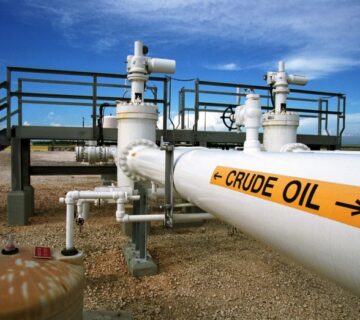
On infrastructure, Mr Ekpo said the OB3 pipeline is 100 per cent complete.
He explained that pre-commissioning has been concluded in preparation for first gas, following completion of the technically demanding River Niger crossing.
“The pipeline can carry 2 BCF/D and is expected to unlock more than 500 MMscf/D of incremental domestic supply. The AKK Pipeline is also approximately 95 per cent complete,” he added.
The minister said through the Midstream and Downstream Gas Infrastructure Fund, N671 billion in public funds has attracted approximately N1.6 trillion in private investment.
“That funding covers 31 projects and 205 infrastructure assets that could deliver about 475 MMscf/D to the domestic market when fully operational. Across the sector, our broader target remains approximately US$30 billion in gas investment by 2030,” he said.
In transportation, he said CNG conversions have risen from approximately 11,000 vehicles in 2023 to more than 120,000 today.
“Our target is at least one million CNG-powered vehicles and up to 1,000 refuelling stations nationwide.”
READ ALSO: Ekpo woos investors for gas, pushes Nigeria-Libya pipeline
On gas flaring, the minister said 42 companies have been awarded contracts to convert flare gas currently being wasted into energy, feedstock, LPG, CNG and power.
“This administration will sustain the regulatory and commercial measures required to end routine gas flaring by 2030.
“We are also expanding processing, gathering and distribution gas infrastructure so that market development does not wait for every conventional pipeline. Our objective remains unequivocal: no stranded gas and no stranded demand.
“Our next task is clear. We must raise production, accelerate pipeline and processing capacity, and improve gas supply to the power sector. We must mobilise investment, expand CNG and LPG access, eliminate routine flaring, and ensure that producing communities receive tangible benefits.
“We have made substantial progress, but progress is not the destination; it is the foundation for the work ahead. The true measure of policy is sustained delivery,” he added.