








The Nigerian Content Development and Monitoring Board (NCDMB) has announced plans to eliminate intermediaries in Nigeria’s oil and gas sector through a nationwide joint capacity audit and the introduction of a harmonised contractor grading system.
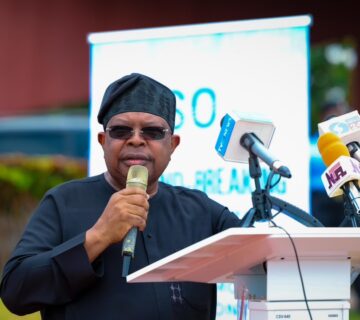
The Executive Secretary of NCDMB, Felix Ogbe, disclosed this while delivering the keynote address to flag off the 2026 Nigeria Oil and Gas (NOG) Energy week, themed: ‘Advancing Energy Ambitions for Competitive & Resilient Economies’ in Abuja on Monday.
Mr Ogbe, represented by Abayomi Bamidele, the board’s director of capacity building, said the new framework was jointly developed with the Nigerian Upstream Petroleum Regulatory Commission (NUPRC), Nigerian Petroleum Exchange (NipeX), Petroleum Technology Association of Nigeria (PETAN), Oil Producers Trade Section (OPTS) and other industry stakeholders in line with the Presidential Directive on Local Content Compliance.
He said the initiative would ensure that only companies with proven technical and operational capacity secure contracts, while genuine Nigerian manufacturers and service providers gain direct access to opportunities in the sector.
“Now, the outcome of that in-country capacity will provide a detailed understanding of existing capacities. So that it is not subject to some PSO or some nice pictures on websites. It is something physical that we are going to check.
“It will eliminate intermediaries. I like the way it was coined inside the Presidential Directive. It is not called middlemen, middlewoman or portfolio. We call them intermediaries. Irrespective of whether you are a man or a woman.
“If so far you don’t have the capacity and you are trying to force yourself to do this thing, Mr President says we should kick you out. So you cannot drop his name and say I have access, etc. No, we will plan to kick you out. It will also improve the contracting circumstance,” Mr Ogbe said.
He said the exercise would introduce a harmonised five-class grading system for contractors, replacing the different classification models currently operated by various industry regulators.
“Currently, a company can be graded differently by NCDMB and NipeX. With this harmonisation, everyone will work with one classification system, ensuring consistency across the industry,” he added.
Speaking further, he said the board will commence a nationwide joint capacity verification exercise in the third quarter of 2026, noting that the exercise will involve physical inspection of facilities rather than reliance on documents submitted online.
He noted that the exercise would expose companies without genuine operational capacity and eliminate middlemen who secure contracts only to subcontract them to firms with actual facilities.
“It is painful when a company that owns the assets and manufacturing facilities ends up becoming a subcontractor to someone who merely won the contract without the required capacity. This initiative is designed to correct that,” he said.
According to him, the audit would also provide government and investors with accurate information on existing industrial capacity, enabling better investment decisions and helping identify areas requiring further development.
ALSO READ: Nigerians to expect drop in petrol price with direct Dangote supply – IPMAN
He said the reforms were critical as Nigeria prepares for several major deep-water oil projects expected to significantly increase industry activities.
“We must know whether local companies have the capacity to execute these projects. Where the capacity exists, Nigerians should benefit. Where gaps remain, we will know exactly where intervention is required,” he said.
He stressed that the board remained committed to achieving its target of 70 per cent Nigerian content, adding that the next phase of implementation must move beyond compliance to capacity expansion.
Although he said Nigeria’s local content performance had grown from less than 5 per cent to about 61 per cent since the enactment of the Nigerian Oil and Gas Industry Content Development Act, many local manufacturers still operate below capacity because of limited market opportunities, technology gaps and financing challenges.
“Capacity expansion can only happen when businesses are assured of patronage. There is no point establishing manufacturing facilities if there is no offtake,” he said.