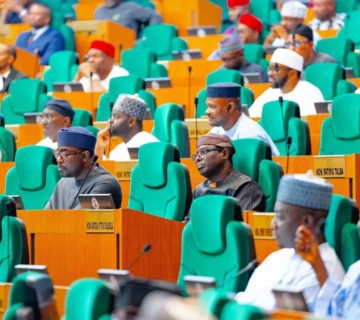









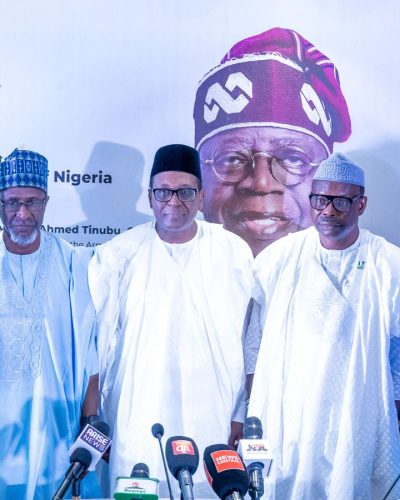




The Minister for State, Petroleum Resources (Oil), Heineken Lokpobiri, has directed the Nigerian Midstream and Downstream Petroleum Regulatory Authority (NMDPRA) to ensure that the pump prices of petroleum products reflect the recent decline in global crude oil prices.
Mr Lokpobiri disclosed this while speaking at a stakeholders’ meeting on cost-reflective pricing of petroleum products, organised by the NMDPRA in Abuja on Monday.
“I urge the authority to strengthen market surveillance and enforce pricing transparency across the supply chain to ensure that reductions in underlying costs are reflected promptly in ex-depot and retail prices.”
He said consumers should have confidence that prices are determined fairly and not by information asymmetry or anti-competitive practices.
“Equally, there is urgency for the NMDPRA to accelerate the operationalisation of the National Strategic Stock (NSS). The NSS will strengthen national energy security, reduce exposure to supply disruptions, and moderate price volatility,” Mr Lokpobiri said.
The minister said the meeting was convened to foster dialogue among industry players on reducing the prices of Premium Motor Spirit (PMS) and other petroleum products without undermining investments.
Oil prices have declined in recent months.
Last week, the Dangote Petroleum Refinery announced another reduction in the ex-depot price of petrol, marking its fourth price cut within a month.
The latest N50 reduction brings the cumulative decrease in the refinery’s petrol ex-depot price to N200 per litre since 30 May, reducing the gantry price to N1,075.
Over the same period, the refinery has reduced the ex-depot price of Automotive Gas Oil (AGO) by N300 per litre and Jet A1 aviation fuel by N520 per litre.
The refinery attributed the price reduction to the easing of tensions in the Middle East, which has led to a decline in global energy prices.
Despite expectations that oil marketers would mirror the cut and reduce pump prices, retail petrol prices remain unchanged.
Speaking on Monday, the minister said that over the past six months, the international crude oil market has experienced significant volatility.
He said Brent crude traded at approximately $61–65 per barrel in January, rose sharply to over US$118 per barrel in April amid heightened geopolitical tensions in the Middle East, and has since moderated to around $71 per barrel as those tensions eased.
Ordinarily, he said such movements in crude oil prices should be reflected in the pricing of refined petroleum products.
“While the initial increase in crude prices understandably exerted upward pressure on PMS prices, the subsequent moderation in crude oil prices has not translated into a commensurate reduction in pump prices across the domestic market, with PMS peaking at N1,596/litre in May to N1,296/litre as at today. This disconnect has understandably raised concerns.
“I am aware that PMS pricing is influenced by several factors beyond crude oil prices, but it is equally important to distinguish between genuine replacement cost and windfall gains arising from inventory management,” he said.
The minister added that temporary gains realised from inventories acquired at higher prices should not become the basis for sustaining elevated pump prices after replacement costs have declined.
“As inventories are replenished at lower costs, the benefits of those lower costs should be transmitted to consumers in a timely and transparent manner. That is the essence of a competitive and efficiently functioning market,” he added.
Mr Lokpobiri said energy is a fundamental input across virtually every segment of the economy, noting that when the cost of energy remains elevated beyond what prevailing market conditions justify, the results translate to inflation.
He said the federal government remains unwavering in its commitment to protect public interest post deregulation.
“Deregulation was never intended to create opportunities for excessive pricing or market distortions but rather promote efficiency, deepen competition and ultimately deliver value to Nigerians,” the minister said.
In his address, Rabiu Umar, the NMDPRA’s Chief Executive Officer, said: “Recently, we have witnessed a welcome easing of those tensions, which has driven a downward shift and moderation in global crude prices.”
ALSO READ: Lokpobiri tasks NMDPRA on petrol quantity compliance, warns against profiteering
However, he said the domestic retail market has not yet harmoniously adjusted to these downward shifts.
“As a responsible regulatory authority, it is our duty to step in alongside you, our valued partners, to interrogate the market forces, understand the operational bottlenecks, and directly address this disconnect between falling replacement costs and sustained retail prices.
“His Excellency, President Bola Ahmed Tinubu, has laid a resilient foundation for a deregulated, competitive, and investment-driven market. But let me be clear: deregulation is not a license for market distortion or unfair consumer pricing. It is intended to drive efficiency, maximise value, and protect the public interest.”
Mr Umar said sustainable profitability for marketers and consumer welfare are not mutually exclusive.
“We need to build a transparent ecosystem where the benefits of market improvements are passed down to the Nigerian consumer in a timely and fair manner,” he said.