










![Nigerian food market. [Photo credit: The Guardian NG]](https://thepreviewmedia.com/wp-content/uploads/elementor/thumbs/Nigeria-Food-market0-rnhwouhomgb6qrfulkpmvgq8nzn41y6tcgi4mirafc.jpg "Nigerian food market. [Photo credit: The Guardian NG]")

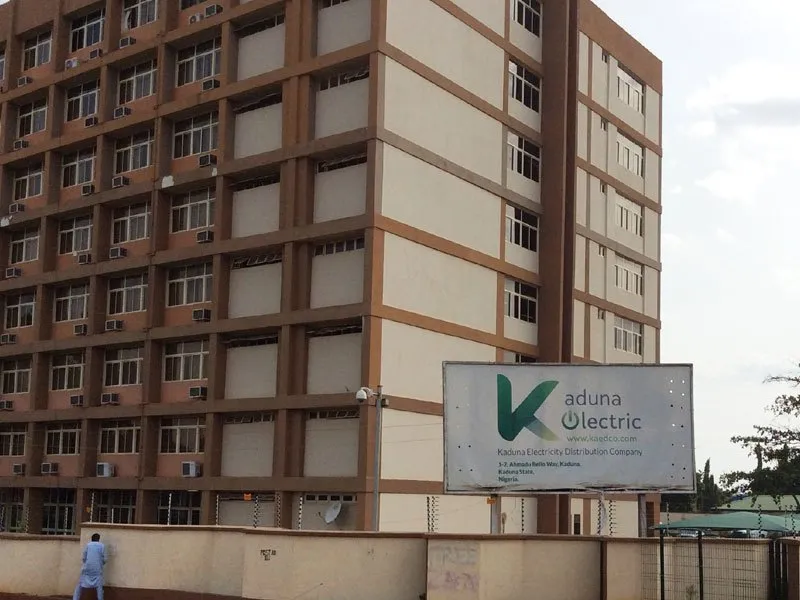
The Nigerian Electricity Regulatory Commission (NERC) has dissolved the board of Kaduna Electricity Distribution Plc (KAEDC) and appointed an administrator to take over the utility over what it described as a “grave situation” of prolonged default, inadequate investment and mounting liabilities.
In Order No. NERC/2026/086 issued on Monday, NERC said the intervention was made pursuant to Sections 75–79 of the Electricity Act 2023 to preserve electricity service and transition the DisCo to a credible new core investor within 12 months.
The order, according to NERC, takes effect immediately and will remain in force until amended or revoked by the commission.
The order was signed by NERC Chairman, Musiliu Oseni, and Commissioner for Legal, Licensing and Compliance, Dafe Akpeneye.
According to NERC, as at May 2026, KAEDC’s cumulative market obligation since privatisation stood at approximately N456.5 billion. This comprises N415.5 billion owed to the Nigerian Bulk Electricity Trading Plc (NBET), and N41 billion owed to the Nigerian Independent System Operator (NISO).
The DisCo also has other non-market statutory and third-party obligations totalling N14.26 billion.
The commission said since ASI Engineering Limited took over operations in June 2024 with Akanksha Power and Infrastructure Limited, APIL, as technical partner, KAEDC accrued additional market debt in excess of N118.6 billion as at May 2026.
The commission added that KAEDC paid only 41.93 per cent of adjusted market invoices in 2025, leaving a shortfall of N46.71 billion. For the year, the DisCo collected N51.39 billion against an adjusted invoice of N80.44 billion and remitted just N33.73 billion to the market.
Monthly remittance performance ranged from 32.11 per cent in January to 59.92 per cent in February. Average monthly remittance was N2.81 billion against an average invoice of N6.70 billion.
Losses, CAPEX performance
NERC linked the poor performance to KAEDC’s Aggregate Technical, Commercial and Collection Losses, ATC&C, which stood at 71.88 per cent in 2025. This, it said, means the DisCo accounted for only 28.2 per cent of energy received and delivered to end-use customers.
Key performance indicators for 2025 also showed a metering rate of 34.42 per cent, billing efficiency of 61.56 per cent, and collection efficiency of 46.69 per cent.
Capital investment was equally weak. Actual CAPEX in 2025 was N2.48 billion against a minimum requirement of N24.51 billion — a 10 per cent performance rate achieved only through regulatory derogations.
NERC said about N6.58 billion in derogations was granted between January 2024 and May 2026, while aggregate federal government intervention disbursements since July 2018 totalled approximately N53.79 billion.
Failed takeover conditions
The commission recalled that on 18 January 2024, it issued a conditional no-objection to ASI’s acquisition of 60 per cent equity in KAEDC, subject to 10 conditions, including proof of APIL’s capacity, a loss-reduction trajectory, bank guarantees, and a credible management team.
In a letter dated 25 August 2025, ASI claimed it had met the conditions. NERC, however, said the submissions lacked evidence of infrastructure investment and documentation of technical engagements.
Following KAEDC’s failure to provide a credible sustainability plan, NERC issued a notification of imminent regulatory intervention to shareholders and Afrexim.
At a meeting on 11 June 2026 with NERC, Bureau of Public Enterprises (BPE), Afrexim and Fidelity Bank, all parties agreed ASI had not complied with the takeover conditions or BPE’s shareholding requirements.
ASI requested a 24-month extension to stabilise cash flow. The commission, BPE and Afrexim rejected it, saying a further extension was “not justifiable given continuing risk to end-use customers and the market.”
New interim board, 12-month sale process
To preserve the utility as a going concern, NERC dissolved KAEDC’s board and appointed seven special directors to constitute an interim board.
They are: Abdullahi Garba, Chairman; Francis Agoha; Aliyu Aliyu; Major General Henry Ayamasaowei, rtd; Haliru Dikko; Ayodeji Gbeleyi, BPE Representative; and Abubakar Umar Hashidu, who will also serve as Administrator for an initial 6-month term.
The commission also withdrew KYL approvals issued to all members of KAEDC’s management team and directed affected staff to present themselves for revalidation.
Afrexim has been mandated to lead a transparent and competitive process to secure a replacement core investor within 12 months.
“The administrator shall file approval within 60 days from the commencement of the Order, a coastal 12-month stabilisation plan covering cash-flow controls, market remittance, collection, metering, energy accounting, loss reduction, service reliability, safety, customer complaint resolution, capital expenditure, procurement, staff obligations and legal liabilities.
“The plan shall identify monthly milestones, accountable officers, funding sources and measurable outcomes. Afrexim shall, in coordination with the commission, lead an openly competitive and transparent process to secure a replacement core investor and present the preferred investor to the commission for approval.
“The deadline for the completion of this process shall be 12 months from the commencement of this Order unless the commission grants a written extension upon demonstrated cause,” NERC said.
Minimum investor qualifications
According to the commission, eligible prospective investors in KAEDC shall provide demonstrably adequate working capital to meet the needs of the utility, transparent beneficial ownership, technical capacity to turn around a failing utility and credible support from leading financial institutions.
“A credible 5-year business plan covering service, metering, network investment, loss reduction, market remittance, legacy liabilities and acquisition debt. The preferred bidder shall provide cash-backed funding for the first 2-years of the approved 5-year PIP/CAPEX programme, a Tier-1 bank performance bond for the remaining 3-years, cash-backed 1-year working capital excluding energy cost, and Tier-1 bank guarantees to NBET and NISO covering not less than 3 months of market invoices.
“The Administrator, BPE, NBET, NISO and other material creditors shall reconcile KAEDC’s liabilities and file a liability-management plan with the Commission within 90 days from the commencement of this Order.
ALSO READ: NERC issues new guidelines for technical audit of Nigeria’s transmission network
“The plan may provide for interim warehousing or other lawful treatment of liabilities, without prejudice to creditor rights and subject to necessary approvals. Any warehoused liabilities shall be disclosed in the transaction documents, and prospective investors shall file binding methodologies and timelines for their settlement in their bids,” the commission said.
NERC said all collections and revenues shall be paid into approved accounts and managed in accordance with the Commission’s cash-waterfall and remittance directives.
“The Administrator shall maintain complete and auditable books, asset registers, contracts, employee records and customer data; preserve all electronic and physical records; and ensure that expenditure is necessary, prudent, competitively procured and within approved budgets.
“The Administrator shall file monthly reports with the commission within 10 business days after each month-end, and the interim board shall file quarterly performance reports within 15 business days after the end of each quarter. All reports shall cover, at a minimum, energy received and billed, collections, remittances, ATC&C losses, metering, service availability, safety, complaints, capital and operating expenditure, procurement, staff obligations, liabilities, litigation and progress against the stabilisation and transaction milestones.”
NERC said KAEDC shall maintain safe and uninterrupted electricity distribution to the extent technically available; comply with applicable quality-of-service and customer-protection standards; protect vulnerable customers.
The commission noted that KAEDC shall maintain effective complaint-handling channels and issue timely public notices on material service, governance and transaction developments approved by the commission.