



![Nigerian food market. [Photo credit: The Guardian NG]](https://thepreviewmedia.com/wp-content/uploads/elementor/thumbs/Nigeria-Food-market0-rnhwouhomgb6qrfulkpmvgq8nzn41y6tcgi4mirafc.jpg "Nigerian food market. [Photo credit: The Guardian NG]")

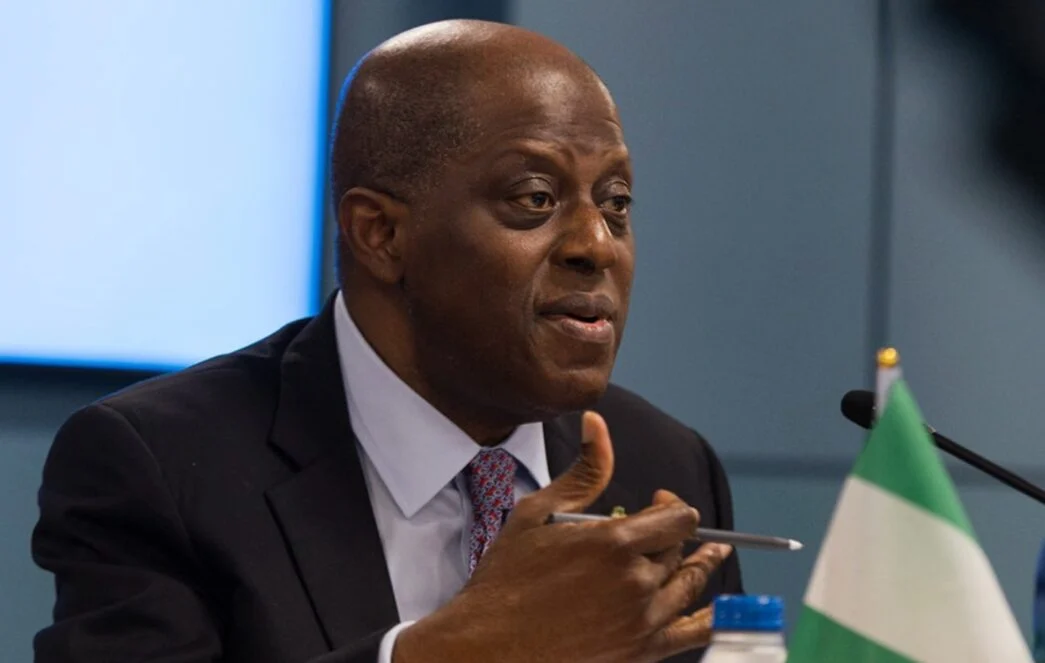
Nigeria lost about 3 per cent of its Gross Domestic Product (GDP) to distortions created by multiple foreign exchange rates, the Governor of the Central Bank of Nigeria (CBN), Olayemi Cardoso, has said.
Mr Cardoso stated this on Tuesday while reflecting on reforms undertaken by the apex bank since the current management assumed office about three years ago.
He said the multiple exchange rate regime imposed significant losses on the economy, higher than the losses from the fuel subsidy regime.
Using Nigeria’s 2023 nominal GDP of about N314 trillion, 3 per cent translates to approximately N9.42 trillion.
Mr Cardoso said that while losses from fuel subsidy were estimated at 2.2 per cent of GDP, losses from multiple FX windows stood at about 3 per cent, putting combined loss from both distortions at about 5.2 per cent of GDP.
“The losses that were taking place from the differential in exchange rates were way too wide, and you can term that as a subsidy. That subsidy was, well, in short, the losses – let’s call it the losses that we were experiencing from that subsidy were much more than the losses that we were experiencing from the fuel subsidy, and that was something that wasn’t well known to many.
“The losses from the fuel subsidy were in the region of 2.2 per cent, I remember, of GDP. Now that’s a staggering amount of money.
“But guess what? The losses that we were making as a result of these multiple exchange rate windows were more. It was three per cent of GDP. So between those, you had 5.2 per cent of GDP lost. Not sustainable by any stretch of imagination,” he said.
The CBN governor described the previous FX system as dysfunctional, with multiplicity of rates for different categories of users.
“We had a very dysfunctional foreign exchange market, whereby there were multiplicity of rates.
“Depending on who you knew and the access you had would determine the rate you would get,” he added.
He said access to cheaper rates was not available to everyone, creating opportunities for some individuals and businesses to benefit from the disparity while others were forced to transact at higher rates.
According to him, claims about the naira exchange rate at the time did not capture the experience of most market participants because only a handful could access the more favourable rates.
“When sometimes the statement is made that, ‘Oh, this was the rate at that time, and that it is no longer that rate,’ I laugh.
“Because when you go and do a survey of who was able to get those rates at that lower rate, you’ll find that just a handful were able to do so,” Mr Cardoso said.
Reforms
Mr Cardoso said the CBN’s FX reforms were aimed at eliminating distortions and creating a more transparent market where transactions are conducted based on market conditions.
He said the reforms resulted in unification of exchange rates and adoption of a willing-buyer, willing-seller model.
“What has happened is that we have succeeded in closing that gap, unifying the exchange rates.”
According to him, the reform was important not only because of financial losses but also due to concerns over fairness and transparency.
“It was important to do this for a number of reasons. Not least, of course, was the fact that it is not fair that some people should profit at the expense of others.
“We are happy, very pleased that we’ve been able to literally eliminate that distortion, and that our system of willing buyer, willing seller, which allowed transparency and allowed the market to find its own level, is where we are today,” he added.
He said the reforms contributed to improved stability in the FX market, allowing businesses to plan and project with greater certainty.
“Stability from a situation of great volatility to one where the market is stable. You can plan. You can project,” he said.
Mr Cardoso said FX pressures had receded significantly, with positive implications for other segments of the economy, including the capital market.
“When we look at the capital markets, where is it coming from? It’s coming from the stability in the foreign exchange markets.”
He linked the reforms to rebuilding external reserves to over $55 billion, the highest in over 18 years, attributing the improvement to consistency and discipline in policy implementation and increased diaspora remittances.
“We have been able to rebuild our reserves. We’re in excess of $55 billion, the highest number in over 18 years,” he stated.
The governor said broader reforms had helped bring inflation down to 15.39 per cent.
He also cited a reduction in Ways and Means financing and a review of intervention programmes as part of efforts to restore the CBN to its core mandate.
According to him, Ways and Means advances had risen to about N28.7 trillion before the reforms, while interventions worth more than N10 trillion were implemented.
He said excessive liquidity injection contributed to inflationary pressures.
“You’re pumping so much liquidity into a system with barely little to show for it, and we all know what inflation is about: too much money chasing too few goods,” he said.
ALSO READ: CBN issues operational guidelines for BDCs’ forex purchases from banks
Mr Cardoso said the reforms were designed to restore confidence in the CBN, strengthen monetary policy transmission and establish a more predictable macroeconomic environment.
He acknowledged that the reforms involved difficult decisions, particularly on interest rates and FX, but said actions were based on prevailing data and Nigeria’s specific circumstances.
“We took the right decisions that have been able to take us back there.”
He said progress should be viewed within the context of conditions inherited by the current leadership, where confidence in the bank and the currency had been lost.
“We were coming from a place where confidence had been lost in the bank and in the country, and that was manifested very clearly from the confidence that was lost in our currency,” he said.
He said the objective is to sustain gains from reforms while strengthening monetary policy effectiveness, noting that improved macroeconomic stability, reduced FX pressure and stronger external buffers now provide greater room for policy adjustment.
He said the ultimate objective is to create conditions where businesses and households can plan, invest and make economic decisions with greater certainty.