






The Nigerian Independent System Operator (NISO) has warned that frequency control is no longer negotiable, saying it has begun measuring, monitoring and penalising poor governor response across the country’s hydro fleet.
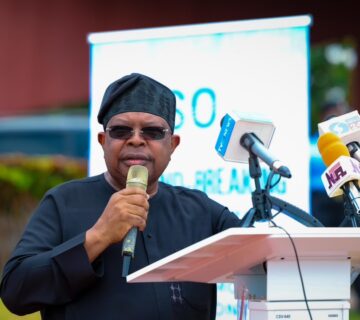
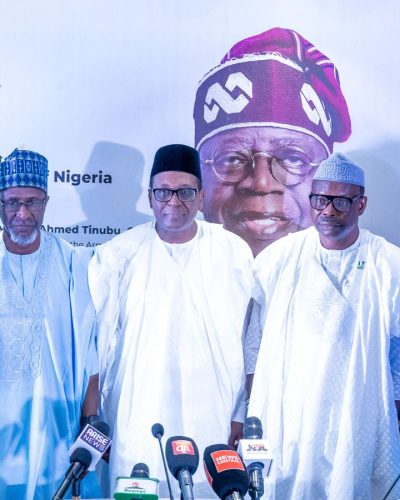
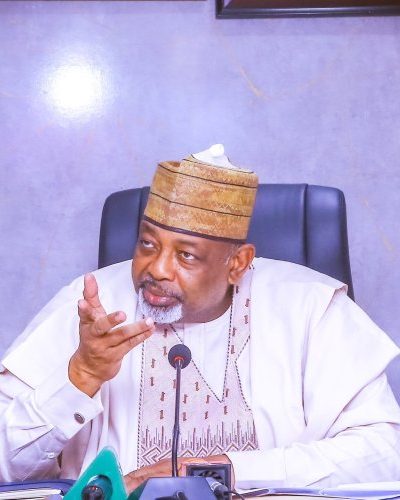
Managing Director/Chief Executive Officer of NISO, Abdu Mohammed, disclosed this on Monday at the opening of the 2026 Hydro Generation Planning Meeting held at the Jebba Hydro Power Station, Niger State.
The 5-day meeting, which runs from August 17 to 21, brought together the Federal Ministry of Power, the Nigerian Electricity Regulatory Commission (NERC), the Transmission Company of Nigeria (TCN), generation and distribution companies, water resources authorities, development partners and other industry stakeholders.
Governor’s response now enforced.
In his address, Mr Mohammed said the conversation around hydropower had shifted from just megawatts to grid flexibility and reliability.
“Governor response is no longer a theoretical attribute we describe in planning documents; it is a measured, monitored and, where necessary, enforced obligation,” he said.
Mr Mohammed said over the past year, NISO has intensified compliance enforcement on Free Governor Control across the generation fleet, including field inspections, conditional derogations with fixed expiry dates, and a penalty framework tied to monthly penalisable capacity, applied consistently under NERC’s regulatory directives.
“I raise this not to single anyone out, but because it is the clearest illustration of what this meeting is really about: turning a station’s stated flexibility into a demonstrated, contractually reliable capability. Every hydro unit in your various plants has a governor-response profile that NISO can see. That visibility should inform how we plan together, not just how we enforce afterwards,” he said.
He, however, said enforcement would be paired with support. “Where compliance gaps do arise, as our derogation process this year has shown, our preference is a structured, time-bound path back to full compliance rather than punitive action taken in isolation.”
Why hydro planning is critical
NISO said hydropower occupies a strategic position in Nigeria’s electricity supply industry.
“Beyond the quantum of energy our hydroelectric stations contribute to the national grid, hydropower provides operational characteristics that are increasingly valuable to a system challenged by generation variability, changing demand patterns and transmission constraints,” He added.
He noted that hydroelectric generation, subject to the technical characteristics of individual units and prevailing hydrological conditions, also supports reserve provision, voltage support and system restoration.
“Hydro generation planning is therefore not simply an exercise in determining how many megawatts will be available at a given period. It is an integral component of national power-system planning and grid security management.”
NISO said the operation of a power system is fundamentally a continuous balancing exercise.
“At every moment, generation must be matched with demand while maintaining acceptable frequency, voltage, transmission loading and system security. This makes accurate generation forecasting and effective generation planning indispensable,” he said.
He listed factors shaping hydro output to include reservoir levels and inflows, upstream and downstream water releases, seasonal hydrological conditions, dam and water-management requirements, generating-unit availability, planned and forced outages, turbine and generator operating constraints, and transmission network capability.
Others include: system demand patterns, environmental and operational considerations and the need to maintain adequate reserves for system security.
Accordingly, he said hydro generation planning must be undertaken through a coordinated and transparent process involving all relevant stakeholders, producing technically realistic plans, operationally implementable and aligned with the requirements of the national grid.
From planning to implementation
A major concern raised at the meeting was the gap between planning and execution.
“It is not sufficient to develop an excellent hydro generation plan on paper. The plan must be supported by timely and accurate information, effective communication, equipment availability and operational discipline,” the NISO boss said.
He called for improved quality and timeliness of hydrological forecasts, generation availability declarations, maintenance and outage schedules, unit capability data, reservoir information, transmission outage data and real-time communication between stations and the system operator.
On asset performance, he urged better coordination of planned maintenance with system requirements and a push to reduce forced outages through preventive and predictive maintenance.
ALSO READ: NISO announces planned outage on Jos-Bauchi-Gombe 330KV transmission line
“Where rehabilitation, refurbishment or upgrading is required, such interventions should be viewed not merely as individual station projects but as investments in national generation adequacy and grid reliability,” he added.
Call for collaboration
NISO said the challenges confronting the Nigerian electricity supply industry are complex, and no single institution can resolve them independently.
“This meeting is therefore an opportunity not only to review plans but to strengthen the institutional relationships required to implement them. I encourage every participant to approach this engagement with openness, professionalism and a shared commitment to the national interest. Let us interrogate our assumptions and examine our historical performance honestly,” he said.
He said Nigeria possesses significant hydropower resources.
“The challenge before us is to ensure that these resources are planned, operated and developed in a manner that maximises their contribution to national development.
“The Nigerian Independent System Operator remains committed to working collaboratively with all stakeholders to ensure that hydropower is effectively integrated into the national generation mix and optimally utilised for the benefit of the Nigerian Electricity Supply Industry,” he added.