







Two consumer advocacy groups have accused the Minister of Power, Joseph Tegbe, of violating the Electricity Act 2023 and breaching constitutional provisions with the exclusion of consumer representatives from the newly inaugurated committee to harmonise the decentralisation of Nigeria’s electricity sector.
The Association for Public Policy Analysis (APPA) and Electricity Consumers Protection Advocacy Centre (ECPAC) said the composition of the committee was designed to “perpetuate continuous distribution companies (DisCos) electricity crimes and foist anti-consumer electricity policies” on state-based electricity consumers.
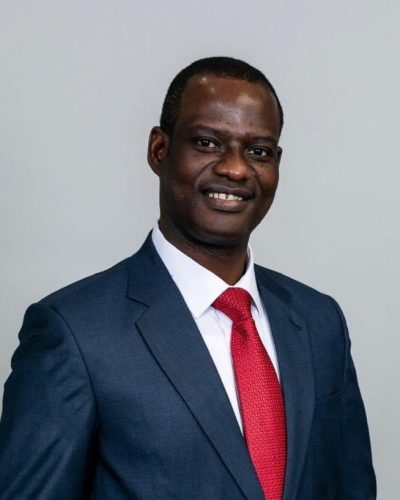
On Tuesday, Mr Tegbe set up a 9-member inter-agency committee to address issues around decentralisation of the electricity market.
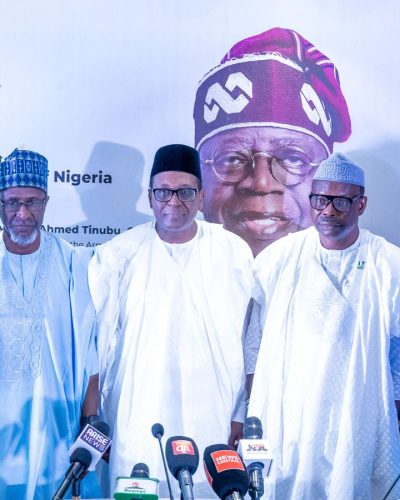
The committee was set up at a high-level workshop on legal, policy, and regulatory harmonisation between federal and state institutions on the decentralisation of the Nigerian Electricity Supply Industry (NESI), held in Abuja.
The workshop was organised by the ministry in collaboration with the Nigerian Electricity Regulatory Commission (NERC).
The minister chairs the committee, with the objective of driving sustained engagement, resolving emerging implementation issues, and supporting the seamless operationalisation of the Electricity Act, 2023.
The committee members were given four weeks to review issues raised at the meeting. The members will work with other stakeholders and share a resolution within the time frame.
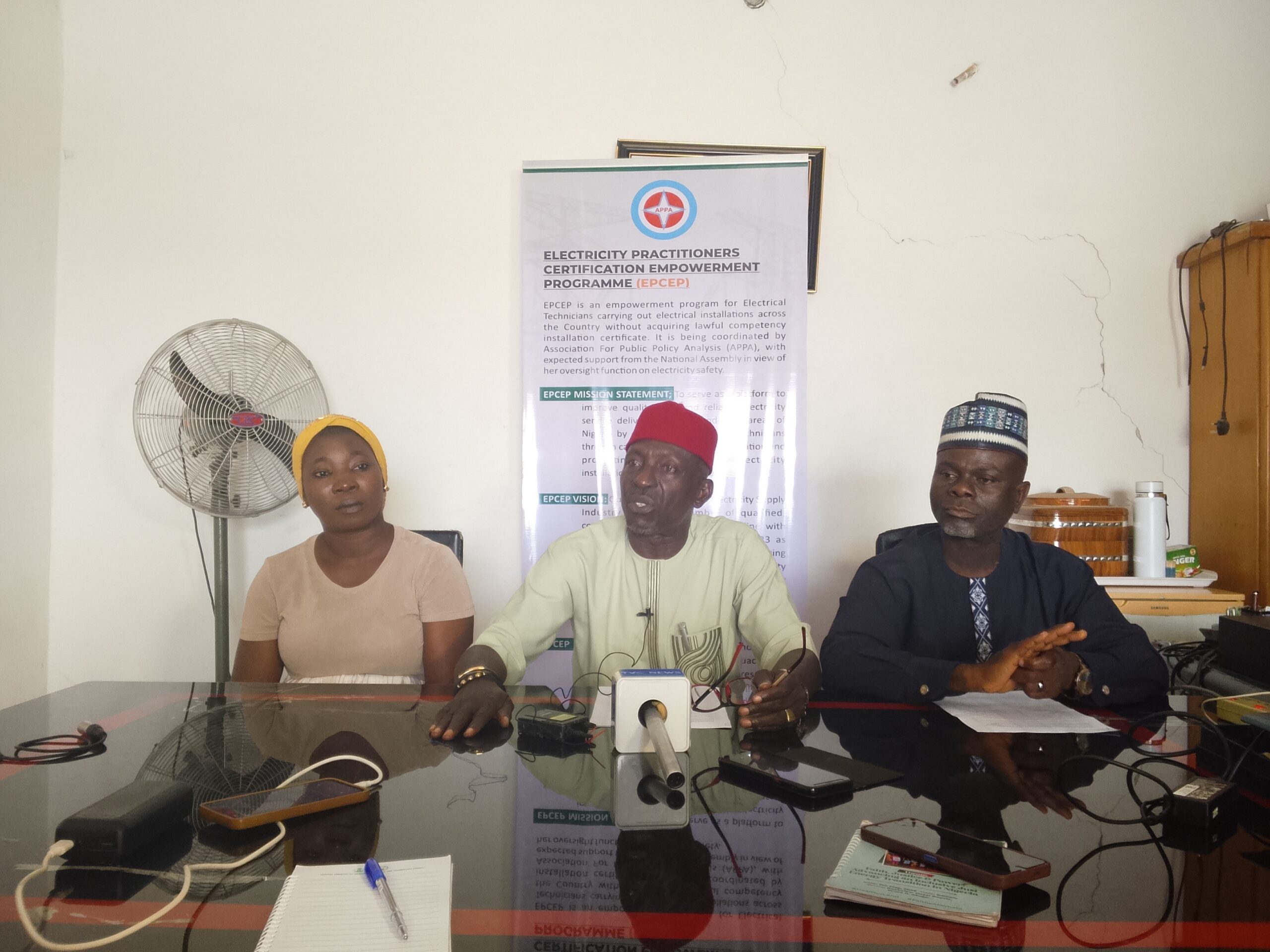
Speaking at a press briefing on Saturday, ECPAC National President, Princewill Okorie, said the committee inaugurated by the minister to drive “harmonious decentralisation of the Nigerian Electricity Ecosystem and full implementation of the Electricity Act 2023” did not include the Federal Competition and Consumer Protection Commission (FCCPC) or any electricity consumer advocacy group.
He argued that while the committee includes representatives of regulators, government agencies, and investors, it excluded the very group the law is meant to protect.
“A list of organisations from where the committee members were drawn is a clear confirmation that consumers are excluded. Hence, the demand side of the electricity supply industry is absent.
“Why will private sector investors, Nigerian Electricity Distributors (ANED), and Generation companies (GenCos) be in the committee to protect and promote investors’ interest and not speak for consumers? Even the anti-graft agencies and FCCPC were not included to bring in consumer rights, abuses, corruption, and financial crime perspectives to the problems associated with power sector policy implementation in the country,” he asked.
Mr Okorie said the exclusion violates Section 34(1)(f) of the Electricity Act 2023, which provides that regulation shall be “fair, and balanced for the consumer, licensee, and investors.”
“Where is fairness in a situation where discussion on power sector privatisation is predicated on the willingness of consumers to pay for efficient service delivery, and consumers are excluded from discussions and decisions that drive the sector?” he queried.
Allegations of ‘electricity crimes’ by DisCos
The groups also accused electricity distribution companies of perpetrating “electricity crimes” against Nigerian consumers without any effort by the institutions of state, among whom are members of the committee to prevent them.
“Thereby encouraging impunity, abuse of market power, abuse of rule of law and fundamental rights of consumers in violation of international covenants on social, economic and cultural rights,” the groups said.
Speaking further, Mr Okorie described electricity crime as “unlawful actions or practices carried out by players in the Nigeria Electricity Supply Industry (NESI), in violation of the provisions of the 1999 Constitution of the Federal Republic of Nigeria, Electricity Act 2023, the regulatory policies of NERC, and the Customer Protection Regulations 2023.
He said the crimes include electricity theft, vandalism, unlawful billing of consumers, unlawful disconnection, failure to repair faults in violation of customer service standards, and bulk billing that promotes fraudulent billing of communities.
“Electricity crimes are illegal, shameful, and unlawful acts that affect the proper delivery of electricity services, cause economic losses to the consumer, the licensee, generator, and the government of the Federal Republic of Nigeria,” he said.
He alleged that the crime thrives because institutions of state with responsibility to prevent it have failed to act, adding that the inaction “can be seen as aiding and abetting criminal actions perpetrated by electricity sector criminals.”
“We call on the Minister of Power and the Senate that is driving for amendment of the Electricity Act 2023 to concentrate on preventing electricity crime in the states as a preparatory step towards achieving a just, accountable, and transparent state electricity markets rather than pushing for amendment of a law that has decentralised the market for states,” Mr Okorie said.
He said it will be wrong to engage in amendment of the Act now that the state electricity markets are taking off, stating that it will not only discourage investors, but also encourage vulnerability of consumers in the hands of discos’ electricity crimes.
“Already, DisCos are not respecting or complying with regulatory directives and orders of state regulators in violation of provisions of State Electricity laws made by State Houses of Assemblies.”
While acknowledging the minister’s call for collaboration between national and state regulators, the group said that any collaborations that would encourage the continued practice of electricity crime against consumers in states should be rejected.
“In fact, state regulators should be allowed to carry out their regulatory activities without interference from NERC. This is because NERC has not proved to apply justice and fairness in its regulatory functions since 2013, when privatisation took off.
“Even enlightenment on the Customer Protection Regulations 2023, which it developed, is not carried out. DisCos that commit electricity crimes are not punished. If there will be any amendment at this time, it should focus on the consumer protection and crime prevention components of the Act,” he said.