












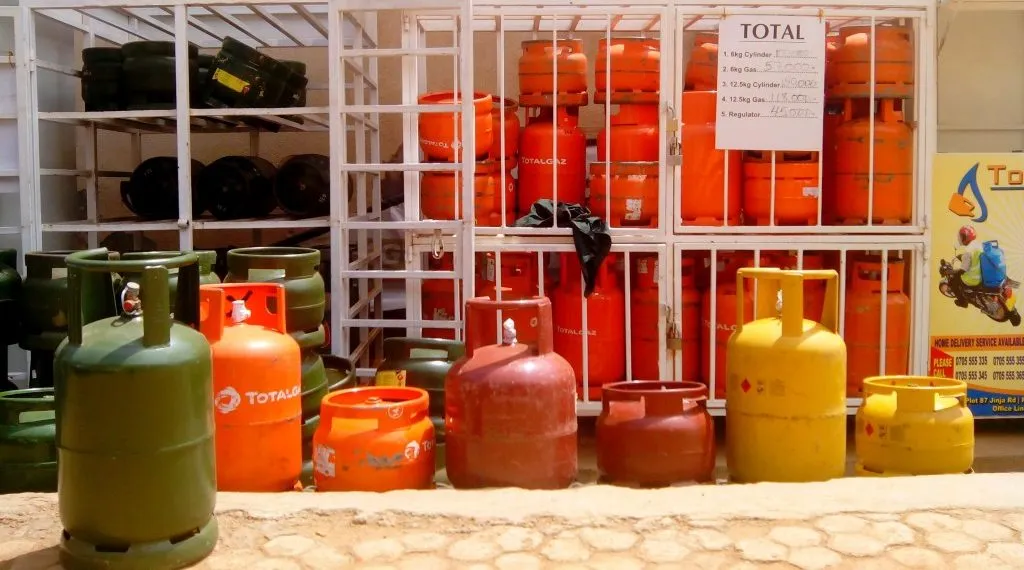
The Nigerian government has announced immediate measures to significantly reduce the price of Liquefied Petroleum Gas (LPG), also known as cooking gas, in the country.
Ekperikpe Ekpo, Minister of State for Petroleum Resources (Gas), announced the measures at an emergency stakeholder engagement on rising LPG prices in Abuja on Monday.
In recent times, the cost of cooking gas has been rising in the country.
The hike in the prices of cooking gas has forced many women into harmful alternatives such as using firewood and charcoal for cooking.
In its report titled Liquefied Petroleum Gas (cooking gas) price watch for April 2026, released last month, the National Bureau of Statistics (NBS) said the average retail price for refilling a 5kg cooking gas increased by 13.73 per cent on a month-on-month basis from N7,655.73 recorded in March 2026 to N8,706.93 in April 2026.
On a year-on-year basis, the NBS said this increased by 10.42 per cent from N7,885.60 in April 2025.
Also, the NBS said the average retail price for refilling a 12.5kg cooking gas increased by 13.89 per cent on a month-on-month basis from N19,652.83 in March 2026 to N22,382.20 in April 2026.
On Monday, Mr Ekpo said the current price pressure reflects temporary supply disruptions and wider market conditions, including reduced domestic output from key suppliers and weak import volumes in recent months.
“The foreign exchange volatility, logistics costs, infrastructure limitations, and international LPG price movements have compounded the pressure, requiring a coordinated response across the value chain,” he said.
The minister said that when a family refills a cooking gas cylinder at a higher price, it affects the household budget.
“When a food vendor, restaurant, or small business pays more for LPG, operating costs rise, and consumers feel the effect. That is why today’s engagement is not merely an industry conversation; it is a matter of public welfare, economic stability, and national responsibility,” he stated.
This, according to the minister, reinforces the need to improve domestic supply, reduce import exposure, and ensure that Nigeria’s gas resources serve Nigerians first.
Accordingly, he said the directive prioritising Nigerian-produced LPG for domestic consumption remains central to strengthening local availability and preventing diversion.
Mr Ekpo said the Nigerian Midstream and Downstream Petroleum Regulatory Authority (NMDPRA) planned LPG supply volumes for June are expected to exceed estimated national demand, subject to timely delivery and efficient distribution.
ALSO READ: Nigeria’s gas minister urges Africa to balance gas exports with domestic utilisation
“Improved supply must be matched by efficient distribution and responsible conduct. Bottlenecks, hoarding, speculative storage, allocation inefficiencies, logistics constraints, and pricing distortions must not undermine public confidence.
“I have directed the NMDPRA to intensify monitoring, engage operators, and work with security agencies to discourage hoarding, eliminate artificial scarcity, and strengthen distribution and pricing transparency,” the minister said.
In the immediate term, he said marketers have indicated readiness to increase imports where necessary, while expected deliveries from new domestic facilities, including the Seplat gas facility, should support supply in the coming weeks.
“We are also exploring a local blending initiative with Nigeria LNG Limited, local producers, and the Port Harcourt plant operator to move locally produced LPG closer to the market, reduce import pressure and logistics costs, improve reliability, and support more stable pricing,” he added.