











The federal government has charged state governments to align agricultural production with consumption to protect farmers from losses and stabilise food prices for Nigerian households.
Ezeaja Ikemefuna, Head, Department of Information in the Ministry of Agriculture and Food Security, disclosed this in a statement on Thursday.
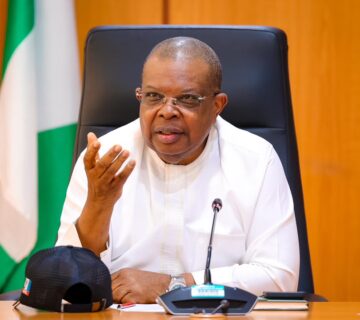
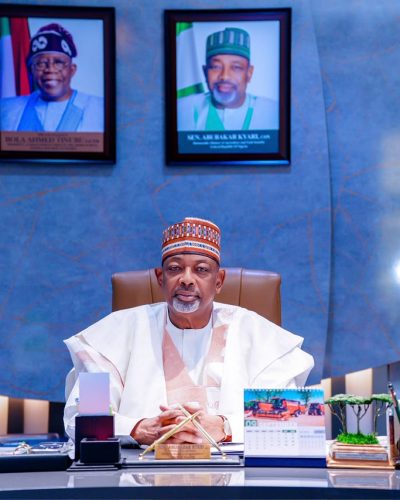
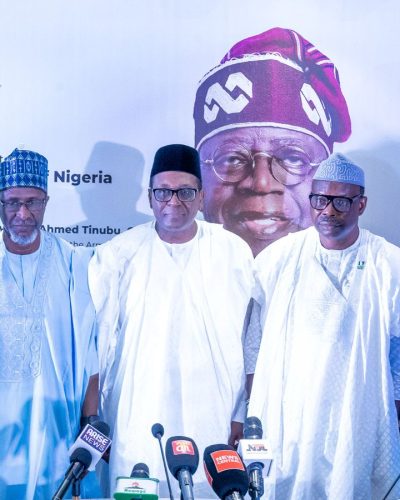
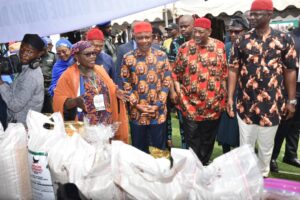
Mr Ikemefuna said the Minister of Agriculture and Food Security, Abubakar Kyari, gave the charge on Thursday at the 48th Council Meeting of the National Council on Agriculture and Food Security (NCAFS), held in Enugu.
The meeting was themed: “Enhancing Agricultural Value Chains, Agro-Industrialisation and Market Access for Economic Growth.”
A difficult imbalance
Mr Kyari said the past three years exposed a difficult imbalance in agricultural markets.
He said when food prices rose, households struggled to afford necessities. “When commodity prices later declined, many farmers found themselves selling their harvests at prices that could not cover their production costs.”
Food inflation hit 40.87 per cent in June 2024, eased to 8.89 per cent by January 2026 — its first single-digit reading in more than a decade — but rose again to 19.59 per cent by September 2026 as costs remained high and farmers’ incomes came under pressure.
Further, Mr Kyari blamed the escalation of conflict in the Middle East, which disrupted energy, shipping, and fertiliser markets, pushing urea above $850 per tonne in April 2026 and passing higher input, energy, and transport costs onto farms.
Tinubu’s interventions
According to him, President Bola Tinubu has responded with a clear sense of urgency, recognising that sustainable food security requires substantial investment in agricultural production and financing.

To this end, he said the president has strengthened the operationalisation of the National Agricultural Development Fund, prioritised recapitalising the Bank of Agriculture, and supported the introduction of the N200 billion Guaranteed Minimum Price Programme.
These interventions, he noted, reflect Mr Tinubu’s determination to move beyond immediate price relief, protect the farmer’s incentive to produce and strengthen the availability of affordable food for Nigerian households.
“Through the National Agricultural Development Fund, the Farm Input Support Programme has reached over 115,000 beneficiaries across 25 states and the Federal Capital Territory, with N16.27 billion disbursed through agribusiness financing, while the Bank of Agriculture has financed over 500,000 smallholder farmers.
“The Bank of Agriculture is anchoring the Guaranteed Minimum Price Programme to protect eligible farmers against distress sales through structured purchases and commodity aggregation,” the statement said.
Mechanisation drive
On mechanisation, Mr Kyari disclosed that under the Renewed Hope National Agricultural Mechanisation Programme (RH-NAMP), after the first phase of 2,000 tractors and over 9,000 implements, a second phase of 1,500 tractors and over 8,000 pieces of complementary equipment is underway to expand access, reduce production costs and improve productivity.
Using maize as an example, he said its price affects feed mills, poultry producers, food processors and ultimately the consumer.
“Processors need raw materials delivered in the right quantity, at the required quality, and at a commercially viable cost — not production estimates.
“That is why agricultural value chains must connect production with processing, investment and dependable markets, ” he said.
Value chains, markets
Mr Kyari said the Special Agro-Industrial Processing Zones initiative is expanding domestic value addition, while the Rural Access and Agricultural Marketing Project is improving links between producing communities and markets.
He added that the World Bank-supported AGROW Project, now being prepared for implementation, will create more commercial partnerships between smallholder farmers and agribusinesses, while the African Continental Free Trade Area presents further opportunities for Nigerian agricultural products.
“Access to regional and international markets, however, requires more than trade agreements, he said. Products must meet standards for quality, safety, traceability and consistency of supply.”
These requirements, he said, determine whether Nigerian businesses can compete and sustain their presence in those markets.
ALSO READ: WAPP North Core power project linking Nigeria, four others hits 75% completion
Mr Kyari urged commissioners to build on progress ahead of the 2027 season through more reliable production forecasts, closer alignment between agricultural supply and industrial demand, and stronger coordination between producing and consuming areas.
He said the alignment would protect farmers from losses, ensure factories get raw materials in the right quantity and quality, stabilise food prices for consumers, and reduce waste across value chains.
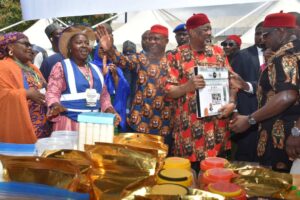
In his opening remarks, Enugu State Governor Peter Mbah welcomed ministers, commissioners and delegates from the 36 states and FCT, and development partners.
He said Nigeria does not suffer from a shortage of agricultural potential or policies, but from failure to turn potential and policies into an agricultural economy that delivers prosperity at scale.
“A farmer can produce a good harvest and still struggle to earn a decent living,” he said.