












The Nigerian Upstream Petroleum Regulatory Commission (NUPRC) on Tuesday said 143 companies qualified for the commercial bid stage of the 2025 oil licensing round, while 13 of the 50 oil blocks on offer attract no bids and will be returned to the government’s licensing basket.
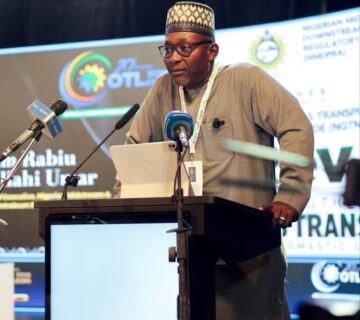
The NUPRC Chief Executive, Oritsemeyiwa Eyesan, disclosed this in her opening remarks at the Commercial Bid Conference held in Abuja on Tuesday.
The licensing round
Last December, the NUPRC opened bidding for 50 oil and gas blocks, aiming to attract $10 billion in investment.
Of these 50 blocks, the commission said 15 are onshore assets, 19 are shallow water assets, 15 are frontier assets, and one is a deep water asset.
On Tuesday, Mrs Eyesan said only 37 of the 50 blocks attracted bids during the technical evaluation stage.
“At the end of the exercise, we had 50 blocks on offer, but we only had representation for 37 of those 50 blocks. Thirteen of those blocks will be returned to the basket,” she said.
She explained that the licensing round has progressed through several distinct phases, including registration, prequalification, data access, bid preparation, and submission.
“To reinforce trust, the commencement of this licensing round attracted interest from around 300 companies across 50 available assets. After the prequalification process, 196 applicants were deemed eligible to advance to the bidding stage. By the submission deadline, 143 companies had submitted 200 technical and commercial bids covering 37 assets,” she said.
Beyond these quantitative markers, Mrs Eyesan said a diverse group of participants has shown keen interest in the process, adding that new entrants are leveraging this opportunity to test their capabilities, while established players, both local and international, are seeking to expand their presence and further consolidate their positions.
“This validates our commitment to offering Nigerian opportunities on an equitable basis to all stakeholders, regardless of their experience within hydrocarbon development.
“Such engagement underscores continued confidence in Nigeria’s upstream potential and demonstrates that our initiatives to enhance Nigeria’s competitiveness for investment capital are yielding positive results,” she stated.
She said the exercise was conducted under clearly defined guidelines, with technical and commercial requirements as well as evaluation criteria published ahead of the process and further clarified during the pre-bid conference, webinars, and dedicated engagement channels.
According to her, the representatives of the Nigeria Extractive Industries Transparency Initiative (NEITI) observed both the bid opening and technical evaluation processes to enhance transparency and credibility.
“The evaluation was rigorous, but the objective was simple: to place the assets in the hands of bidders capable of delivering the best overall long-term value to Nigeria through increased reserves, higher production, sustainable fiscal returns and wider economic benefits.”
According to her, the winning bidder for each asset will be the bidder with the highest weighted aggregate score and the bid that delivers the best overall long-term value to the government—not simply the highest immediate payment.
She said this approach recognises that petroleum acreage does not create value merely because it has been awarded, noting that it creates value when it is explored, discoveries are appraised, projects are developed, and production reaches the market.
Prospects
She said the assets available in this licensing round have the potential to add about 500 million barrels to Nigeria’s reserves, increasing our existing reserves of crude oil and condensate—which currently stand at 37.01 billion barrels—and 215.19 trillion cubic feet of gas.
“Over the next three years, once successfully developed, these assets are expected to contribute a minimum of 300,000 barrels per day of crude oil and condensate production,” she said.
According to her, the licensing round represents a vital step for Nigeria in achieving its goal of reaching three million barrels per day by 2030.
“It is essential to highlight that the government will support new production from both small and large fields, aiming to broaden the range of participants and promote collaboration throughout the industry.”
’Drill or drop’ warning
Additionally, she said the commission prioritises not only growth but also the production of “efficient barrels”—those that deliver value to all stakeholders, including the government.
“To the bidders who will emerge successful today, an award is not a trophy to be held. It is an obligation to invest, drill, develop and produce. Our message is therefore clear: drill or drop. Work programmes must be implemented, financial commitments must be honoured and agreed milestones must be achieved.
“The commission will support credible operators through clear guidance, predictable regulatory decisions and timely intervention where genuine obstacles arise. In return, we expect performance. Acreage cannot remain inactive while Nigeria’s production, revenue and energy-security objectives are deferred,” she added.
Mrs Eyesan said each winning bidder must satisfy the post-bid conditions prescribed in the guidelines, including the provision of the applicable guarantees, payment of the signature bonus and first-year rent, and execution of the relevant contractual documents.
“A winning bidder that fails to fulfil the prescribed conditions within 90 days of receiving its offer letter will lose its entitlement to the asset. The commission may thereafter invite the reserve bidders, in their order of ranking, to fulfil the conditions of the award. The government is not seeking speculative holders of acreage; it is seeking partners with the capacity, discipline and commitment to deliver measurable production and economic value,” she stated.
FG committed to reforms
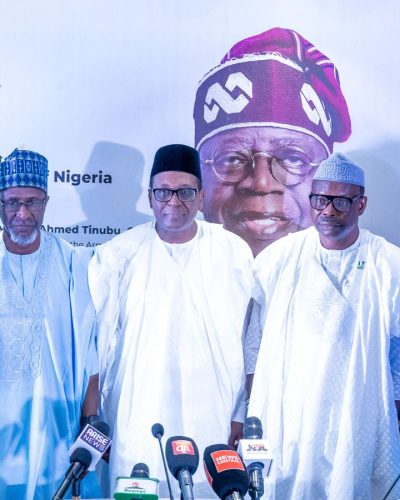
In his remarks, the Minister of State for Petroleum Resources (Gas), Ekperikpe Ekpo, described the conference as a major milestone in Nigeria’s licensing process, stating that it reflects the government’s commitment to transparency, competitiveness, and credibility under the Petroleum Industry Act (PIA) 2021.
ALSO READ: 143 firms to battle for 50 oil, gas blocks as NUPRC begins 2025 commercial bidding
“The federal government, under the leadership of His Excellency, President Bola Ahmed Tinubu, remains firmly committed to creating an enabling environment that attracts investment, accelerates exploration and production, and unlocks the full value of Nigeria’s hydrocarbon resources,” Mr Ekpo said.
For the gas sector in particular, he said the importance of the licensing round cannot be overstated.
“As Nigeria pursues the objectives of the Decade of Gas Initiative, new upstream investments will provide the foundation for increasing gas reserves, expanding domestic gas supply, supporting industrialisation, improving energy access, and strengthening our position as a leading supplier of natural gas to regional and global markets.”
He noted that the PIA, together with the administration’s ongoing policy and fiscal reforms, has significantly enhanced investor confidence by promoting regulatory certainty, transparency, and ease of doing business.
“Today’s exercise further demonstrates that Nigeria’s licensing regime is anchored on fairness, accountability, and international best practices. To our prospective investors, I encourage you to take advantage of the vast opportunities that Nigeria offers.
“With one of the largest proven natural gas reserves in the world, abundant oil resources, a growing domestic market, and a reform-oriented government, Nigeria remains one of the most attractive investment destinations in the global energy industry,” he said.