










The Nigerian Midstream and Downstream Petroleum Regulatory Authority (NMDPRA) has emphasised the need to strengthen gas distribution infrastructure nationwide to translate Nigeria’s vast gas reserves into meaningful economic and industrial growth.
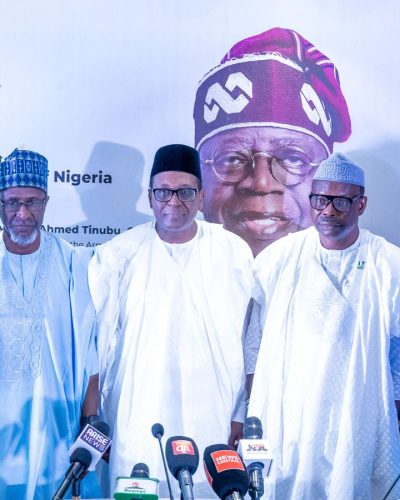
Speaking at the Association of Local Distributors of Gas (ALDG) Business Forum in Abuja, the Authority Chief Executive, Rabiu Umar, said while Nigeria possesses over 209 trillion cubic feet of proven natural gas reserves, the country’s major challenge is no longer gas abundance but gas accessibility.
Mr Umar, represented by the Acting Executive Director, Distribution Systems, Storage and Retailing Infrastructure, Ayorinde Cardoso, noted that the nation’s gas agenda must focus on ensuring reliable delivery of gas to industries, power plants, businesses, CNG stations and households.
Addressing participants at the forum themed “From Gas Abundance to Gas Access: Reassessing Nigeria’s Gas Distribution Imperative,” Mr Umar said the federal government is targeting gas supply growth to 10 billion cubic feet per day by 2027 and 12 billion cubic feet per day by 2030.
He stressed that achieving these targets will require significant investment in last-mile gas distribution infrastructure alongside major pipeline projects such as the Ajaokuta-Kaduna-Kano (AKK) and OB3 pipelines.
He highlighted the progress made under the Gas Distribution Licensing (GDL) framework established pursuant to the Petroleum Industry Act (PIA) 2021.
According to him, the Authority issued ten Gas Distribution Licences in 2025, with the licensed zones currently serving about 430 customers through over 535 kilometres of pipeline infrastructure and a combined network capacity of 442 MMSCF/D.
READ ALSO: NMDPRA unveils digital portal for project tracking, compliance reporting in host communities
He further revealed that the Authority is advancing plans for the next phase of Gas Distribution Licences, particularly along the AKK Pipeline Corridor, to unlock new industrial clusters and deepen domestic gas penetration across Northern Nigeria.
Acknowledging the growing role of virtual gas distribution through Compressed Natural Gas (CNG) and Liquefied Natural Gas (LNG) trucking, he maintained that the long-term objective remains the expansion of Piped Natural Gas (PNG) infrastructure as the most efficient and scalable model for nationwide gas utilisation.
He reaffirmed NMDPRA’s commitment to fostering an investment-friendly regulatory environment that supports infrastructure expansion, supply reliability and market growth across the gas value chain.
He urged stakeholders to move from “reserve-based pride to utilisation-driven performance.”
He said the success of Nigeria’s gas agenda will ultimately be measured by how effectively gas is delivered to productive use across the country.