









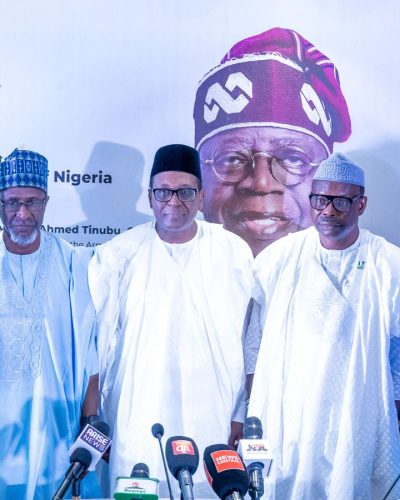




The Centre for the Promotion of Private Enterprise (CPPE) has commended the Central Bank of Nigeria (CBN) decision to maintain all key monetary policy parameters at the 305th meeting of the Monetary Policy Committee (MPC).
Earlier on Wednesday, the CBN kept its key interest rate unchanged at 26.5 per cent. The apex bank also maintained the asymmetric corridor around the Monetary Policy Rate (MPR), retained the Cash Reserve Ratio (CRR) at 16 per cent for merchant banks, 45 per cent for deposit money banks and 75 per cent for non-TSA deposits.
The benchmark interest rate, formally known as the MPR, is a key tool used by central banks to influence borrowing costs, inflation, and overall economic activity.
CPPE, in a statement signed by its director, Muda Yusuf, on Wednesday, said the decision reflects a pragmatic, measured and increasingly sophisticated understanding of the inflation dynamics currently confronting the Nigerian economy.
“At a time of heightened global uncertainty and mounting geopolitical tensions, the decision of the MPC sends a powerful signal of policy maturity, strategic restraint and confidence in the direction of macroeconomic management,” Mr Yusuf said.
He said the current inflationary pressures are substantially structural and externally induced.
“The intensifying geopolitical tensions involving Iran, Israel and the United States have triggered fresh volatility in the global energy market, pushing up crude oil prices and transmitting severe cost pressures into domestic energy prices, transportation, logistics and manufacturing operations.
“Inflation at this time is being driven more by supply-side disruptions than by excess domestic demand. Monetary policy is a powerful stabilisation instrument, but it cannot repair supply chains, resolve geopolitical conflicts or eliminate structural bottlenecks in production and distribution,” he said.
The think tank warned that attempting to force down structural inflation solely through aggressive monetary tightening would amount to applying a monetary solution to a structural problem.
“The decision to hold rates therefore demonstrates a commendable recognition that excessive tightening at this stage could suffocate productivity, weaken industrial recovery, constrain investment appetite and undermine employment generation.”
Mr Yusuf said economies do not grow on the strength of high interest rates, adding that they grow on the strength of productivity, enterprise, investment confidence and policy coherence.
“The CPPE particularly commends the Central Bank for the increasingly disciplined management of the monetary policy architecture and the relative stability achieved in the foreign exchange market over recent months. Exchange rate stability has become one of the most important anchors of macroeconomic confidence in the economy.
“A stable currency environment improves investor sentiment, moderates imported inflation, enhances planning predictability and reduces speculative distortions within the market,” he said.
Indeed, he said the recent policy direction of the CBN reflects a transition from crisis management to confidence management, a development, the think tank said, is critical for restoring macroeconomic credibility and rebuilding investor trust in the Nigerian economy.
“We also commend the fiscal authorities for the renewed commitment to fiscal consolidation and improved revenue performance.
“The sustainability of macroeconomic stability ultimately depends on the quality of fiscal discipline. Rising revenues should translate into lower fiscal deficits, reduced dependence on debt financing and stronger fiscal buffers,” the think tank said.
The CPPE further applaud the seamless and non-disruptive implementation of the banking sector recapitalisation programme.
Mr Yusuf said the exercise has not triggered systemic anxiety, depositor panic, bank failures or significant erosion of shareholder confidence, noting that this demonstrates regulatory maturity, improved supervisory capacity and careful management of transition risks by the Central Bank.
“The recapitalisation programme is not merely a banking reform exercise; it is fundamentally a strategy for building a stronger financial intermediation framework capable of supporting long-term industrialisation, infrastructure financing and economic transformation. Strong economies are built on strong financial systems.
“However, for the few banks still dealing with recapitalisation-related transitional issues, it is imperative for the Central Bank to sustain clear communication and continuous reassurance to preserve depositors’ confidence in those banks and overall financial system stability. Confidence remains the oxygen of the financial system,” he said.
The CPPE said the outcome of the 305th MPC meeting reflects a balanced and intelligent policy calibration, one that appropriately recognises that the ultimate objective of macroeconomic management is not merely to tame inflation statistics, but to create an environment that supports investment, productivity, competitiveness, industrialisation and sustainable job creation.