






The media adviser to former Vice President Atiku Abubakar, Paul Ibe, has asked the federal government to publish the full details of its recently signed framework for American investment in Nigeria’s mineral sector.
Last Wednesday, Nigeria and the United States (US) signed a landmark framework agreement to pave the way for American investment in Nigeria’s solid minerals sector, estimated to be worth about $700 billion.
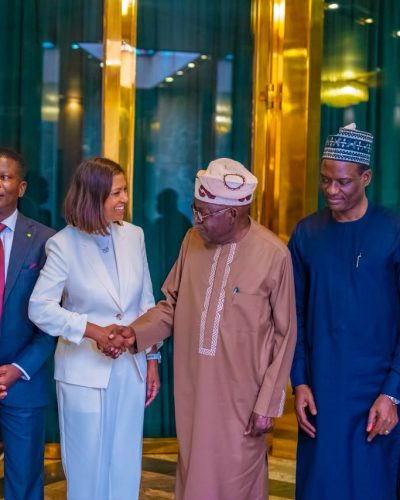
The agreement was signed at the Nigeria Mission House in New York by the Minister of Solid Minerals Development, Dele Alake, and the US Deputy Secretary of State, Christopher Landau.
Both officials later exchanged the signed documents at the ceremony, Kehinde Bamigbetan, special adviser to Mr Alake, said in a statement last Thursday.
The agreement, according to the statement, is expected to use the Nigeria-US government relationship as a foundation for business-to-business transactions to boost Nigeria’s value-addition-driven value chain.
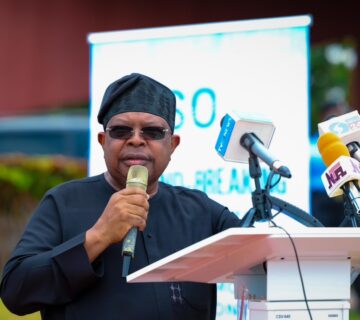
In a statement on Tuesday, Mr Ibe said Nigerians deserve more than photographs, handshakes and press releases following the announcement of the agreement, which the government says covers mineral resources estimated to be worth about $700 billion.
He said the $700 billion figure being reported does not represent an investment by the United States, but the estimated value of Nigeria’s mineral resources.
“Let us first clear up one misleading impression: this is not a $700 billion investment by the United States. The $700 billion figure is the estimated value of Nigeria’s mineral resources. And that makes the real question even more important: Where is the agreement?” Mr Ibe said.
According to him, for resources of such enormous value, the government must disclose what exactly Nigeria has committed to.
“What exactly has Nigeria committed to? Which minerals are covered — lithium, gold, rare earths or others? Will American companies enjoy any preferential access? What geological data will Nigeria provide, and who owns the data generated from exploration?” he asked.
Mr Ibe also asked whether the agreement contains tax concessions, guarantees or preferential fiscal arrangements, and whether it mandates in-country processing or allows minerals to be exported as raw materials.
Other questions raised by the Atiku aide include binding provisions for Nigerian jobs, local content, technology transfer and value addition, as well as dispute settlement mechanisms and whether there are annexes, side letters or implementation agreements not yet made public.
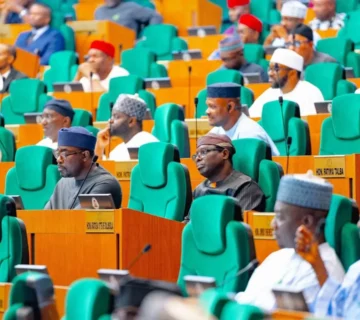
He said the National Assembly must be allowed to scrutinise the agreement.
“Have the Senate and House of Representatives been furnished with the complete document? Have the relevant committees on solid minerals, treaties and agreements, finance and appropriations scrutinised its provisions? If not, why not?” he said.
Mr Ibe noted that Section 12 of the Constitution provides that a treaty cannot have the force of law in Nigeria unless enacted by the National Assembly, while Sections 88 and 89 give the legislature oversight and investigative powers.
“This does not mean every framework agreement automatically requires prior legislative approval. But if this deal involves fiscal concessions, guarantees, public expenditure, changes to Nigerian law or commitments affecting strategic national resources, then the National Assembly has a legitimate constitutional responsibility to scrutinise those aspects,” he said.
READ ALSO: Nigeria, Türkiye sign agreement to deepen cooperation in solid minerals sector
“So why should an agreement involving mineral resources estimated by the government at $700 billion remain unavailable for full public and institutional scrutiny?” he asked.
He added that the United States is entitled to negotiate aggressively in pursuit of its national interest, but Nigeria must be equally determined to protect its own interest.
“There is a very simple way for the government to clear the air: publish the annexes and side letters, if any. Tell Nigerians whether the complete agreement has been transmitted to the National Assembly. Let us know exactly what America gets and exactly what Nigeria gets,” Mr Ibe said.
“Nigeria’s mineral wealth belongs to Nigeria. Agreements governing resources of such enormous strategic value should never depend on secrecy. Nigeria’s mineral resources should never be used as leverage to achieve personal political ends,” he added.
He called on President Bola Tinubu to publish the deal and allow the National Assembly to scrutinise it.
“Mr President, publish the deal. Let the National Assembly scrutinise what falls within its constitutional powers. Let Nigerians read the agreement and judge for themselves,” he said.